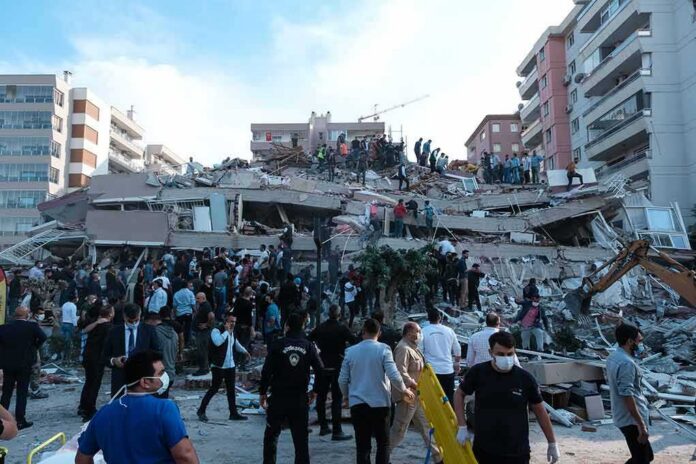
Back-to-back monster quakes hammered Venezuela’s capital, exposing fragile buildings and shaky leadership as panic spread across Caracas.
Story Snapshot
- Two powerful quakes, a 7.2 foreshock and 7.5 mainshock, hit within 39 seconds [7]
- Strong shaking sent crowds fleeing in Caracas; videos show chaos in streets [1]
- Casualty figures vary as hospitals overflow and rescue work continues [3]
- Experts warn vulnerable buildings worsened the toll and strain on care [4]
What Happened: The Double Earthquake That Rocked Caracas
The United States Geological Survey (USGS) reported two major earthquakes striking Venezuela on June 24, 2026. A magnitude 7.2 foreshock hit first. A magnitude 7.5 mainshock followed 39 seconds later. The twin bursts slammed the region and shook the capital. Buildings swayed. Walls cracked. People ran for open ground. Shaking was felt beyond Venezuela. Reports noted collapse and damage across Caracas and coastal areas facing the epicenter [7].
Local and social posts captured the fear in real time. Video showed crowds sprinting from a stadium and people pouring into streets to avoid falling debris. Clips from airports and busy avenues showed dust clouds, alarms, and frantic calls for help. Early accounts said strong shaking hit Caracas and nearby La Guaira, where structures suffered clear damage. These images lined up with widespread reports of collapse and urgent rescue needs in the capital and along the coast [1].
Damage And Casualties: Conflicting Counts In The Chaos
Casualty numbers shifted as hospitals processed waves of injured people. A live report cited the health minister saying about 235 people had died and some 4,300 were injured, with many needing surgery. Search teams worked through debris, and many people remained unaccounted for. Satellite images and aerial video showed large damage in La Guaira and parts of Caracas, including collapsed buildings and overrun medical facilities [3].
Outside experts warned the toll could rise. A geoscience analysis flagged Venezuela’s vulnerable building stock and limited emergency capacity. It cited early data suggesting hundreds, and possibly thousands, of deaths were plausible as rescues unfolded. The piece also noted the risk of landslides and ground failure in steep or filled terrain. These factors often turn strong shaking into mass-casualty events in cities with older or poorly enforced construction codes [4].
Aftershocks, Infrastructure Strain, And The Risk Of Rumors
Reports described multiple aftershocks in the hours after the mainshock, adding stress to cracked buildings and rescue zones. Emergency crews faced blocked roads, dust, and power issues while trying to reach trapped residents. Some coastal facilities and refineries appeared stable after checks, but the wider grid and hospitals were under heavy strain. People set up temporary camps outside damaged homes while waiting for official guidance and supplies [3].
Video shows panic in immediate aftermath of double earthquake in Venezuela's capital Caracas https://t.co/565BSNCDWC #News
— The Right News, Right Now. (@BradPorcellato) June 27, 2026
Confusion also fed rumor mills. In past Latin American quakes, fast-moving claims on social media have inflated casualty figures or spread false alerts. That pattern can muddy urgent decisions and scare families already in shock. Officials and media should post clear, frequent updates with verifiable numbers. Viewers should rely on primary seismic data and hospital-confirmed figures before sharing dramatic claims that lack sources or context [4].
Why It Matters To Americans: Resilience, Reliability, And Real Help
This disaster highlights a key truth: honest data and strong standards save lives. Sound building codes and steady emergency planning matter more than slogans. When facts are scarce, misinformation fills the gap and puts people at risk. American readers can watch for official updates based on seismic science and hospital reporting. Real help flows best when leaders cut confusion, protect speech, and let first responders do their jobs with solid logistics and open information [3].
What To Watch Next: Verified Data And Recovery Priorities
Expect refined quake parameters and updated casualty counts as rescue work continues. Look for engineering reviews that separate quake force from construction failure. Watch for aid corridors opening and hospitals restoring capacity. Track official bulletins that confirm aftershock activity and building safety checks. As recovery starts, the priority stays simple: save lives, secure shelter, and restore power and care. Verified numbers and transparent updates will guide the next phase [7].
Sources:
[1] YouTube – Video shows panic in immediate aftermath of double earthquake in …
[3] Web – 2026 Venezuela earthquakes – Wikipedia
[4] Web – Venezuela rocked by 7.5 and 7.2 magnitude earthquakes – CNN
[7] Web – Overall Green Earthquake in United States on 24 Jun 2026 15:10 UTC