A defeated leftist president in Colombia is now blaming Israel rather than his own record or the voters, and the international left is trying to turn a routine election loss into a global grievance.
Story Snapshot
- Outgoing leftist president Gustavo Petro refuses to accept preliminary results showing his radical ally lost to a Trump-backed conservative.
- Petro is claiming hacked election software and even accusing Israel of rigging Colombia’s vote, without public proof.
- Colombian election officials and European Union observers say the vote was transparent and found no evidence of hacking.
- The dispute fits a wider Latin American pattern where beaten leftist leaders attack election systems and fuel mistrust in democracy.
Petro’s Ally Loses Tight Race To Trump-Backed Conservative
Colombia just held one of its closest presidential runoffs in modern history, and it did not go the way the Latin American left wanted. Preliminary results show conservative lawyer Abelardo de la Espriella, who openly embraced former United States President Donald Trump, narrowly ahead of leftist senator Iván Cepeda, the chosen successor of outgoing president Gustavo Petro. The early tally put de la Espriella around 49.7 percent and Cepeda about 48.7 percent, with over 99 percent of polling places counted. That is a razor-thin but clear edge. Official results from the earlier round already showed voters drifting away from Petro’s camp when de la Espriella led Cepeda 43.7 percent to 40.9 percent, signaling frustration with leftist policies on crime, energy, and the economy.
As the count came in, Cepeda refused to concede and said the early numbers were “not yet official or binding,” promising to wait for full legal review before recognizing any loss. Petro quickly backed him and demanded a deeper review of the vote, turning a standard verification process into a national political crisis. Petro posted on X that hundreds of thousands of voters were wrongly added to the rolls, pointing to about 800,000 new entries and suggesting the registry itself was tainted. Yet Colombia’s National Registry said it rechecked 99.98 percent of polling tables and found only a tiny 0.06 percent deviation from the preliminary results, which strongly supports the idea that the first and final numbers lined up.
From Audit Demand To Explosive Claim: ‘Israel Rigged The Vote’
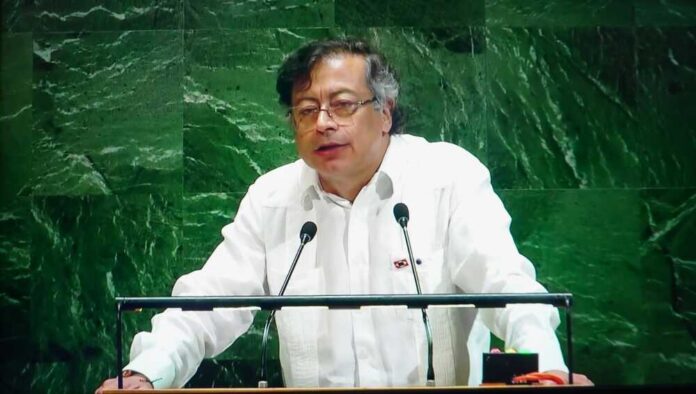
Petro then went far beyond calls for a recount. In comments reported by outlets following his posts on X, the outgoing president claimed Colombia’s election software had been hacked and that server “IP address changes” showed outside interference in the count.[3] He said this proved that others entered vote data into the system and then made an extraordinary leap: he publicly pointed the finger at the State of Israel, calling it “the only entity in the world” capable of such an operation.[3] Petro argued that he had warned years earlier that the private “Bautista brothers” software was vulnerable and said his request for a full audit before the vote was blocked.[3] A Oneindia news segment summarized his message as a charge that Israeli-linked actors helped swing the race to de la Espriella, fueling online outrage among his supporters.[1]
These claims land on top of Petro’s long and very public anti-Israel turn while in office. Over the past few years, he moved Colombia away from a strong security and trade partnership with Israel, a country that had supplied advanced weapons, technology, and farm know-how.[9] Analysts note that he suspended Israeli arms purchases, pushed to cancel the free trade agreement, and finally severed diplomatic relations altogether during the Gaza war.[8][9] Now, instead of taking responsibility for economic pain at home, Petro is using that same foreign villain narrative to cast doubt on his own country’s election. Yet so far he has not released system logs, forensic reports, or any hard technical proof to back up his claims; reporters who covered the dispute say he has raised suspicions “without providing evidence.”[5]
Observers Say Vote Was Transparent While Region Faces Election Trust Crisis
Colombian authorities and international observers are pushing back. The National Registry says its review confirms the preliminary and near-final tallies match almost perfectly, undermining the idea of large-scale digital manipulation. A statement from the European Union’s election observation mission, which tracked the process, describes the tally as “transparent, orderly, and smooth” and says samples of local tally sheets matched the paper ballots they checked. That mission reported no sign of hacking or systemic fraud and concluded it could “dismiss any manipulation of data” in both the fast preliminary count and the official tabulation. Earlier international assessments of Colombia’s election framework also stressed transparency and traceable procedures, with results managed in front of party representatives and judges.[8][13]
Petro’s reaction fits a broader pattern troubling democracies across Latin America. Researchers who studied elections in the region found that when losing candidates openly dispute results, their supporters’ trust in elections drops sharply, even when the process itself is sound.[19] Recent regional reviews describe “democratic backsliding,” where leaders weaken checks and balances and then cry foul when voters turn against them.[17] Another survey of 2025 elections in countries like Ecuador, Bolivia, and Honduras shows how losers often accuse fraud in tight races, feeding a crisis of faith in election institutions.[18] Colombia now risks joining that list, not because citizens rejected leftist policies—that is democracy—but because the outgoing president is teaching his base to see a normal loss as conspiracy.
Why This Matters For American Conservatives Watching Abroad
For many readers in the United States, this story feels familiar. A left-wing government that spent years pushing globalist alignments and “woke” foreign policy now refuses to accept a close but credible election defeat. Instead of respecting the process, Petro is attacking election software, foreign allies he already opposes, and the very institutions that counted the votes. International observers, including European teams that are hardly right-wing, say the system held and the count was solid.[13] Yet the narrative on parts of the left is that outside enemies stole the election. For conservatives who care about national sovereignty, secure borders, and honest ballots, Colombia offers a warning: when leaders blame foreign villains every time voters fire them, trust in elections erodes, and the door opens for more government control and less accountability.
Colombia’s tight race shows that, even in a region with real democratic strain, institutions can still work when votes are counted in the open and results are checked against paper records.[17] What is at stake now is whether those facts matter more than Petro’s storyline. If his baseless blame game sticks, it will deepen cynicism at home and feed a growing habit across the region: delegitimize any conservative win as “rigged,” no matter what the evidence says. Americans who value the rule of law and real elections should watch closely, because the same playbook often migrates north.
Sources:
[1] Web – Colombian President Refuses to Accept the Election Defeat of His …
[3] Web – Trump-backed political outsider wins Colombia election, initial … – …
[5] Web – Latest results from Colombia’s presidential runoff election show
[8] YouTube – LIVE: Polls Close in Colombia Presidential Runoff as Nation Awaits …
[9] Web – [PDF] PRELIMINARY STATEMENT – EEAS – European Union
[13] Web – What Happens When You Clean Up an Election
[17] Web – IRI Pre-Election Assessment Mission to Colombia’s 2026 …
[18] Web – [PDF] Report – OAS.org
[19] Web – Elections and democracy in Latin America: emerging trends