The Supreme Court’s latest campaign finance ruling shows why AI political speech will be the next First Amendment fight.
Quick Take
- The Court just struck down a federal limit on party spending done with candidates.
- That ruling leaned hard on the First Amendment and free speech logic.
- Legal research says AI-generated political content is often treated as speech, not mere conduct.
- Broad bans on synthetic campaign content look vulnerable, while disclosure rules have a better chance.
The Court Keeps Expanding Speech Protection
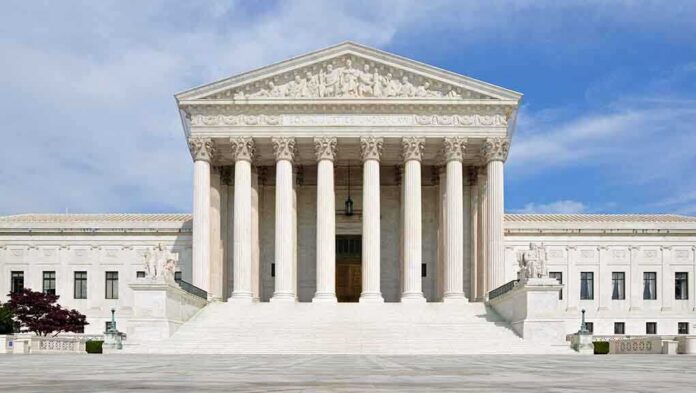
The Supreme Court ruled 6-3 that a federal law limiting coordinated party spending violates the First Amendment. The Court said political parties have a right to make unlimited independent expenditures during a campaign. That matters because the justices keep treating political activity as speech, not just behavior. For conservatives who have watched years of election rules pile up, the message is plain. The Court is still cutting back federal power over political speech.
The ruling does not decide any AI case directly. But it gives lower courts a clear signal about how the justices think. When the Court sees political expression, it starts from strong speech protection. That makes a broad ban on AI-generated campaign messages hard to defend. The research package also says AI-generated content is generally afforded the same First Amendment protection as human-made content, unless a narrower speech limit applies. That is the legal collision course now forming.
Why AI Campaign Ads Create a New Problem
AI changes the medium, not the basic fight. Legal and policy sources in the record say AI-generated political content is usually analyzed as speech covered by the First Amendment. They also say the government cannot simply outlaw speech because a machine helped produce it. That does not mean all AI election rules fail. It means lawmakers must work within narrow limits, especially if they want to stop deception without trampling lawful speech.
Several sources point to disclosure and disclaimer rules as the safer path. Those rules can tell voters who paid for an ad or whether a message used synthetic media. That is very different from a blanket ban on AI political content. The distinction matters. A disclosure rule aims at transparency. A ban targets the message itself. Under current doctrine, that difference often decides whether a law survives or gets struck down in court.
What the Research Says About the Weak Points
The record is strong on First Amendment theory, but weaker on a direct Supreme Court ruling about AI speech. The materials mainly extend older cases like Citizens United and campaign finance precedent into the AI setting. That leaves a gap. The Court has not yet issued a final ruling on generative AI in elections. So the law is still developing, and the exact line between protected expression and punishable deception remains unsettled.
That uncertainty gives both sides room to fight. Supporters of strict AI rules will argue that synthetic political media can mislead voters and poison elections. Critics will answer that the First Amendment does not stop protecting speech just because the source is new or unpopular. For now, the strongest legal point is simple. If a rule targets the content of political speech, courts will likely treat it with deep suspicion.
The Likely Next Front
The next big fight will not be whether AI matters. It already does. The real question is what kind of rule the government writes. A narrow label requirement may survive. A broad ban on AI campaign ads may not. Courts are already skeptical of laws that sweep too far and treat synthetic content as a special category outside normal speech rules. That makes this issue especially important for voters who want clean elections without more federal overreach.
For conservative readers, the stakes are obvious. If the government can silence political speech because it used AI, the same logic could spread fast. Today it is synthetic ads. Tomorrow it could be edited video, automated outreach, or any tool officials dislike. The Court’s recent campaign finance move shows it still values speech limits on government power. That same logic is likely to shape the AI debate when the next case reaches the justices.
Sources:
cnav.news, brennancenter.org, apnews.com, wsj.com, nbcnews.com, youtube.com, congressionaldigest.com, bclawimpact.org, legaljournal.princeton.edu