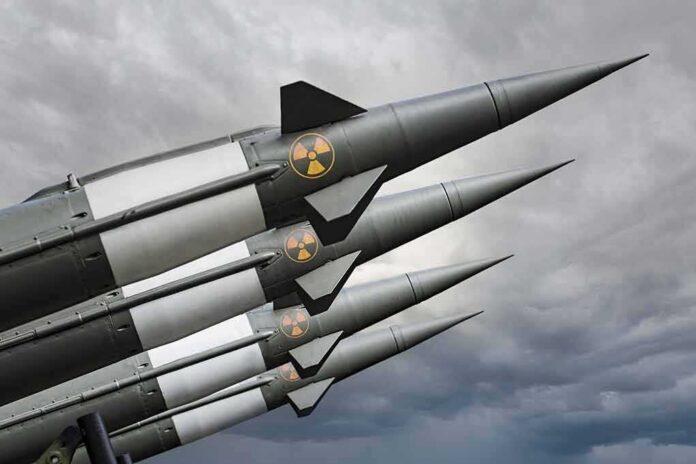
America’s missile-defense shield is being burned down faster than it can be rebuilt, and the slow replacement cycle is now the real warning sign.
Quick Take
- Center for Strategic and International Studies analysis says Patriot, THAAD, and other top interceptors were heavily used in the Iran fight.
- Replacements for several key missiles will take years, not months, under current delivery plans.
- Defense Secretary Pete Hegseth has said replenishment depends on the weapon system and can take “months and years.”
- Stockpile estimates vary, but multiple reports say the remaining inventories are tight and create readiness risks.
Missile Stocks Took a Hit in the Iran War
Reporting and analysis in July 2026 say the United States used large numbers of high-end interceptors during the Iran war, leaving key stockpiles badly strained. The strongest concern is not just the size of the drawdown. It is the time it takes to refill the magazines. Centers and news outlets say Patriot and THAAD inventories are down sharply, while the Pentagon has not released a full public accounting.
Center for Strategic and International Studies inventory work estimated that Patriot stocks fell from about 2,200 before the war to fewer than 827, while fewer than 278 THAAD interceptors remained after heavy use. Military Times said the Pentagon had used roughly 65 percent of its Patriot inventory, leaving fewer than 1,000 interceptors, and ABC News reported that a U.S. official described Patriot and THAAD stockpiles as “extremely low.” Those figures are estimates, but they point in the same direction: the United States spent down its most valuable defenses quickly.
Replacements Will Not Arrive Overnight
The bottleneck is industrial capacity. CSIS said Patriot, THAAD, and Tomahawk inventories will take three or more years to return to prewar levels under current delivery projections, while Standard Missile-3 and Standard Missile-6 replacements will take about two years. Hegseth’s own comment that replenishment can take “months and years” matches that picture, and it fits a wider pattern in defense manufacturing where specialized parts and slow production lines limit how fast the United States can recover.
That delay matters because the next crisis may not wait for factory schedules. Military Times said depleted inventories could create readiness problems if another major conflict breaks out before stocks recover. CSIS also warned that the United States faces a “window of vulnerability” while production catches up. For readers who want a strong military and a government that does not waste hard-won resources, the message is simple: firing expensive interceptors is easy; replacing them is not.
Why the SM-3 Claim Needs Careful Reading
The headline claim that the military spent “half its SM-3 stockpile” is not clearly proven by the source package. The material provided does show SM-3 in replacement timelines and stockpile discussions, and one CSIS piece says the Standard Missile-3 line has long lead times and limited delivery rates. But the supplied sources do not give a clean public inventory release showing that half of the prewar SM-3 stock was actually fired in this conflict.
Question for people much smarter than me:
Doesn’t it make sense for us to license Patriot missile production to Ukraine, considering our anemic production timeline?
As part of the deal, we could require Ukraine to sell some quantity to allies, who are similarly facing supply…
— Thaaat Colin (@ThaaatColin) August 8, 2026
That gap does not erase the broader story. It means the strongest documented case is about Patriot and THAAD depletion, plus the long rebuild time for the broader interceptor base. The public debate is being shaped by estimates, not full Pentagon disclosure, which leaves room for disputes over exact counts. Even so, the direction of travel is clear: the war consumed expensive munitions faster than the defense industrial base can replace them.
Sources:
19fortyfive.com, aljazeera.com, militarytimes.com, thehill.com, tandfonline.com, youtube.com