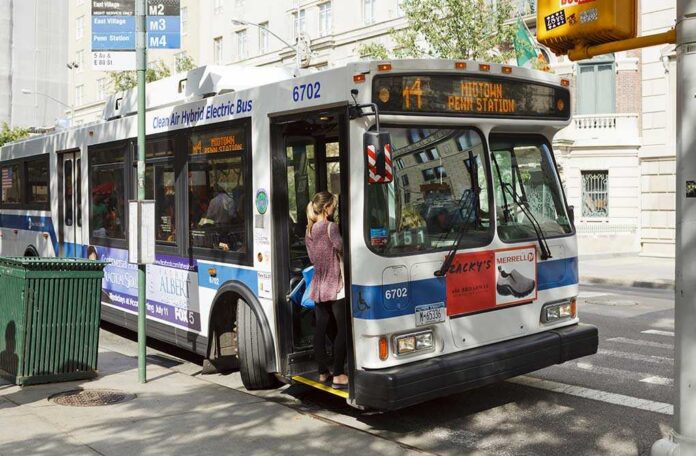
New York City bus riders say service is slow, crowded, and lawless—and the transit authority’s own data backs them up.
Story Snapshot
- MTA’s Fall 2024 survey showed only 53% bus rider satisfaction, citing waits, reliability, and crowding.
- Fare evasion on local buses hovered near 50%, draining revenue and fueling disorder, officials said.
- City and state reports documented sluggish speeds and poor on-time performance across many routes.
- Auditors flagged electric bus reliability and charging issues reducing service on planned routes.
MTA Riders Report Low Satisfaction and Real Pain Points
Metropolitan Transportation Authority leaders published survey results showing only 53 percent satisfaction among local, limited, and Select Bus riders in Fall 2024. Riders cited wait times, unreliable trips, and crowding as top complaints. Those numbers fell from the prior spring, signaling a slide in rider confidence and value. This is not a fringe gripe. It is the transit authority’s own measurement of customer experience, and it marks a system many New Yorkers feel is no longer working for them.
Transit is a basic promise: show up, pay a fair price, and get to work or home on time. When half the bus fills with people who skip the fare, that promise breaks for everyone. Metropolitan Transportation Authority leaders have called fare evasion the number one existential threat, with local-bus evasion around 50 percent, based on the agency’s data. Lost revenue means fewer buses, dirtier buses, and more frustration for the folks who do the right thing and pay.
Slow Speeds and Missed Schedules Undercut Daily Life
City reports found bus performance lagging on speed, reliability, and on-time rates. Average speeds have barely improved over a decade, keeping riders stuck on vehicles that crawl while their schedules slip. That means late arrivals to jobs, schools, and doctor visits. It also means more riders cancel plans or bail out to pricier options. When a core city service leaves one-third of buses off schedule on many lines, the harm compounds day after day for working families.
Public watchdogs tracked cancellations and bunching that make trips unpredictable. Riders judge the system by the whole door-to-door journey. They care about how long they wait, whether the bus actually comes, and if it is too crowded to board. Agency dashboards sometimes show “service delivered,” but that metric does not heal the wait at a dark stop on a cold night. Clear accountability requires matching what riders feel with what leaders measure.
Policy Choices and Technology Gaps Add to the Chaos
State auditors reported that battery electric buses faced reliability and charging problems. Those issues pushed the buses onto shorter routes and kept them out of service more than planned. The push to go green is fine when it works, but it must not strand riders. Reliability must come first. If new vehicles and chargers are not ready, agencies should fix them fast or keep proven fleets rolling until riders can count on a bus that starts, runs, and finishes its route.
Local debates over “free transit” made paying optional in practice, and culture followed policy. During and after the pandemic, messaging and lax rules taught people that fares were flexible, and many never went back. Now honest riders watch freeloaders stream aboard while service quality drops. That breeds anger and invites conflict on the bus. A civil city needs clear rules, fair enforcement, and safe operators who are not left to referee fights in a rolling free-for-all.
What Taxpayers and Riders Should Demand Next
Riders should expect shorter waits, reliable arrivals, and clean buses with open seats. Leaders can deliver that by linking funding to on-time targets, speeding buses with curb management and signal priority, and restoring order at the farebox. Smart enforcement should focus on repeat fare thieves and violent actors, not families scraping by. But the bottom line is respect for the people who pay. Without that, the system bleeds money and trust until it breaks.
https://twitter.com/15_bigmouth/status/2112057817813139642
New York needs transit that honors work and family. President Trump’s call for law and order aligns with restoring basic standards on public buses. That means real consequences for fare evasion, a pause-and-fix approach on unreliable green tech, and data that match rider reality. Start with safety, speed, and service you can set a watch by. Give riders value for the fare, and the bus stops being a battleground and becomes what it should be—a reliable way to live free and get ahead.
Sources:
mta.info, ny1.com, washingtontimes.com