
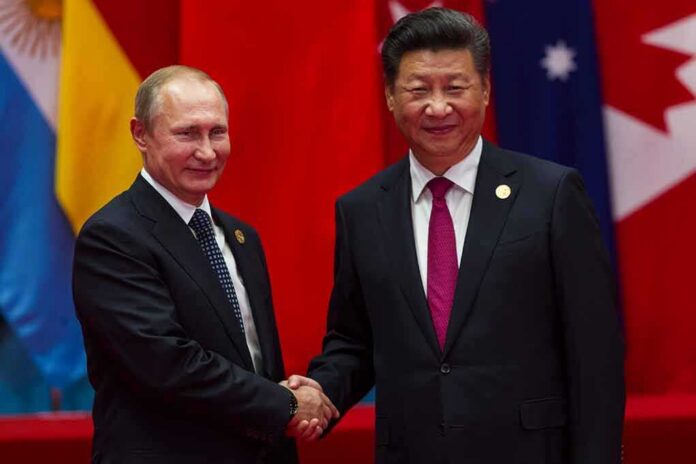
President Trump says he expects a first-of-its-kind meeting with Vladimir Putin and Xi Jinping in China to press denuclearization and end deadly wars.
Story Highlights
- Trump says he expects to meet Putin and Xi at the November APEC summit in Shenzhen.
- Denuclearization is a stated focus, along with live conflicts and security issues.
- The Kremlin says a three-way talk has been discussed on the summit sidelines.
- The dates align with the November 18–19 Asia-Pacific summit schedule reported by outlets.
Trump Signals Expected Shenzhen Sit-Down With Putin and Xi
Reuters reported that President Trump said he thinks he will meet Russia’s Vladimir Putin and China’s Xi Jinping during the Asia-Pacific meetings in Shenzhen on November 18–19. Trump said the talks would cover “a lot of things, including denuclearization.” He has also said he is open to a three-way format to discuss nuclear weapons and broader security. This would put American concerns at the center of the summit spotlight, rather than on the sidelines of rival agendas.
The expected venue is the Asia-Pacific summit in Shenzhen, which several outlets identified as the likely time and place for any leader-level engagements. Reports describe planning for meetings on the sidelines, where leaders often handle tough issues in shorter, focused sessions. That format lets the United States press nuclear risk reduction, deterrence, and conflict de-escalation without handing Beijing or Moscow control over the main stage.
Kremlin Acknowledges Talks About a Three-Way Meeting
Reuters also reported that the Kremlin said a three-way meeting involving Trump, Putin, and Xi had been discussed on the summit sidelines. That public statement matters, because it shows Moscow expects contact at the top level and is preparing for it. Such an acknowledgment puts pressure on Beijing to engage, and it sets a clear path for the White House to drive a tight agenda centered on U.S. security interests and regional stability.
Coverage traced the idea of a Shenzhen encounter through October and early November updates. Outlets described the same November window and the same possible summit setting, building a consistent picture of where this could happen. While no joint schedule is published yet, the independent match on dates and the Kremlin’s on-record nod both support Trump’s expectation. This creates space to press denuclearization talks and reduce immediate threats before winter escalations.
Agenda Focus: Denuclearization and Active War Zones
Trump named denuclearization as a core subject. That aligns with the need to check nuclear risk while conflicts continue in Europe and the Middle East. By putting nuclear issues on the table, the United States can test whether Russia and China will engage in practical steps, like clearer lines to avoid miscalculation and guardrails on the spread of advanced weapons. Even a narrow win on crisis channels would help protect Americans and our allies.
Trump: 'I'm going to be going to China, for meeting with President PUTIN & President XI
One of the things we'll be talking is denuclearization' pic.twitter.com/bNIhKsC7qg
— MAGA Girl (@MagaGirl009) November 9, 2026
Reports also connected the proposal to efforts to address the Ukraine war and other flashpoints. Meeting on the sidelines keeps the agenda flexible, but it also demands discipline. The White House can elevate what matters most to Americans: stop wars from widening, cut nuclear risk, and deter aggression. If Beijing or Moscow try to turn the session into a photo op, Washington can insist on concrete steps, or walk and make that choice public. Deterrence and clarity work together.
Why This Matters to U.S. Strength and Security
A face-to-face among the three nuclear powers has no modern precedent, which makes presence and message control vital. For conservatives, this is about peace through strength: use direct talks to lower risk while holding firm on American interests. Trump’s stated focus on denuclearization sets a clear test. Either Moscow and Beijing show movement toward safety measures, or they reveal they prefer theater over results. That contrast helps America rally allies and press ahead.
What to Watch Next
Watch for White House travel details, the Asia-Pacific host’s leader schedule, and any readouts confirming agenda items. Also watch signals from the Kremlin and China’s Foreign Ministry on timing and format. Even a short leaders’ huddle can produce real guardrails if the United States drives a tight list: crisis hotlines, no-use thresholds, and steps to stop advanced weapons flows to terror networks. If those pieces start to appear, Americans gain a safer world at lower cost.
Sources:
insiderpaper.com, reuters.com, euronews.com, yahoo.com