
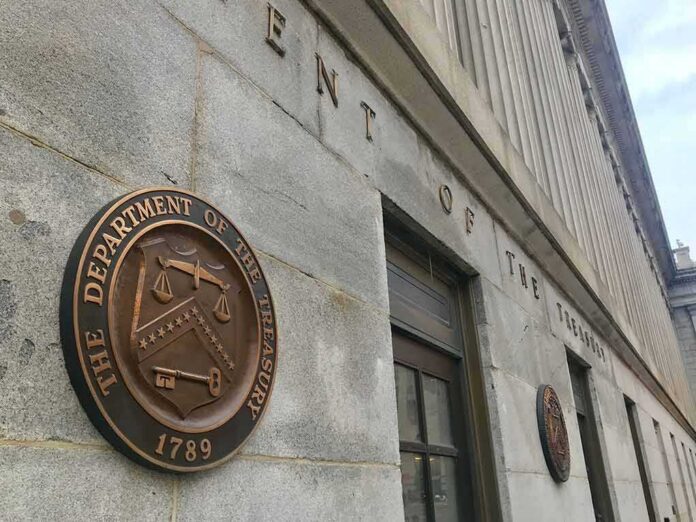
The Treasury Secretary moved onto a U.S. military base after Iranian threats targeted his life, underscoring how far Tehran will go to hit American officials.
Story Highlights
- Reports say Treasury Secretary Scott Bessent relocated to a U.S. military base after Iranian threats.
- Treasury says Bessent will keep leading the pressure campaign on Iran’s economy.
- U.S. officials assess Iranian plots against Americans have reached advanced stages.
- Past Justice Department cases show Iran-linked plots against U.S. targets and officials.
What Happened: Bessent Relocated After Threats Tied to Iran
The New York Times reported that Treasury Secretary Scott Bessent moved from his home to a U.S. military base after Iranian threats against his life. Reuters confirmed the report the next day, citing sources familiar with the matter. A Treasury spokesperson said Bessent will not be deterred and will continue his work to squeeze Iran’s economy through sanctions and financial tools. The department did not publish security details, which is standard for active protective measures.
U.S. officials assessed in recent weeks that Iranian plots against current and former American officials had grown more advanced. Reuters reported a memo from a senior intelligence official warning that lethal plots against American citizens had reached advanced stages. Those assessments included intelligence related to threats against Bessent, according to the reporting. These updates reflect a rising threat picture tied to Tehran’s network and its reach beyond the Middle East.
Why Bessent Is a High-Value Target for Tehran
Treasury under President Trump has pushed a hard line on Iran’s economy. Reports describe Bessent as a leading figure in the administration’s effort to isolate Iran financially. That includes sanctions and trade restrictions aimed at cutting the regime off from cash, technology, and banking channels. These steps strike at the core funding that Iran uses for its regional proxies and covert operations. That role makes the Treasury chief an obvious target for pressure and intimidation by hostile actors.
Treasury’s public stance is clear: the work continues despite threats. The spokesperson’s statement signaled no slowdown in the sanctions campaign. That message tells allies and adversaries that threats will not change U.S. policy. It also tells Americans that the administration prioritizes both security and mission. Protective moves, like relocation to a base, are designed to reduce risk while senior officials stay on the job. That balance is common when national security concerns spike.
Pattern of Iran-Linked Plots Against U.S. Figures
Public Justice Department cases show a record of Iran-linked plots against people connected to the United States. In 2022, the Department of Justice charged a member of Iran’s Islamic Revolutionary Guard Corps with plotting to murder former National Security Adviser John Bolton. In 2024, a federal jury convicted Asif Merchant, who admitted the Revolutionary Guard sent him to arrange political assassinations in the United States. These cases match a wider pattern of Tehran’s global targeting.
🚨 U.S. Treasury Secretary Scott Bessent has moved out of his Washington, D.C. residence and into a military bas following threats against his life linked to Iran.
A U.S. intelligence memo warned that Iranian plots targeting American personnel and citizens had reached advanced… pic.twitter.com/Lv4gPypp3L
— 𝐓𝐡𝐞 𝐄𝐦𝐩𝐢𝐫𝐞 𝐖𝐚𝐭𝐜𝐡 (@TheEmpireWatch) November 11, 2026
Earlier prosecutions add to that pattern. In 2011, Manssor Arbabsiar received a 25-year sentence for a plot to kill the Saudi ambassador on U.S. soil. The case tied back to Iranian actors, underscoring the regime’s willingness to strike far from home. These records do not prove the exact details of the current threat to Bessent. They do show that Iran and its agents have a history of planning violence against high-profile targets linked to U.S. policy.
What This Means for Policy and Security
The reported move places a spotlight on the stakes of financial warfare. When sanctions bite, hostile regimes push back. Bessent’s relocation shows the United States is treating the threat as real while refusing to pause pressure. The message to our readers is simple: keep the pressure on Iran, protect our officials, and back strong enforcement. That is how we defend American lives, hold a rogue regime in check, and keep faith with our national security priorities.
Sources:
townhall.com, reuters.com, politicalwire.com, the-express.com