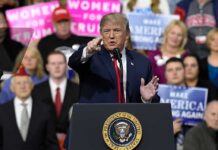
Trump’s birthright citizenship order ran straight into the Constitution, and the first wave of court fights made that clash unavoidable.
Quick Take
- President Trump signed Executive Order 14160 to narrow birthright citizenship for some U.S.-born children.
- The order targets children of parents who are unlawfully present or only temporarily present in the country.
- Courts quickly blocked enforcement as lawsuits piled up across multiple states.
- The Supreme Court heard the case in Trump v. Barbara and later ruled the order unconstitutional.
What Trump Ordered
President Trump issued Executive Order 14160 on January 20, 2025, and the text set out a direct challenge to the long-held reading of the Fourteenth Amendment. The order said some children born on U.S. soil would not count as citizens if their mother was unlawfully present or only here on a temporary basis, and if the father was not a United States citizen or lawful permanent resident.
That position rested on a narrow reading of the phrase “subject to the jurisdiction thereof.” The Congressional Research Service said the administration argued that children in those categories fall outside the Citizenship Clause, which means the White House was not treating this as a small policy tweak. It was a direct attempt to change who gets citizenship at birth.
The First Legal Wall
Within days, states, civil rights groups, and immigrant advocates filed lawsuits in federal court. Reuters reported that the administration’s directive was blocked while judges reviewed its legality, and the Associated Press said one federal judge called the order “blatantly unconstitutional” during the first hearing in a multistate case. Those early rulings signaled that the legal fight would be about the Constitution, not just immigration policy.
The opposition also pointed to settled precedent. Reuters reported that challengers relied on the Fourteenth Amendment and the Supreme Court’s long-standing birthright citizenship rule in United States v. Wong Kim Ark, which has shaped American law for generations. That history matters because conservatives who value the rule of law should notice what was at stake: a president trying to narrow a constitutional rule by executive order alone.
The Supreme Court Takes Over
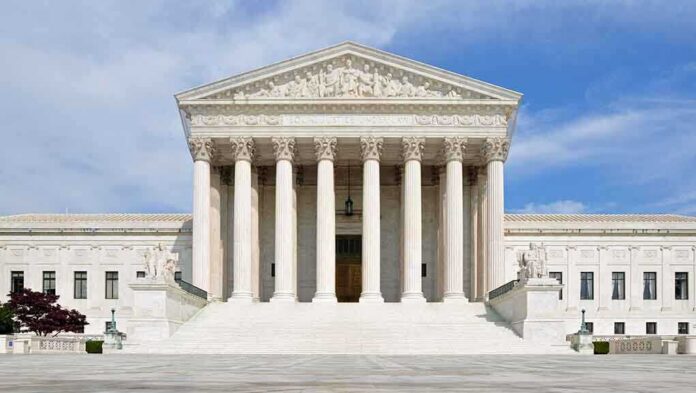
The case reached the Supreme Court in Trump v. Barbara, where the justices heard oral argument on April 1, 2026, according to the Congressional Research Service. The same summary says the Court reviewed whether Executive Order 14160 was constitutional under the Fourteenth Amendment and whether it was authorized by federal citizenship law. Reuters later reported that the Supreme Court rejected Trump’s bid to restrict birthright citizenship in a 6-3 ruling.
Your morning market news
– Scientists warn of “urgent” biosecurity concerns after AI successfully designs 16 new viruses capable of replicating inside cells
– Trump signs two executive orders to limit birthright citizenship
– FCC gets rid of limit on broadcast TV ownership
-…— TheStockGuy (@TheStockGuyTV) August 7, 2026
That outcome closed the door on the administration’s first major push to limit birthright citizenship through executive action. For readers frustrated by runaway government power, the case stands as a reminder that even a strong White House cannot rewrite the Constitution with a pen. The legal record in this fight shows a clear pattern: the order was challenged immediately, blocked repeatedly, and then struck down by the Supreme Court.
Why This Fight Mattered
This was never just about immigration optics. The administration framed the issue around unlawful presence, temporary visas, and what it called the meaning of American citizenship, while challengers said the order attacked a settled constitutional guarantee. The clash exposed a basic question that goes far beyond one policy: can the executive branch decide that some U.S.-born children do not count as Americans?
The early court decisions answered no, and they did so fast. Reuters, the Associated Press, and advocacy groups all reported that injunctions and temporary blocks prevented enforcement while the case moved forward. In plain terms, the government tried to redraw a bright constitutional line, and the courts put that effort on hold before it could take effect.
Sources:
reason.com, aclu-nh.org, reuters.com, en.wikipedia.org, bbc.com, aclu.org, congress.gov, aila.org