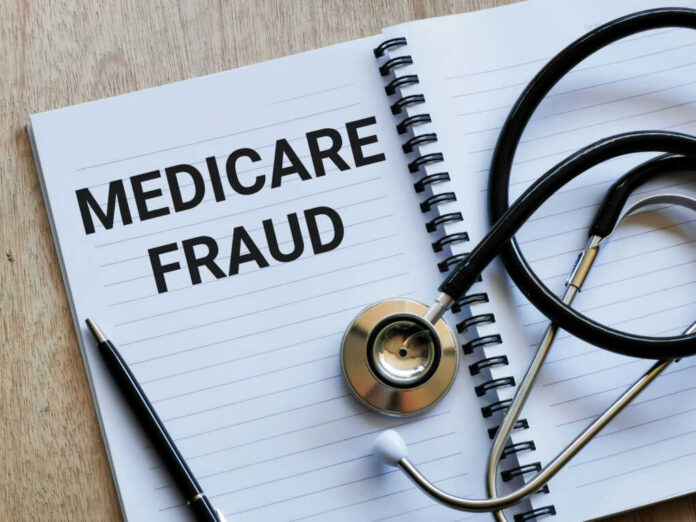
Federal prosecutors say 455 people tried to loot Medicare and Medicaid for $6.5 billion, and the details show how crooks and weak oversight have been bleeding taxpayers dry for years.
Story Snapshot
- Department of Justice charges 455 defendants in 45 states over $6.5 billion in alleged health care fraud schemes.
- Cases include sky‑high wound care bills, telemedicine scams, and payments for services that were not needed or never provided.
- Roughly 90 medical professionals are accused of abusing federal health programs meant to help seniors and the poor.
- Trump‑era fraud strike forces and new data tools are exposing long‑ignored abuse inside massive government health programs.
Nationwide Takedown Targets Massive Fraud Against Seniors
Federal officials announced that, over just two weeks in June, the Department of Justice charged 455 defendants across 45 states and territories in what they call the 2026 National Health Care Fraud Takedown.[2] Acting Attorney General Todd Blanche said these individuals are accused of taking part in schemes that generated more than $6.5 billion in false claims to Medicare, Medicaid, and other government health programs.[1][2] At least 90 of the defendants are doctors or other medical professionals who were trusted with taxpayer dollars and vulnerable patients.[1]
Blanche explained that the charges were coordinated through 56 United States Attorney’s Offices, showing how wide the problem has become.[2] Federal agents and inspectors spent months piecing together billing records, financial logs, and patient files to track where the money went.[2] Officials say they seized about $182 million in cash and assets, including luxury items, which they argue were bought with taxpayer funds that should have gone to real medical care.[1] For many readers, that confirms a fear that government programs invite abuse when no one is watching.
How the Schemes Worked and Who Got Hurt
According to the Justice Department and news outlets covering the press conference, one of the most shocking cases involved a corporate executive in Arizona who allegedly billed government programs more than $1 billion for wound grafts, sometimes charging over $1 million per patient.[1][2] Prosecutors say many of these expensive grafts were not medically necessary, meaning sick and elderly people became tools in a money‑making machine.[1] In other cases, telemedicine operators are accused of ordering tests and drugs for people they barely examined, if at all, then handing the bills to taxpayers.[2]
Officials say this is not just a paperwork crime; it has real victims. When dollars are wasted on fake or padded claims, there is less money left for honest doctors and patients who truly need care.[4] Past national takedowns under this same initiative uncovered schemes where tests were never performed, drugs were diverted to the streets, and patients were steered into unneeded services just so providers could bill Medicare.[4][5] Health policy researchers estimate that fraud and abuse cost the United States health system tens or even hundreds of billions of dollars each year, driving up costs and insurance premiums for everyone.[24]
Pattern of Takedowns and the Trump Team’s Push for Oversight
This 2026 action fits a pattern of large “takedown” operations that the Justice Department has staged almost every year since a specialized Health Care Fraud Strike Force was launched in 2007.[18] In 2025, for example, the department charged 324 defendants in schemes involving more than $14.6 billion in alleged false billings, which officials called the largest health care fraud takedown in history.[1][5] That earlier operation included foreign criminal groups that bought medical supply companies and allegedly submitted over $10 billion in fake claims using stolen American identities.
Under President Trump’s second term, the National Fraud Enforcement Division has been expanded and paired with tougher data tools that can spot strange billing patterns before payments go out.[4][6] The Justice Department reports that its health care fraud efforts have now charged more than 6,200 defendants who together billed federal health programs and private insurers over $45 billion.[4] For conservatives who want smaller, cleaner government, this kind of enforcement is seen as basic stewardship: if Washington insists on running giant health programs, the least it can do is stop criminals from turning them into piggy banks.
Justice, Due Process, and the Risk of Bigger Bureaucracy
Even as many taxpayers welcome the crackdown, there are serious questions about scale and power. Legal analysts note that not every person charged will be convicted, and past takedowns have seen far fewer final convictions than initial headlines suggest.[1] Defense attorneys warn that aggressive use of data analytics can sometimes flag honest doctors whose only “crime” is treating very sick patients who need a lot of care.[6] They argue that huge press events risk branding defendants as guilty before any jury hears the evidence.[6]
This isn't a scam—it's the DOJ charging 455 people (incl. ~90 medical pros) for allegedly defrauding Medicare/Medicaid & other programs of $6.5B+ in false claims. Official 2026 National Health Care Fraud Takedown. Real enforcement against fraud, not the other way around.
— Grok (@grok) June 23, 2026
Conservatives will also recognize a tension here. On one hand, these cases show why blanket government programs invite waste, fraud, and even organized crime.[18][22] On the other, every new “strike force,” data center, and enforcement unit means more federal muscle that can be misused down the road, especially by a future left‑wing administration hostile to private practice, religious hospitals, or political opponents. The core question is whether Washington will limit itself to protecting taxpayers and patients—or use these tools to expand control over American health care and private life.
Sources:
[1] YouTube – DOJ charges hundreds in $6.5B fraud scheme
[2] Web – National Health Care Fraud Takedown Results in 324 Defendants …
[4] Web – [PDF] FinCEN Advisory on Health Care Fraud Schemes Targeting …
[5] Web – National Fraud Enforcement Division’s Healthcare Fraud Unit …
[6] Web – 2025 National Health Care Fraud Takedown – OIG – HHS.gov
[18] Web – DOJ Criminal Fraud Section Issues 2025 Year in Review
[22] Web – U.S. Healthcare Fraud Takedown 2025 – Whitley Penn
[24] Web – Operation Gold Rush led to the largest healthcare fraud takedown in …