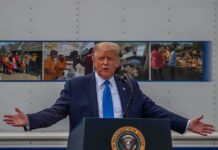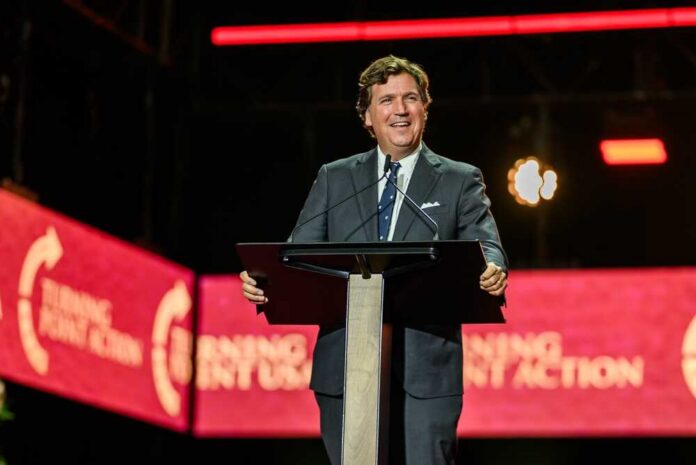
Tucker Carlson’s stunning claim that Donald Trump possesses “spellbinding” and potentially “supernatural” qualities has ignited a firestorm, raising questions about whether one of conservatism’s most influential voices has lost credibility while exposing deep fractures in the America First movement.
Story Snapshot
- Tucker Carlson describes Trump as having “spellbinding” and potentially “supernatural” qualities that weaken judgment and create compliance
- Carlson publicly breaks with Trump over Iran military action, calling the president a “slave” to Israeli interests
- Video evidence contradicts Carlson’s denial of making Antichrist comparisons about Trump
- The split highlights growing tensions between traditional conservatives and Trump’s foreign policy decisions
From Ally to Critic: Carlson’s Stunning Reversal
Tucker Carlson, once a staunch Trump supporter, has executed a dramatic about-face that sent shockwaves through conservative media. In a recent New York Times interview, Carlson described Trump as possessing qualities that literally cast a spell on those around him, making them more compliant and confused. The media personality characterized this influence as potentially supernatural, a bizarre departure from traditional political commentary. This metaphysical framing represents more than simple criticism; it suggests Carlson views Trump’s influence as fundamentally manipulative and possibly dangerous to those in his orbit.
The breaking point came in February when Trump decided to participate in military action against Iran alongside Israel. Carlson opposed this decision vehemently, stating publicly that he regrets supporting Trump and has become a vocal critic on his show. He characterizes Trump’s relationship with Israeli Prime Minister Benjamin Netanyahu as one of subordination, arguing the president acts as a “slave” to foreign interests rather than as a sovereign leader protecting American interests. For conservatives who elected Trump specifically to prioritize America First policies, Carlson’s accusation strikes at the heart of their frustrations with endless foreign entanglements.
Contradictions Undermine Credibility
The controversy deepened when Carlson denied referring to Trump as the Antichrist during his New York Times interview, despite video evidence showing him explicitly asking whether Trump could be the Antichrist. This contradiction raises serious questions about Carlson’s honesty and consistency, precisely the qualities his audience values most. When media figures who position themselves as truth-tellers engage in obvious contradictions, it feeds into broader public distrust of all institutions, including conservative media. The incident illustrates a troubling pattern where personalities seem more concerned with managing their image than maintaining intellectual integrity.
Foreign Policy Fractures Conservative Coalition
Carlson’s break with Trump over Middle East policy exposes a fundamental divide within the conservative movement. Millions of Americans across the political spectrum share growing concerns about U.S. entanglement in foreign conflicts that drain resources while domestic problems fester. The question of whether American presidents serve American interests or foreign powers resonates with citizens frustrated by a government that seems unresponsive to their needs. Carlson’s characterization of Trump as controlled by external forces, whether through Netanyahu’s influence or some metaphorical spell, taps into deep anxieties about who actually governs America.
https://twitter.com/GeorgeMentz/status/2051452403137085852
The “spellbinding” characterization itself warrants examination. While Carlson may have intended it metaphorically, the language suggests something beyond normal political charisma or persuasion. It implies a fundamental alteration of rational thinking among those exposed to Trump’s influence. Whether one supports or opposes Trump, framing political influence in supernatural terms represents a dangerous departure from reasoned discourse. Americans deserve commentators who explain political dynamics through facts and analysis, not mystical language that obscures rather than illuminates. As both left and right increasingly distrust establishment figures, incidents like this reinforce the perception that media personalities prioritize ratings and relevance over honest analysis of the issues affecting ordinary citizens.