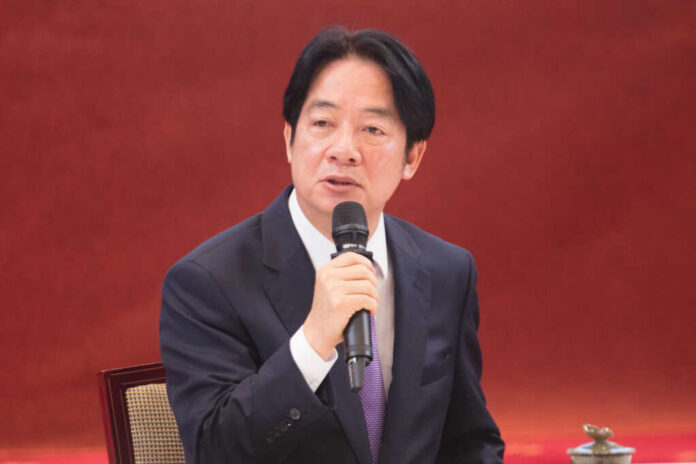
Taiwan’s president says he is “happy” to talk with Donald Trump just as Beijing warns against any such contact, turning a single phone call into a test of American resolve in the Pacific.
Story Snapshot
- Taiwan’s President Lai Ching-te publicly signaled he is ready and “happy” to speak directly with President Trump about security and regional stability.
- Trump has said he is preparing to talk with Lai while weighing a multibillion-dollar arms package for Taiwan, reviving hard questions about how America deters China without triggering war.
- Beijing insists such leader-to-leader contact violates its “one China” claim and has repeatedly warned Trump against actions that might “encourage independence.”
- For U.S. conservatives, the moment spotlights a choice between bowing to Chinese pressure or standing clearly with a democratic ally under threat.
Trump, Lai, and a Phone Call That Rattles Beijing
Reports from both American and Taiwanese outlets say Taiwan’s President Lai Ching-te has told his foreign ministry he is open and “happy” to speak directly with President Donald Trump on “related matters,” including security and the Taiwan Strait status quo. This comes as Trump publicly confirmed he is preparing to talk with “the person that is running Taiwan” as part of his decision on a major United States arms sale to the island.[1][2] A simple phone call has become a geopolitical earthquake.
For longtime readers, this will sound familiar. During Trump’s first term, his phone conversation with then‑President Tsai Ing-wen broke decades of diplomatic habit and infuriated Beijing, even though it lasted only minutes and focused on routine issues like trade and security. The uproar was never really about the call’s content. It was about symbolism: a United States president treating a freely elected Taiwanese leader as a legitimate counterpart, rather than a problem to be managed around Chinese sensitivities.
Strategic Ambiguity Meets Conservative Clarity
Since 1979, Washington has walked a tightrope called “strategic ambiguity,” recognizing Beijing diplomatically while keeping unofficial ties and defense commitments to Taiwan.[2] That structure was meant to prevent both a Chinese invasion and a unilateral Taiwanese declaration of independence. Every signal from the White House gets read by dictators in Beijing and voters in Taiwan as a clue to where America really stands. Public talk of a Trump–Lai call therefore matters less for its protocol than for the message it sends about deterrence and resolve.[2]
Conservatives watching this know exactly what is at stake. The same diplomatic establishment that spent decades selling out America’s manufacturing base to globalist trade deals now lectures Trump about not upsetting China over a simple conversation. Yet Taiwan buys United States weapons, shares intelligence, and stands as a democratic buffer in front of an increasingly aggressive Chinese Communist Party. When an ally’s president says he is eager to speak and warn that Beijing is destabilizing the region, that is not provocation; it is a reality check.
Beijing’s Red Lines and Xi’s Pressure Campaign
Chinese Communist Party leader Xi Jinping has repeatedly framed Taiwan as the “most important issue” in China–United States relations and warned that mishandling it could create a “very dangerous situation.” Chinese media amplify his line that “Taiwan independence and cross‑strait peace are as irreconcilable as fire and water,” language designed to make any high‑level United States–Taiwan contact sound like a march toward secession. From Beijing’s perspective, even a routine Trump–Lai call undermines its narrative that Taiwan is merely a domestic province.
That is why Chinese officials and state outlets push hard whenever Washington even hints at closer contact with Taipei. The strategy is simple: raise the cost of every American move, then rely on risk‑averse diplomats and corporate lobbyists to pressure the White House into backing down. We have seen versions of this before, when Taiwan trip itineraries or transit stops were quietly shelved after Chinese complaints, even as both sides publicly cited other reasons. The goal is to turn Beijing’s “red lines” into our rules, without a single vote in Congress.
Arms Deals, Negotiating Chips, and America’s Credibility
Trump has tied the potential Trump–Lai conversation directly to his review of a multibillion‑dollar weapons package for Taiwan, reportedly in the range of fourteen billion dollars and possibly larger over time.[1] Taiwanese officials have urged the administration to continue and expand arms sales to ensure “regional peace and security,” emphasizing that a well‑armed Taiwan makes war less likely, not more.[2] In parallel, Taiwan’s top envoy in Washington says defense talks with the United States remain active as the new deal looms.
Critics on the left accuse Trump of using Taiwan as a “negotiating chip” with China, pointing to his own description of arms sales as leverage in talks with Xi. But leverage is not a dirty word if it serves American interests and keeps an authoritarian rival off balance. The core question for conservatives is straightforward: does backing down on a simple leader‑to‑leader call, or on defensive weapons for a democratic partner, make the Pacific safer for Americans and our allies, or does it invite more coercion from Beijing?
What This Means for Conservatives at Home
For an audience exhausted by globalist games, this episode is a reminder that foreign policy and domestic strength are linked. A Washington class that shrugs at Chinese influence over our supply chains will happily accept Chinese vetoes over who the American president can talk to. A conservative approach says the opposite: defend our sovereignty, honor our commitments, and make sure our soldiers are never sent to fight wars made more likely by years of appeasement. Clear communication with allies like Taiwan is part of that.
US President signals possible talks with Taiwan President Lai
This as the Taiwan Strait remains a flashpoint in China-US relations
President Lai welcomes a possible Trump call@BislaDiksha has more on this pic.twitter.com/ynTB7rvbCI
— WION (@WIONews) May 21, 2026
Trump’s decision on whether to speak with Lai, and how firmly to back Taiwan’s defenses, will tell Beijing whether the United States under his second term still bows to “unwritten” diplomatic rules or stands unapologetically with self‑governing partners under threat.[1][2] For now, one thing is clear: Taiwan’s president is ready to talk, China is trying to stop it, and once again, it falls to an American president accountable to voters—not party elites—to choose which side of that line this country stands on.
Sources:
[1] Web – Trump says he’ll talk to Taiwan’s president amid arms deal … – …
[2] YouTube – Trump rattles ties with China after claiming he will speak …