A tiny toad that once shut down a “green” project has become the poster child for why the Trump administration is blowing up environmental red tape that strangled American energy for decades.
Story Snapshot
- Interior’s new National Environmental Policy Act framework moves most rules into a flexible handbook to cut years off project reviews.[1][2]
- Statutory deadlines for environmental reviews aim to end endless “lawfare” that blocked everything from pipelines to transmission lines.[1]
- Officials say core safeguards stay in place, but radicals already sue and scream “rollback” to protect their litigation gravy train.[3][5][7][8]
- Streamlined rules could speed both traditional and “green” energy, stopping obscure species fights from derailing national priorities.[1][5][6]
Interior’s Overhaul Targets Decades of Weaponized Environmental Red Tape
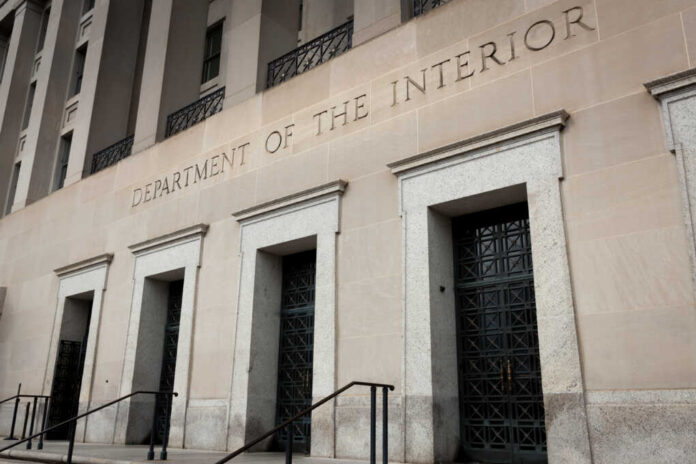
The United States Department of the Interior quietly finished one of the most consequential clean-up jobs in Washington: rewriting how it follows the National Environmental Policy Act, the law activists used for years to stall roads, pipelines, power lines, and even some renewable projects.[1][9] On February 24, 2026, the department adopted a final rule largely locking in a 2025 interim overhaul and shifting most procedures out of dense regulations into a streamlined Interior handbook.[1][2] Supporters say this finally puts elected leadership, not activist lawyers, back in charge of national energy policy.[5]
Interior’s own National Environmental Policy Act page explains that nearly eighty percent of its old regulations have now been rescinded and replaced with guidance in the new handbook. Legal analysts note that, instead of rigid one-size-fits-all regulatory text, the handbook gives officials practical tools and flexibility to tailor reviews to actual projects while still following the law.[1][2] For conservatives who watched judges and bureaucrats use National Environmental Policy Act process as a veto on American prosperity, that flexibility is not a bug; it is the overdue correction.[5]
Deadlines, Not Endless Delays, for Environmental Reviews
The new framework does something common-sense Americans assumed government already did: it sets real shot clocks for environmental reviews.[1] Under expedited procedures described by legal summaries, environmental assessments generally must be finished within about one year, and environmental impact statements within two years, with even faster timelines available in fee-supported expedited tracks.[1] Congress backed that structure by giving project sponsors the right to go to court if agencies blow the deadlines, ending the old game where bureaucrats could stall forever with zero consequences.[1]
Interior also kept and strengthened emergency authorities that let bureaus act quickly when life, property, or key resources are at risk, instead of forcing responders to wade through paperwork while communities suffer.[1][2] At the same time, the rule preserves tools like categorical exclusions, which allow truly low-impact actions to move ahead without years of study and litigation.[1][2] The National Park Service, for example, recently adopted dozens of categorical exclusions to speed routine work so staff and dollars are focused on genuine environmental issues, not duplicative forms.[6] That is exactly the kind of prioritization taxpayers have demanded for years.
Safeguards Remain While Analysis Refocuses on Real-World Impacts
Despite predictable left-wing talking points about “gutting” the law, the new system keeps core safeguards that prevent rubber-stamp approvals.[1][2][5] Interior’s press releases emphasize that the changes remove outdated and duplicative text while maintaining key requirements to consider environmental effects.[5] Applicants who help prepare environmental documents must certify the professional integrity of their work and disclose any financial interests in project outcomes, while Interior bureaus must independently verify the analysis before relying on it.[2] Multi-agency coordination rules are preserved, keeping states, local governments, tribes, and experts at the table instead of sidelining them.[1][9]
The handbook also brings National Environmental Policy Act analysis into line with recent Supreme Court guidance on causation, focusing reviews on effects that are reasonably foreseeable and have a close causal link to the federal decision.[2][9] That means officials are no longer pressured to speculate about every hypothetical ripple effect activists can dream up in court filings. Critics argue that this narrower focus may omit some indirect impacts, but they have not produced concrete cases where the new approach has already allowed real-world environmental harm.[2][7][8] What it clearly does is stop the practice of using worst-case speculation as an excuse to paralyze projects Americans need.
Energy Projects, Lawsuits, and the Battle Over Who Sets Priorities
As soon as the final rule landed, the usual environmental groups and allied media blasted it as an illegal “clawback” of protections and a threat to endangered species.[3][7][8] Commentators complain that some environmental assessments will not automatically come with Federal Register notices and monthslong comment periods, even though National Environmental Policy Act itself never required that much process.[3] They also warn that expedited timelines could strain staff and compress analysis windows, but they offer no staffing data or case studies showing that quality has actually slipped.[1][8] Their anger seems aimed less at defending nature and more at preserving a litigation model that has delivered them influence and fundraising for decades.
Public Employees for Environmental Responsibility (PEER) filed a lawsuit Monday against the Department of the Interior (DOI) in the US District Court for the District of Columbia on Tuesday, more than two months after the group filed multiple Freedom of Information Act (FOIA)… pic.twitter.com/sZPYjIhKwo
— Kimiyah 💋 (@boujiebaddie) May 12, 2026
For everyday Americans, the stakes look very different. Families who have lived through rolling blackouts, soaring utility bills, and blocked infrastructure know that an endangered toad or obscure plant is often just the excuse used to stop projects that would deliver reliable power and good jobs. The Trump administration’s own messaging makes clear that National Environmental Policy Act is supposed to be a procedural law that informs decisions, not a weapon to stop them.[5] By cutting green tape while keeping real safeguards, Interior’s new rules give the United States a fighting chance to build pipelines, transmission lines, mines, and even responsible renewable projects without letting fringe activists hold the entire country hostage.
Sources:
[1] Web – Department of the Interior Finalizes NEPA Procedures – WilmerHale
[2] Web – Department of the Interior Finalizes Major Overhaul of NEPA …
[3] Web – Interior claws back NEPA regs – E&E News by POLITICO
[5] Web – Trump Administration Delivers Historic NEPA Reform, Unleashing …
[6] Web – National Park Service Expands Use of Streamlined Environmental …
[7] Web – Interior Department revokes environmental regulations established …
[8] Web – Interior’s review rollbacks: Why we shouldn’t trade long-term …
[9] Web – Agencies Significantly Narrowed NEPA Requirements, Changes …