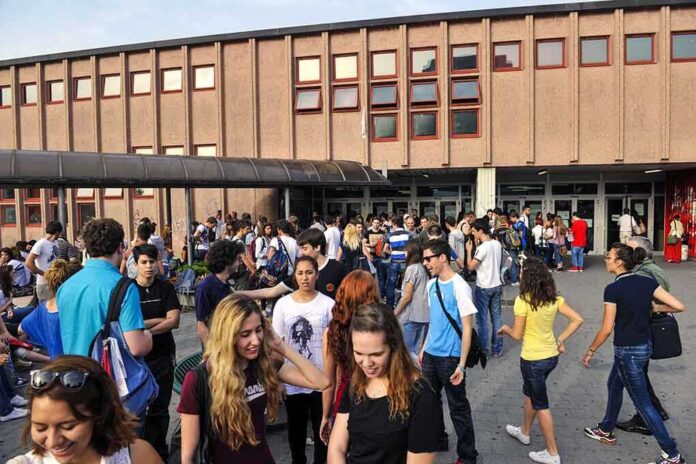
Paris high schools are shutting down as fires, blockades, and clashes erupt over crumbling classrooms and missing teachers.
Story Highlights
- Hundreds of French schools have closed or suspended classes amid violent student protests.
- Students cite overcrowding, teacher shortages, and rundown buildings as core grievances.
- France’s government admits problems but blames far-left agitators for “urban violence”.
- Officials report dozens of injured staff and multiple schools burned or ransacked.
What Sparked the School Uprising in Paris
Wire reports say the protest wave began in the Paris region and spread fast to hundreds of high schools. Students say classes are packed, teachers are missing, and buildings are falling apart. One student described classes of 35, missing chairs, and lunch lines too long for a one-hour break. The outcry also points to long school days and lack of nurses or support staff. These are not one-off complaints; closures and blockades have hit campuses across France.
Concrete examples back up the claims. At a named school, parents and teachers said classes in core subjects were canceled due to missing teachers. Reports describe prefab rooms with bad heat control and windows that do not open. During heat waves, students say rooms top 30 degrees Celsius. In winter, some rooms reportedly drop near 13 degrees Celsius. These conditions make learning harder and fuel anger at years of underinvestment in facilities and staffing.
How Wide the Disruption Reached
Government figures and media tallies show the scale. France’s education minister said 400 to 500 high schools would be fully or partly suspended because security conditions were not met. Officials directed schools to hold remote classes when blockades made entry unsafe. Reuters reported protests reached 356 high schools as the clashes intensified. That reach suggests a national problem, not a single district dispute.
The unrest brought serious damage and harm. Reuters reported that 24 schools were burned or ransacked and that 78 teachers had been injured. Those numbers, shared by the education minister, moved the government to crisis meetings and new staffing plans. The harsh scenes—burning bins, barricades, and fireworks near schools—also risk drowning out the students’ resource claims and focusing attention on public order instead.
What Macron’s Government Is Saying and Doing
President Emmanuel Macron said high schools should be open to share knowledge, not blockaded or set on fire. He said he hears the anxiety and anger but that none of the fears justify violence. The education minister said far-left activists hijacked the movement and called the violence “unspeakable.” The government condemned “urban violence” while acknowledging that difficulties in high schools must be addressed.
🇫🇷 JUST IN: Massive student-led protests continue across France over education funding and school conditions.
France’s Interior Ministry estimates around 266,000 people demonstrated nationwide, including roughly 56,000 in Paris. pic.twitter.com/xqfJRjdX4h
— RIC News (@RIC_inform) October 7, 2026
Officials announced steps to fill unfilled posts and prioritize long teacher absences, and they urged remote teaching where needed. Yet students and parents argue this response comes after years of neglect. Reports describe a lack of nurses, counselors, and social workers, plus failing buildings and overcrowded classes. The gap between promises and daily reality keeps anger high and invites more turmoil if fixes stall again.
Why This Matters to American Readers
France’s turmoil is a warning. When big government centralizes education, families can lose control, and problems pile up. Overcrowding, missing staff, and crumbling buildings are the natural result of bloated systems that spend more but deliver less. The Organisation for Economic Co-operation and Development shows France spends a large share of its economy on schools, yet students do not see results in safe, working classrooms. Spending without accountability fails kids.
American parents know this pattern. Bureaucrats promise fixes after a crisis but ignore root causes—lack of transparency, weak discipline, and zero accountability. Order breaks down. In Paris, even the government admits legitimate grievances while police battle street fires and blockades. Real reform means putting students and families first, enforcing the law, and demanding results from every euro or dollar spent. Anything less invites the same chaos here at home.
What Comes Next in France
Authorities plan to keep schools open where possible, push remote classes during blockades, and speed up hiring to fill vacancies. Those steps may ease pressure if they reach classrooms fast. But students point to years of delays and temporary fixes that never stuck. If safety improves but the resource crisis remains, protests could flare again. The choice is between visible repair and accountability now, or rolling unrest that harms learning for another year.
For now, Paris is on edge. Teachers and police are recovering from injuries. Parents want calm and clear solutions. Students say they will not accept crowded rooms, broken windows, and long days that do not deliver results. France can restore order and fix schools at the same time—but only with firm leadership, honest numbers, and urgent repairs that students can see and feel in every class.
Sources:
youtube.com, reuters.com, dw.com, france24.com, lbc.co.uk, bbc.co.uk