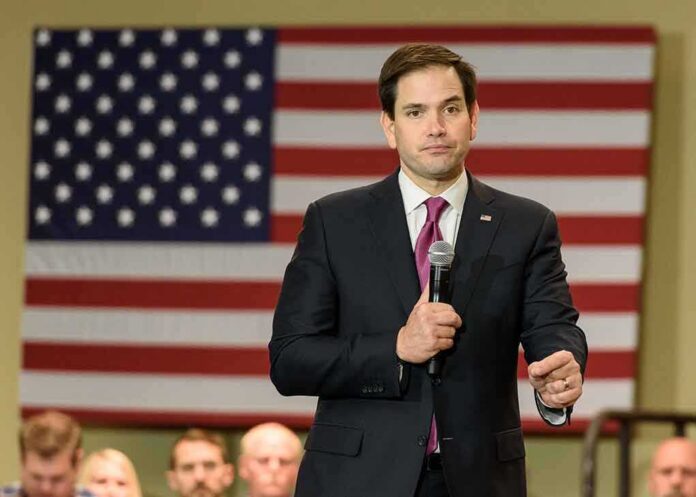
As flight delays, bank glitches, and tech outages rattled Americans, Secretary of State Marco Rubio said there was “zero evidence” the events were connected — and Tucker Carlson lit into that claim.
Story Highlights
- Rubio told reporters the Microsoft, aviation, and banking issues were “completely unrelated.”
- The White House relayed intelligence leaders saying there was no coordinated cyberattack.
- Tucker Carlson challenged the rush to dismiss a broader threat and pressed for proof.
- Experts say clustered outages can stem from separate failures, but the public wants transparency.
Rubio’s Categorical Denial Of A Link
Secretary of State Marco Rubio addressed reporters in Manila on November 18 and said there was “zero evidence whatsoever” tying the recent outages together. He stated that the Microsoft problem “has nothing to do” with the aviation disruption, and that the aviation issue was separate from banking glitches. He framed the events as isolated technical failures with distinct causes and said all available evidence pointed that way. He did not release supporting forensic records.
The administration backed up Rubio’s message through a White House note relaying intelligence. Director of National Intelligence Jay Clayton was cited as saying the incidents were not a cyberattack and not a coordinated state action. The line from the administration aimed to calm fears of a planned strike. It emphasized timing does not prove connection, and that early reviews did not show shared attackers or a master plan.
Tucker Carlson’s Push For Answers
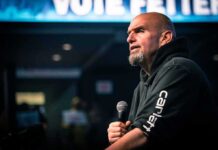
Tucker Carlson highlighted the cluster of disruptions and asked why leaders ruled out links so fast. His program walked through outages touching aviation, banks, and big tech, as well as the pressure on critical systems Americans use each day. Carlson questioned assurances that the events were unrelated and pressed for evidence. His episode did not claim to prove a connection but argued the public deserves clear records and not just talking points.
On Carlson’s show, former National Counterterrorism Center Director Joe Kent argued the scope and timing made quick dismissals hard to accept. He said that with events across sectors, it is “really hard to say” there is no relationship without deeper proof. Carlson placed the debate in the context of global conflict and the race in artificial intelligence. The segment credited the administration’s statements but urged transparency to match the confidence.
What We Know — And What We Do Not
Rubio’s core claim rests on the absence of evidence that ties the outages together, not on public release of root-cause reports. He said each incident had its own cause, but he did not cite named forensic teams, logs, or indicators seen by the public. The White House echoed a similar posture based on intelligence briefings. These statements may be accurate, but they leave citizens asking for the documents that would close the loop.
Independent experts say many outages come from change errors, vendor issues, or aging systems rather than attacks. They also say today’s networks are deeply connected, so several failures can cluster in time without a single hand behind them. That pattern has happened before, including the large global disruption sparked by a faulty software update in 2024. Still, the unusual pace of outages this month makes people want clear, testable proof.
Why Transparency Matters For Trust
Americans need power, planes, banks, and data systems to work. When they do not, families pay the price in time and money. A fast denial without shared evidence can feel like spin, even if it is right. The administration can meet both goals: calm fears and show its work. Releasing non-sensitive timelines, root-cause summaries, and confirmation that separate teams reached separate conclusions would honor the public and strengthen trust.
Conservatives want secure borders, strong families, fair prices, and safe infrastructure. They also want a government that levels with them. Rubio’s words may prove true, and Americans will welcome that. But the bar for proof should match the stakes. Publish the declassified findings that show no shared code, no common supplier fault, no repeated indicators across networks. That simple step backs the claim and denies bad actors the fog of confusion they exploit.
Sources:
afp.com, state.gov, jen.jiji.com, the-independent.com, kmph.com, thehill.com, datacenter.uptimeinstitute.com