
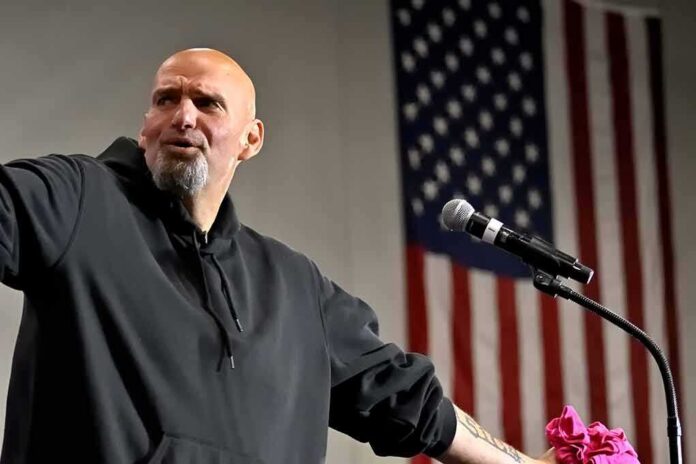
Sen. John Fetterman says there’s no “common ground” with the far left on Israel, underscoring a stark Democratic split as a socialist challenger pushes sanctions and an end to U.S. military aid.
Story Snapshot
- Fetterman rejects common ground with the Democratic far left on Israel policy.
- Fetterman backs aid to Israel as part of a democracy-defense package with Ukraine and Taiwan.
- Challenger Ahmed Moor seeks to end U.S. military aid and impose sanctions on Israel.
- Fetterman’s office says cutting support without disarming Hamas would strengthen Hamas.
Fetterman Draws a Line with the Far Left on Israel
Sen. John Fetterman said he no longer sees any common ground with the far left on Israel, marking a clear break inside the Democratic Party. The remark came as debates over Israel policy intensified and as a primary challenger emerged. Fox-linked reporting quoted Fetterman saying he has a strong difference of opinion on Israel and the Jewish community and does not expect future common ground. The statement signals a hardened stance, not just a passing dispute, within Democratic ranks.
Fetterman’s posture reflects a broader Senate framing that links support for allies to defending democracy. In a January 18, 2026 statement, he backed aid for Ukraine, Israel, and Taiwan, saying passage would send a clear signal to adversaries. He said his vote would be yes, underscoring that Israel support sits within a wider security package that targets global threats and deters hostile regimes. This ties Israel aid to a larger peace-and-security rationale, not a single-country carveout.
The Policy Clash: Aid and Sanctions in Sharp Relief
Fetterman’s official Senate page argues that cutting or conditioning aid without first disarming Hamas would strengthen the terror group. That view sets a security test for any shift in support. It also pushes back on efforts to throttle weapons flow before Hamas is neutralized. The position does not detail dollar amounts or oversight steps, and it does not spell out humanitarian or legal conditions. Those gaps leave room for future debate over guardrails and reporting.
Ahmed Moor, a Gaza-born Democratic socialist, is running a primary challenge centered on ending U.S. military support to Israel and imposing sanctions. Reporting describes his aim to withdraw military aid and use penalties until Palestinians gain equal rights, citing the anti-apartheid model against South Africa as a guide. Moor frames U.S. taxpayers as implicated in Israeli policy and argues the system serves powerful interests, linking foreign aid to kitchen-table stress at home.
What Fetterman Said about His Challenger—and What Is Documented
Reporting says Fetterman called Moor “pro-Hamas,” pushing a sharp moral line in the debate. The available accounts tie this to Moor’s stated views about Israel and sanctions, but they do not present a direct Moor quotation endorsing Hamas or its attacks. That means the label sits as Fetterman’s characterization, while Moor’s documented platform centers on ending aid and adding sanctions rather than praising Hamas. Readers should track fuller records if new evidence emerges.
The rift arrives as Democrats face rising internal pressure over Israel and Gaza. Coverage notes that activists and some primary voters favor cutting or conditioning support, while Fetterman stands firm behind Israel’s military campaign against Hamas. The dispute is not only rhetorical. It is about whether Washington keeps arms flowing to a core ally under fire or uses U.S. leverage to force changes on the ground. That choice will test party unity as 2028 approaches.
Why This Matters for Security, Spending, and American Strength
For many conservatives, the stakes are simple: allies must know America keeps its word, and terrorists must know we will not reward them. Fetterman’s vote pledge on allied aid tracks that principle by grouping Israel with Ukraine and Taiwan to deter hostile regimes. Moor’s plan would pull military aid and add sanctions, which would likely weaken Israel’s deterrence and embolden Iran’s network. That outcome would invite more chaos and higher long-term costs for U.S. security.
𝐅𝐄𝐓𝐓𝐄𝐑𝐌𝐀𝐍 𝐎𝐍 𝐇𝐈𝐒 𝐆𝐀𝐙𝐀-𝐁𝐎𝐑𝐍 𝐏𝐑𝐈𝐌𝐀𝐑𝐘 𝐂𝐇𝐀𝐋𝐋𝐄𝐍𝐆𝐄𝐑: 𝐈𝐑𝐀𝐍 𝐊𝐍𝐎𝐖𝐒 𝐃𝐄𝐌𝐎𝐂𝐑𝐀𝐓𝐒 𝐖𝐎𝐍'𝐓 𝐇𝐎𝐋𝐃 𝐓𝐇𝐄𝐌 𝐀𝐂𝐂𝐎𝐔𝐍𝐓𝐀𝐁𝐋𝐄
Sen. John Fetterman just got his first announced 2028 primary opponent: Ahmed Moor, a Gaza-born,… pic.twitter.com/VJEPEaAAen
— M.A. Rothman (@MichaelARothman) November 15, 2026
The facts also show this is not only about foreign policy. When Washington projects strength, energy prices, trade routes, and family budgets face fewer shocks. When America wavers, crises grow, and costs hit home. Congress will now face a clear test: back a proven ally fighting a terror army, or signal retreat while hoping sanctions change hardened actors. Fetterman chose the first path. Moor wants the second. Voters will decide which road better protects American families and our friends abroad.
Sources:
facebook.com, forward.com, jewishchronicle.timesofisrael.com, fetterman.senate.gov, rawstory.com