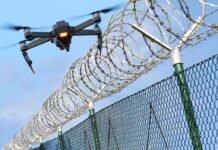
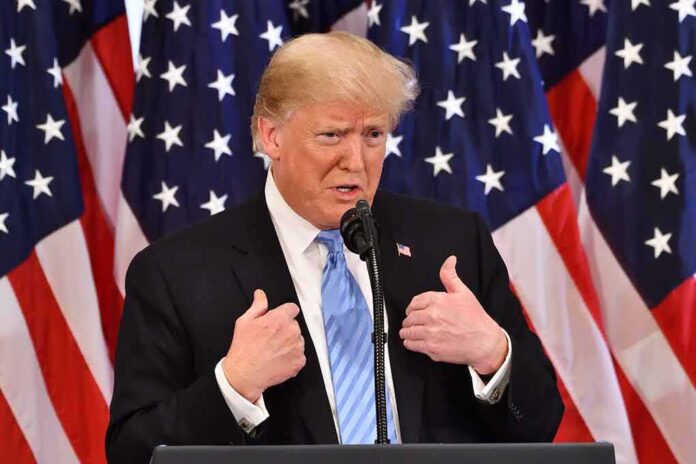
A reported Iranian explosive-drone plot targeting President Trump triggered emergency security moves and fresh vows to defend America’s leaders.
Story Highlights
- Israeli media reported Mossad shared intelligence with the Central Intelligence Agency about an Iranian drone plan aimed at Trump and senior officials.
- U.S. officials reportedly tightened security and reduced some public exposure after the warning, including moving certain leaders to secure facilities.
- The United States has previously charged an Iran-linked operative in a separate plot to kill John Bolton, citing revenge for Qasem Soleimani’s death.
- Key details and official confirmation of the drone plot remain undisclosed, while Iran publicly denies any plan to target Trump.
DHS Secretary Mullin addresses the reported assassination warning
Homeland Security Secretary Markwayne Mullin responded after Israeli media reported that Israel’s Mossad warned the Central Intelligence Agency about a possible Iranian explosive-drone plot targeting President Trump and top U.S. officials. The report said intelligence sharing occurred through established channels. It also said a senior-level meeting took place while the warning was assessed. Mullin emphasized ongoing vigilance, stating that threats from hostile regimes will be met with strong protection for the President and his team.
Reports said U.S. leaders took the warning seriously. Some officials were moved onto secure military facilities, and certain public events were scaled back to limit exposure while teams reviewed the risk. Protective steps do not prove a plot is real. But they do show how agencies act when the threat picture spikes, even with gaps in detail. The aim is simple: keep the Commander in Chief and senior officials safe while intelligence gets checked and verified.
What the intelligence reports claim and what is still unknown
Israel Hayom’s account, echoed by several outlets, alleged that Iran planned to use explosive-laden drones against President Trump and senior figures. It cited unnamed Israeli and American officials and noted that another Western service reached a similar view, though that point lacked independent verification. The public record still has no disclosed timeline, target locations, drone type, or cell members. The White House and the Central Intelligence Agency have not publicly confirmed those specific details.
Reuters reporting, summarized in later coverage, said U.S. intelligence could not verify some earlier Israeli warnings about plots against Trump, a history that tempers confidence in new claims until corroboration appears. At the same time, officials must act on credible-sounding warnings, even when fragments are missing. That balance—move fast to protect lives, but be careful about thin sourcing—defines this moment. The precautionary posture can be right even when evidence remains incomplete.
Iran’s denials and the track record that still worries U.S. officials
Iran’s leaders publicly denied any plan to kill President Trump. Iran’s president said there was “none whatsoever,” and the foreign ministry rejected claims that Tehran intended such an action. Those denials exist alongside a separate, documented case. In 2022, the United States charged Shahram Poursafi, described as tied to Iran’s military apparatus, with plotting to kill former National Security Advisor John Bolton, allegedly in revenge for Qasem Soleimani’s 2020 death. That case shows a real pattern U.S. officials must weigh.
The Bolton plot indictment, supported by court filings and statements, is not proof of a new drone scheme against Trump. But it does show the regime’s willingness to consider violence abroad to settle scores. That context explains why Secretary Mullin and security teams are not shrugging off warnings. The stakes involve the President’s life and national stability. Protecting American leaders against foreign terror plans is not politics—it is a core duty of government in dangerous times.
What comes next: verification, deterrence, and constitutional duty
U.S. agencies will press to validate or debunk the drone claim through classified collection and partner sharing. Congress can seek briefings and demand careful transparency that does not burn sources. If facts harden, deterrence must be clear and credible. If the plot remains unproven, the lesson is still urgent: foreign enemies test our defenses and our will. Americans expect limited, effective government that protects liberty, secures borders, and keeps our leaders safe without feeding panic.
For now, the prudent course is steady vigilance and facts first. The administration’s security steps signal resolve without overreach. Iran’s denials are on record, and the Bolton case is in the docket. Intelligence will either confirm parts of this story or it will not. Until then, the mission stands: defend the Constitution, shield elected leaders, and show adversaries that America is alert, united, and ready to respond to any strike at our sovereignty.
Sources:
ibtimes.co.uk, cnbc.com, thejewishedition.com, x.com, economictimes.indiatimes.com