Michelle Obama’s decision to skip Jesse Jackson’s Chicago memorial—while nearly every major Democrat showed up—has reignited questions about who still feels bound by public duty and who doesn’t.
Story Snapshot
- Rev. Jesse Jackson’s March 6, 2026 memorial in Chicago drew top Democratic figures, including Barack Obama, Joe Biden, and Bill Clinton.
- Reports said Michelle Obama did not appear to attend, despite long-standing personal and political ties between the Obamas and Jackson.
- Michelle Obama has previously said she is intentionally opting out of “supposed to attend” events like funerals and inaugurations.
- Trump, now President, did not attend due to scheduling but sent a video tribute through the White House.
Chicago memorial highlights a stark attendance contrast
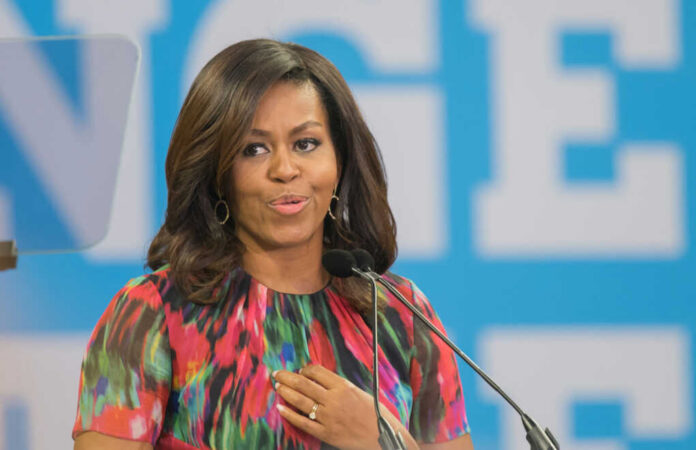
Chicago’s South Side memorial service for Rev. Jesse Jackson on March 6 brought together a familiar lineup of Democratic power players. Former President Barack Obama attended and delivered remarks praising Jackson’s influence, while former Presidents Joe Biden and Bill Clinton also participated alongside other prominent Democrats. Against that backdrop, multiple reports indicated former First Lady Michelle Obama did not appear to be present, an absence that stood out because the event took place in the Obamas’ hometown and centered on a figure they publicly credited as formative.
The service underscored how Jackson remained a unifying symbol for the Democratic establishment even after years of shifting coalitions and cultural disputes. Jackson’s history as a protégé of Martin Luther King Jr. and as a two-time presidential candidate made him a key figure in the modern political era. The visible presence of national politicians signaled respect for that legacy. Michelle Obama’s absence, however, became the headline because it contrasted sharply with the “full attendance” optics Democrats often value.
What we know—and what remains unconfirmed—about Michelle Obama’s absence
Reports described Michelle Obama as skipping the service, and noted her office was contacted but did not provide a public explanation in the coverage cited. That matters for readers trying to separate confirmed facts from social-media speculation: the reporting focus is not on a stated reason, but on the lack of one. Without an on-the-record statement specific to this memorial, the public is left to interpret the decision through prior comments she has made about stepping back from expected appearances.
That interpretive gap is where rumor cycles typically thrive, including renewed chatter about the Obamas’ marriage based on reduced joint appearances in recent years. Michelle Obama has pushed back on that type of narrative before, emphasizing privacy and the idea that, at this stage of life, she chooses what to attend rather than following an expectation script. In other words, the strongest factual support in the available material points to a deliberate scheduling philosophy, not to any single confirmed personal or political dispute connected to Jackson’s memorial.
A pattern: opting out of “supposed to attend” political rituals
Michelle Obama’s absence at the Jackson memorial fits a pattern described in earlier reporting: she skipped President Trump’s 2025 inauguration and also missed former President Jimmy Carter’s funeral the same year. She later characterized those choices as intentional, describing a decision “to stay put and not attend funerals and inaugurations.” For many Americans—especially those who treat civic rituals as part of leadership—this raises a straightforward question: if public figures can opt out whenever they feel like it, what exactly is the standard for public service after leaving office?
Conservatives tend to see this through a common-sense lens. Nobody is compelled to attend a memorial, and the Constitution doesn’t require it—but public trust is built on consistency and accountability, not carefully curated appearances. When Democrats and their media allies lecture everyday Americans about “norms,” “institutions,” and “threats to democracy,” these moments stand out: the political class demands obligation from citizens while allowing itself maximum flexibility. The reporting does not prove hypocrisy, but it does document a visible double standard in expectations and optics.
Trump’s video tribute and the politics of public respect
President Trump did not attend the memorial in person due to scheduling, according to the reporting, but the White House sent a video tribute. That detail is politically significant because it shows a baseline level of respect offered from the current administration to a major figure closely associated with Democratic politics. It also highlights the practical reality of presidential schedules—an absence can be explained and still paired with a formal message. In this case, the contrast is not partisan; it is about communication and clarity.
Michelle Obama raises eyebrows again by skipping Jesse Jackson’s memorial service https://t.co/XhFRMO1TER
— The Independent (@Independent) March 7, 2026
For the public, the bigger takeaway is how modern politics increasingly runs on symbolism rather than substance—and how that symbolism gets weaponized. Jackson’s legacy, Obama’s eulogy, and the attendance of Democratic leaders became a tableau of institutional memory. Michelle Obama’s nonappearance became a separate, louder story because there was no comparable explanation attached to it in the coverage. Limited data is available beyond the reported nonattendance and her prior comments, so conclusions should stay grounded in those confirmed points.
Sources:
Michelle Obama raises eyebrows again by skipping Jesse Jackson’s memorial service
Barack, Michelle Obama among others