
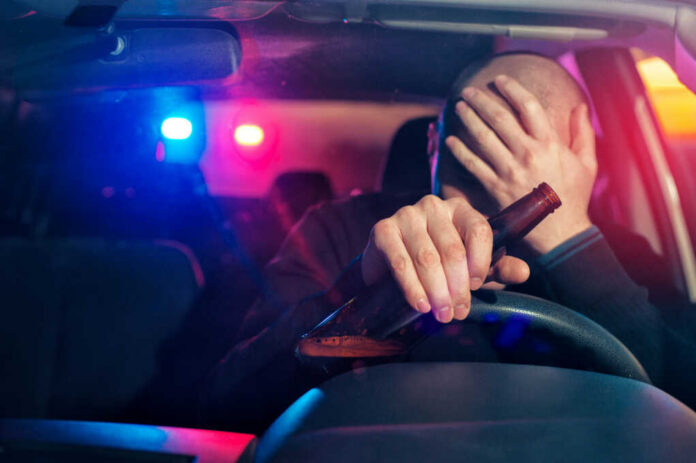
Six careless words at a crash scene are now echoing louder than the sirens, and they reveal more about our culture’s warped view of drunk driving than about any one California defendant.
Story Snapshot
- Viral “I only had one drink” quotes often come from entirely different cases than the headlines you see.
- California prosecutors can turn a fatal drunk-driving crash into a murder charge, even without proven intent to kill.
- Sensational arrest videos risk drowning out the hard evidence that should actually decide guilt or innocence.
- Real justice demands police reports, toxicology, and reconstruction data—not just a viral six-word sound bite.
How A Six-Word Excuse Became Clickbait Currency
Every few months, a new arrest clip hits the internet: blue lights flashing, a dazed driver wobbling through field sobriety tests, and the same tired line—some version of “I only had one drink.” One Florida arrest, where the woman kept talking about a single Twisted Tea while barely staying upright, became a minor online spectacle and shorthand for drunk-driving denial.[1][2][3] That six-word non-defense now gets recycled into headlines about entirely different crashes, including cases in California that the clip has nothing to do with.
Readers assume the quote came from the California driver in question, when the actual sources point back to that unrelated Florida traffic stop.[1][2] That is the sleight of hand: a real couple in California may be dead after a crash, a real defendant may face life-changing charges, yet the emotional hook in the story is borrowed from somebody else’s viral humiliation. That might sell ad impressions, but it does not help anyone understand what really happened on a particular highway on a particular night.
What California Actually Requires To Prove A Deadly DUI
California law does not convict people of murder because of a catchy quote; it requires proof that a driver was impaired, that the impairment caused the crash, and that the driver knew the deadly risk of driving drunk and ignored it. Prosecutors lean on that legal theory—rooted in the state’s implied-malice doctrine—whenever a driver with prior drunk-driving warnings kills someone in a crash. Court records in recent cases show judges approving murder charges where a driver had past convictions, completed alcohol-education programs, and still chose to drive after drinking.
Those decisions did not turn on how many drinks the driver claimed; they turned on blood-alcohol tests, eyewitness accounts, crash reconstruction diagrams, and histories of prior warnings. In one California case, a judge found enough evidence of implied malice in a deadly crash involving a married couple to move the case toward trial, based on what reconstruction and witness statements showed about speed, signals, and impairment. In another, a Riverside County driver received fifteen years to life for a crash that killed a newlywed, again because the record showed he knew the risks and plowed ahead anyway.
When Viral Clips Contaminate Real Cases
Search the headline about a California driver’s “stunning six-word reply,” and the trail leads back not to a California Highway Patrol report or a county court docket, but to that Florida Twisted Tea video and other generic arrest content.[1][2][3] The result is contamination: facts, footage, and dialogue from one case bleed into public perception of another, where the available materials show no such quote, no chemical-test result, and no published reconstruction data. Blame becomes personalized, while the underlying mechanics of the crash remain almost totally opaque to the public.
That skew matters because Americans with a conservative instinct for due process usually agree on this: punishment should follow from evidence, not from internet outrage. The impulse to protect innocent people from wrongful conviction is just as strong as the desire to throw the book at genuinely reckless drivers. When we let viral clips stand in for police reports, we hand enormous moral power to whoever edits the video thumbnail and writes the headline, and we sideline the tedious, indispensable work of proving exactly what happened and why.
What A Serious Fact-Finder Should Demand
Any serious assessment of a fatal drunk-driving allegation in California should start with documents, not memes. That means seeing the collision report, the probable-cause declaration, the toxicology results, and the crash reconstruction before drawing conclusions. It means asking whether the driver had prior drunk-driving convictions or court-ordered education that would show clear knowledge of the risk, the kind of record that has supported murder convictions in other California cases. Without those materials, all we really have is a tragedy plus a story shaped to fit a familiar outrage template.
Families who lose loved ones to drunk drivers deserve more than clickbait; they deserve a justice system trusted because it is transparent about what it knows and what it does not. Drivers facing life in prison deserve a public that waits to see the tests, the timelines, and the diagrams before demanding their heads. And the rest of us, who will drive home tonight alongside strangers making better or worse choices, deserve reporting that treats facts as more important than a six-word sound bite that might not even belong to the case at hand.
Sources:
[1] Web – Woman falls during sobriety test, claims she only had one …
[2] Web – Florida woman arrest video: ‘I will say I drank a Twisted Tea’
[3] YouTube – Woman Miserably FAILS Sobriety Test After Claiming She …