New York City will use $70 million in taxpayer funds to sell “essential” groceries up to 30% below retail while private operators run the stores and the city eats the overhead.
Story Highlights
- City plans five taxpayer-funded grocery stores with a promised 30% discount on a core basket.
- Model relies on subsidies: city owns sites, covers rent and construction; private vendors run operations.
- Pricing formula not fully defined; officials admit details are still being worked out.
- First store targeted for East Harlem on existing city land; timeline stretches into 2027 and beyond.
City-Subsidized Network Promises 30% Off “Essential” Items
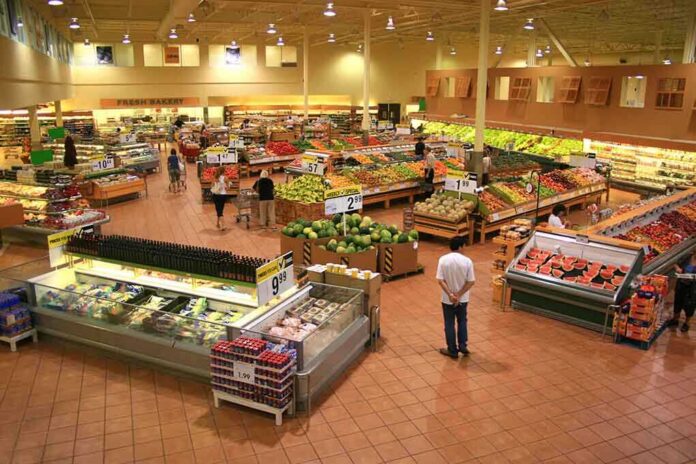
Mayor Zohran Mamdani says five city-owned grocery stores will sell a core basket of food about 30% below regular market prices. Reports describe discounted staples like eggs, milk, bread, produce, and pantry items. The city frames the plan as relief from high prices in neighborhoods with fewer options. Officials highlight a fixed basket that resets monthly to give families stable prices. The claim remains broad. It hinges on how the city locks in discounts and enforces them with private operators.
The most concrete part is the subsidy. City materials say New York City will own the property, fund construction, and cover rent, while a private operator runs each store under city rules. That structure removes large costs from the operator and requires pass-through savings on a set of staples. Supporters say this can beat normal retail math and help low-income areas. Critics see public money propping up prices that private shops must meet or lose customers.
Undefined Pricing Math Raises Accountability Questions
City leaders describe a fixed discount on an “essential basket,” but they have not published the final calculation. In the official transcript, a senior leader says the discount will be a certain percentage but the exact method is not yet decided. That gap matters. Without a clear formula, taxpayers cannot verify real savings or detect gaming. A locked basket also means many other items may sell at normal rates, so a whole-cart bill may not fall by 30%.
Promises of a 30% cut sound simple. Enforcing that promise is not. The operator must pass savings on select items and meet city standards. That demands audits, penalties, and contract teeth. If the city fails to police compliance, discounts could fade. If the city enforces hard, operators may cut service or selection to protect margins. Either way, the plan needs transparent contracts and public scorecards to prove families get what was promised, month after month.
$70 Million, Five Stores, And A Long Timeline
Reuters reports the city set aside $70 million for five stores, one in each borough, with city ownership of the land and subsidies for key goods. Private vendors will run the shops under city-set rules. That is a large public bet on a small footprint. If the stores open on time and hit the targets, advocates will call it proof of concept. If they slip or miss, the program looks like expensive symbolism with narrow reach and little relief citywide.
The rollout begins at La Marqueta in East Harlem, a site the city already controls. Reports say the first opening is expected in 2027, with further sites following. Building on public land may speed permitting, but it also shields the model from real market conditions that private grocers face. That makes it harder to judge if the approach can scale beyond a few politically chosen locations without heavy, permanent subsidy support.
Fair Competition, Real Savings, And Who Pays The Bill
Supporters say the plan helps neighborhoods squeezed by high grocery prices and low access. They argue that city ownership lets families keep more of their paycheck when inflation bites. Critics counter that government-backed prices distort competition, push small grocers to the brink, and risk locking in new costs for taxpayers. Until the city releases the pricing math, contract enforcement terms, and operating data, both sides argue from principle more than proof.
🚨 MAMDANI’S CITY-OWNED GROCERY STORES ARE ALREADY DRAWING FIRE
New York City Mayor Zohran Mamdani is rolling out taxpayer-funded grocery stores that will sell select items at a discount.
No hot food.
Just a $70 million plan that critics say could have simply bought a million… pic.twitter.com/i8IOYh0Bou— Gunther Eagleman™ (@GuntherEagleman) July 28, 2026
Here is the conservative test for this policy: prove the savings are real, broad, and tied to clear rules that taxpayers can see and verify. Publish the exact basket, the exact discount formula, and the monthly audit trail. Post the operator contracts, penalties, and site-selection scores. Show the total public cost per dollar saved at the register. If City Hall cannot meet that bar, this looks less like relief and more like a subsidy treadmill that families and small businesses will pay for later.
Sources:
thegatewaypundit.com, nyc.gov, youtube.com, newsnationnow.com