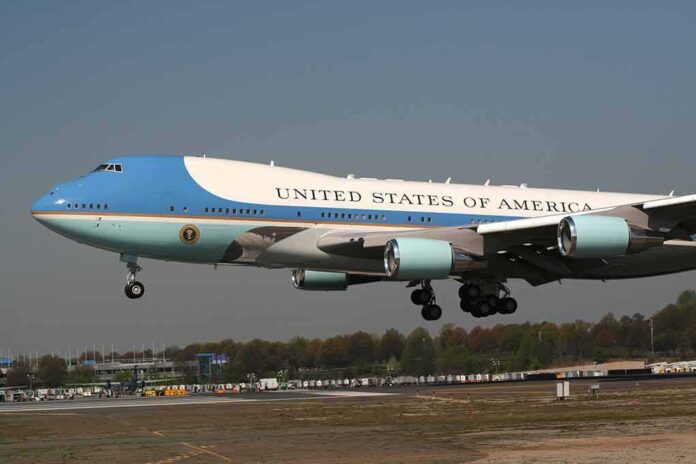
The White House removed CNN from the Air Force One television pool for President Trump’s Saturday trip and listed another outlet instead, upending the media rotation but keeping coverage moving.
Story Highlights
- White House guidance left CNN off Air Force One for Saturday’s trip.
- Real America’s Voice was listed to fill the television role, preserving coverage.
- Major networks then paused pool TV duties in protest, reducing shared video.
- A judge restored banned outlets’ White House access, but travel pool choices remain disputed.
What Changed With Saturday’s Air Force One Trip
White House guidance for Saturday’s travel did not include CNN in the television pool seat on Air Force One, confirming the network’s exclusion for that trip. Reports said Real America’s Voice would take the slot, signaling the administration’s intent to keep a camera on the flight and maintain basic coverage functions. The White House Correspondents’ Association describes 13 fixed press seats on Air Force One, including three for television crews, which makes any rotation change significant.
CNN framed the move as part of a broader clash over press access. The network said it had been slated to serve as the pool television outlet on certain days but was removed from that rotation by the White House. After the change, several major networks said they would not step in to fill television pool duties, creating gaps in pooled video of routine moments, like boarding the plane or crossing the South Lawn. That protest amplified the impact of the decision beyond one outlet.
How The Pool Works And Why It Matters
The pool is a small team that shares its reporting with all outlets when space is tight. The White House Correspondents’ Association materials say Air Force One has a set number of seats, with defined roles for wires, photographers, television, radio, and print. These rules reflect scarcity, not censorship. When a scheduled outlet is changed, the effect ripples to every newsroom because the pool’s video and notes become the common record used across platforms. That is why a single swap can draw intense focus.
The dispute also comes after the administration took on a larger role in choosing pool participants, shifting authority away from the press association. Supporters argue that White Houses have long managed access on tight trips and must balance logistics, security, and fairness. Critics answer that when politics drives selection, the shared record can tilt. Both things can be true in a system with limited seats and high stakes.
Legal And Process Fights Running Alongside Access Decisions
In a separate but related fight, a federal judge ordered the White House to restore access to several outlets after their hard passes were revoked, citing due process concerns under long-standing case law. That ruling addressed building access and credentials, not who sits on specific travel legs. The White House later argued that access is a privilege, not a guarantee, and that press freedom does not entitle any one network to any one seat. The legal debate over standards and notice is not over.
Meanwhile, cable and broadcast networks paused television pool duties after CNN’s exclusion, which meant fewer shared images of the president’s movements. Some outlets and commentators said the boycott hurt viewers more than it helped, because it left less independent footage of routine presidential events. Others said it was the only leverage the press had to resist viewpoint-based choices. Both outcomes highlight how protests can shape what the public actually sees.
What Conservatives Should Watch Next
Conservatives expect fair coverage, not fawning spin. The Saturday switch kept a camera on the trip by listing another outlet, which preserved a basic public record. That is a win for transparency. But the press boycott cut into that benefit by shrinking shared footage. Viewers then had to rely more on direct White House feeds or individual outlets, not pooled video. That trade-off matters for trust and for the historical record of a presidency.
White House again removes CNN from TV pool duties, blocks Air Force One access
The Trump administration had allowed the network to serve as the designated White House pooler hours earlier, a week after the White House banned CNN, MS NOW and Politico.— ALI IMRAN BANGASH (@aibangash) September 26, 2026
Going forward, two tests will decide how this settles. First, do pool rotations return to a stable, published order that all sides can live with, even when tensions are high? Second, do networks resume pool coverage so routine events are documented for everyone? The White House has authority to manage scarce seats. The press has a duty to keep the public informed. Both should meet those duties without turning basic access into a permanent proxy war.
Sources:
mediaite.com, theguardian.com, wmur.com, whca.press, cnn.com, apnews.com, mediagazer.com, washingtonexaminer.com, justthenews.com