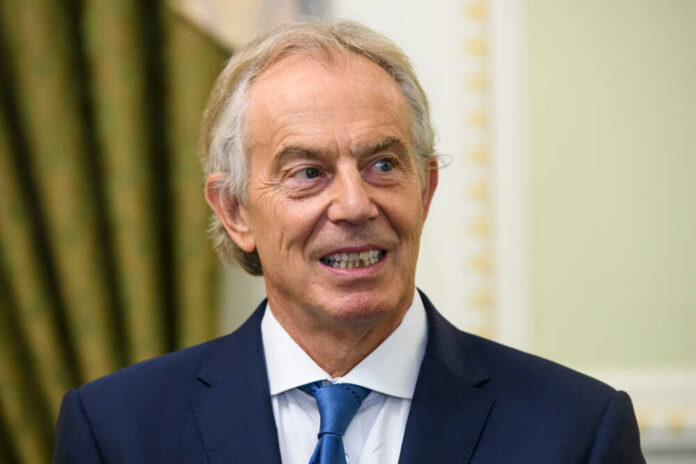
Tony Blair, Labour icon, blasts his own party’s aggressive green energy push as a recipe for economic ruin, demanding cheap power over rigid climate timelines.
Story Highlights
- Blair urges replacing UK’s “Clean Power 2030” with “Cheaper Power 2030” to prioritize affordable energy via nuclear, natural gas with carbon capture, and cost-capped renewables.
- High UK electricity prices—Europe’s highest at £0.25-0.30/kWh—threaten competitiveness and public support for net-zero goals.
- Report warns that without abundant, low-cost energy, Britain risks deindustrialization and lost innovation, echoing frustrations with elite-driven policies.
- Partial policy wins emerge, like 2026 SMR funding, amid growing voter backlash against rising bills.
Blair’s Call for Energy Pragmatism
The Tony Blair Institute for Global Change released “Why Britain Needs an Energy-Strategy Reset” in November 2024. Former Prime Minister Tony Blair critiques the Labour government’s Clean Power 2030 plan, which targets a fully clean electricity grid by 2030. Blair argues this rigid decarbonization timeline ignores economic realities. UK households face Europe’s highest electricity prices, around £0.25-0.30 per kWh, compared to the EU average of £0.20. These costs stem from heavy reliance on intermittent renewables without sufficient baseload power. Blair proposes “Cheaper Power by 2030” to deliver abundant energy and sustain net-zero ambitions.
Historical Roots of the Energy Crisis
Britain’s net-zero path traces to the 2008 Climate Change Act, amended after the Paris Agreement, with a 2050 target set in 2019. The 2021-2022 Ukraine crisis spiked gas prices 300-400 percent, exposing vulnerabilities in renewable-heavy strategies. Labour’s July 2024 election victory led to Clean Power 2030 announcements. Blair’s report counters this, highlighting how subsidies inflated bills. Global powers like China and India prioritize cheap fossil fuels, while the UK’s 1 percent of world emissions limits its unilateral impact. This setup frustrates citizens on both sides weary of policies that burden families without delivering prosperity.
Stakeholders and Power Struggles
Tony Blair leverages his Labour ties to influence Keir Starmer and Energy Secretary Ed Miliband, who defend renewables for long-term savings. Renewables firms like Ørsted oppose Blair’s cost caps that threaten subsidies. Nuclear advocates, including Rolls-Royce for Small Modular Reactors, back his push for baseload power. Critics like LSE Grantham label Blair a fossil-fuel apologist, ignoring UK cost surges since 2021. Consumers and industries demand relief; polls show 40 percent oppose net-zero expenses and 60 percent prioritize affordability. Blair’s soft power pressures a government facing electoral risks from voter fatigue.
Recent Developments and Policy Shifts
By early 2026, no full reversal of Clean Power 2030 occurred, but Blair’s ideas gained traction. January 2026 saw government announcements for SMR tenders and cost-cap trials—a partial victory. National Grid ESO warned in October 2025 of 2030 shortfalls without gas and nuclear. Blair reiterated in 2025 interviews that cheap power enables climate goals. Grid upgrade costs exceed £30 billion, fueling public backlash during 2025 winter bills. These steps reflect mounting pressure on elites to address real-world hardships over ideological pursuits.
One has to assume that, even if it was only per incuriam, that Blair didn't actually say this…
'Cheap, plentiful energy is more important than climate-first strategy, says Tony Blair' :https://t.co/34SaQG8Xyh pic.twitter.com/PBJ9eIhDpW
— THE AGENT APSLEY #ScrapUniversalCredit #JC4PM2019 (@THEAGENTAPSLEY) May 5, 2026
Economic and Broader Impacts
Adopting Blair’s approach could cut bills 10-20 percent short-term through gas-carbon capture subsidies, projecting 1-2 percent GDP growth and £50 billion savings. Long-term, cheaper power supports electrification for EVs and heat pumps while averting steel industry offshoring. It enables energy-hungry AI data centers. Failure risks deindustrialization and eroding public consent for net-zero. This pragmatism influences US and EU debates under President Trump’s America First energy policies, validating conservative warnings against globalist green mandates that hollow out working-class dreams.
Sources:
Michael Liebreich Substack analysis on Blair’s report
Tony Blair Institute: Why Britain Needs an Energy-Strategy Reset
Tony Blair Institute: Reimagining the UK’s Net-Zero Strategy
LSE Grantham Institute response to Tony Blair Institute publication