
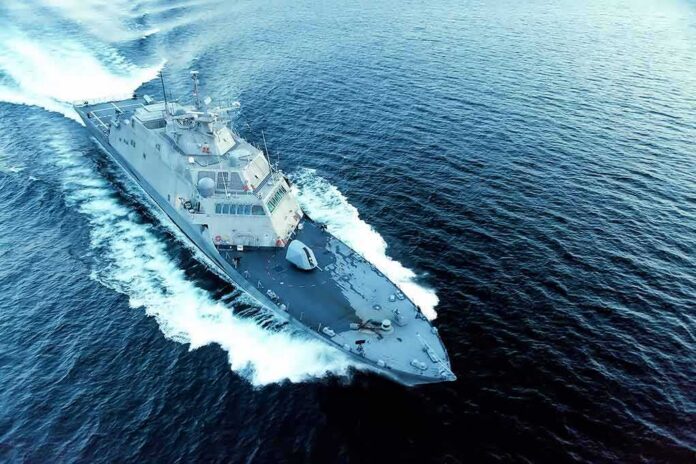
A reported sea-drone strike in Libya left a Russian warship destroyed and others damaged, signaling Ukraine’s fight has reached the Mediterranean.
Story Highlights
- Reports say a Russian warship sank in Benghazi after a suspected Ukrainian sea-drone attack.
- Ukraine’s long-range campaign also hit Russian oil and military sites far from the front.
- Finnish officials assessed a separate Baltic Sea ship strike as probably Ukrainian.
- Russia claims most drones were shot down, but fires and blasts show real impacts at several sites.
Mediterranean strike puts Russian naval assets on notice
Reports from outlets tracking the war state a Russian warship sank in Benghazi, Libya, after a suspected Ukrainian sea-drone strike, with two other vessels damaged. The incident marked a spread of the sea campaign from the Black Sea into the Mediterranean, raising questions about Russian logistics far from home waters. Attribution language remains cautious, but the event aligns with Ukraine’s pattern of hitting Russian assets beyond the frontline, including ships and support vessels in new regions.
Coverage of the Benghazi incident describes a suspected Ukrainian operation rather than a confirmed claim by Kyiv, reflecting the fog of war and tight operational security. Still, the effect is plain: a Russian naval asset reportedly lost in a non-traditional theater. That loss, if confirmed, would show that low-cost unmanned surface vehicles can reach vulnerable targets in foreign ports, complicating Russia’s naval posture and insurance risk even outside the Black Sea.
Strikes deep inside Russia target oil, testing, and logistics nodes
Ukraine’s campaign also reached hundreds of miles into Russia. Ukrainian statements and local reporting identified hits or fires at petrochemical and refining sites in Tatarstan, an oil dispatch station near Samara, and the 929th State Flight Test Center at Akhtubinsk, a key aviation and weapons-testing hub. Reports described fires and secondary explosions, suggesting real damage at several sites, even as full outage durations and repair timelines remain unclear in open sources.
These targets matter for war sustainment. Fuel processing, oil movement, and weapons testing underpin combat power. Repeated strikes force Russia to spread air defenses and spend on repairs. That pressure can raise costs and slow operations, even if the damage does not cause instant paralysis. The push beyond the Black Sea into the Baltic and Mediterranean further widens the area Moscow must defend, stressing manpower and equipment across long distances.
Baltic ship attack and competing claims show the information fight
In the Baltic Sea, a Russian-linked cargo ship caught fire and the crew evacuated after a reported drone strike. Finland’s military assessed the attack was probably Ukrainian, adding a non-Ukrainian voice to attribution in that theater. This episode reinforces a pattern: unmanned systems hitting logistics-related shipping far from the front line, prompting regional security concerns and maritime insurance headaches for Russia-linked trade.
Russia counters with large shoot-down claims, saying air defenses downed hundreds to more than a thousand drones in major waves, and that damage to key assets like the Kerch Bridge was minor with traffic resuming after brief closures. Those figures, offered without shared underlying data, compete with images of fires and explosions at multiple sites. The gap highlights a core reality of modern war: numbers are contested, but burned facilities and evacuated crews are hard to ignore.
Why this matters for Americans who value strength and clear limits
Ukraine’s expanding reach exposes how cheap, precise drones can challenge a larger power’s fleet and fuel network. That lesson should guide U.S. defense choices: protect our ports, refineries, and ships, harden supply chains, and keep rules that punish state sponsors of chaos at sea. Securing energy and maritime lanes supports lower costs at home and keeps our Navy free to deter threats, rather than playing catch-up after enemies learn to strike anywhere with bargain tools.
What to watch next: proof, persistence, and port security
Investigations in Libya and the Baltic could firm up attribution with debris, damage surveys, and radar tracks. Satellite images may confirm how long Russian oil and test sites stay offline. If Ukraine keeps hitting far from the front, Russia must spend more on defense and repairs, which can strain its war budget. If strikes slow or shift, expect Moscow to tout resilience. For now, the spread to the Mediterranean and Baltic shows the map of risk keeps getting bigger.
Sources:
youtube.com, twz.com, nationalsecurityjournal.org, chosun.com, reuters.com, transformukraine.org, pollar.news, irishtimes.com, ua.news, tilt.now, newsminimalist.com, ukrdronecampaign.pplx.app