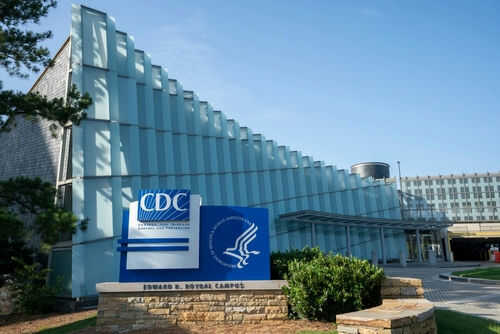
The Centers for Disease Control and Prevention (CDC) has lost roughly one quarter of its entire workforce since January 2025 — and a proposed budget would cut its funding nearly in half.
Story Snapshot
- The CDC shed about 3,000 employees — nearly 24% of its staff — since January 2025, according to a court filing by the agency’s own chief operating officer.
- About 70 “disease detective” officers who track outbreaks were laid off in October 2025, with roughly 1,300 total CDC workers receiving termination notices that same month.
- Congress pushed back and rejected most of Trump’s proposed $33 billion in cuts to health and human services, blocking the deepest reductions.
- The administration’s proposed fiscal year 2026 budget would still cut CDC funding from $9.2 billion to $4.3 billion — a roughly 50% reduction.
CDC Workforce Drops by One Quarter
The CDC has lost close to 3,000 employees since January 2025, cutting its workforce by about 24%. That figure comes directly from CDC Chief Operating Officer Sara Patterson’s court filing in June 2025. The Department of Health and Human Services (HHS) said some of those layoffs were still being reviewed and that steps were being taken to restore certain functions. About 800 of the roughly 2,400 layoff notices were later rescinded.
In October 2025, the administration sent termination notices to another 1,300 probationary CDC employees — about 10% of the remaining workforce. Around 700 of those notices were reversed after officials discovered a coding error had flagged workers who should not have been included. The back-and-forth raised serious questions about how carefully these cuts were being planned and whether core public health functions were being protected.
Disease Detectives Shown the Door
Among those let go in October were approximately 70 Epidemic Intelligence Service officers — the CDC’s frontline disease investigators. These are the trained specialists who respond when a new outbreak appears, trace its source, and help stop it from spreading. Losing dozens of them at once weakens the country’s ability to detect and respond to the next infectious disease threat before it becomes a crisis.
The CDC allocates roughly 80% of its budget to states and local communities. When federal funding shrinks, local health departments feel it first. A University of Minnesota study found that rolling back federal funding to 2019 levels would cut local public health spending by an estimated $13.5 billion nationwide — about $4.3 million per county — with rural areas hit hardest.
Budget Proposal Would Cut CDC Funding in Half
The Trump administration’s proposed fiscal year 2026 budget would reduce CDC funding from $9.2 billion to roughly $4.3 billion — a cut of about 50%. The proposal would also eliminate the CDC’s chronic disease and injury prevention programs entirely. Over 100 public health programs and funding lines would be cut or eliminated under the plan, including 61 programs at the CDC alone.
Congress stepped in and rejected most of the proposed cuts. Lawmakers approved a fiscal year 2026 public health funding bill that blocked nearly all of Trump’s major reductions and actually increased funding for the National Institutes of Health (NIH) above previous levels. The Supreme Court, however, ruled in July 2025 that the administration could legally proceed with HHS job cuts under its efficiency initiative. That ruling gave the administration the legal green light to continue restructuring, even as Congress held the line on the biggest budget slashes.
Real Risks for Everyday Americans
Conservatives rightly want efficient government and less wasteful spending. But there is a real difference between cutting bureaucratic bloat and gutting the systems that catch disease outbreaks early. The CDC’s disease surveillance and emergency response programs are not DEI offices or woke grant programs — they are the early warning system that protects American families. Losing trained outbreak investigators and slashing lab capacity creates gaps that no amount of reorganization paperwork can fill quickly.
The administration has shown it can course-correct — reversing hundreds of layoffs when errors surfaced. Congress has also acted as a check, blocking the most severe cuts. But with the CDC’s key leadership positions, including the director and chief medical officer, still vacant, the agency faces real operational strain at exactly the moment it needs steady leadership most.
Sources:
cbsnews.com, cidrap.umn.edu, pbs.org, nytimes.com, govexec.com, wfae.org, cen.acs.org, youtube.com, theconversation.com, epi.org, dph.illinois.gov, facebook.com, yipinstitute.org