As the 96-hour survival window closes, clashing death tolls and missing counts raise hard questions about what Venezuela’s regime is hiding and how fast help can reach the trapped.
Story Highlights
- Official tolls range from 188 to 235 dead, with thousands injured, while many remain missing [1][2][8][10].
- United States aid, rescue teams, and military coordination are moving in at President Trump’s direction [1][2].
- United Nations agencies warn of massive needs and tens of thousands reported missing on civil portals [19].
- United States Geological Survey models flagged very high casualty risk, far above early state figures [2][20].
Official Counts Diverge As Rescue Clock Ticks Down
Venezuelan officials gave shifting figures as rescuers searched through the fourth day. The National Assembly chief cited at least 188 dead and 1,520 injured, while the health minister later reported about 235 dead and over 4,300 injured [8][1][2][10]. Emergency crews and citizen volunteers dug through pancaked homes in La Guaira and Caracas as families begged for updates at hospitals and school shelters [1][2]. Agencies warned the toll would rise as crews reached blocked zones and unstable towers were cleared [2].
United States Geological Survey modeling projected heavy casualties from the near back-to-back 7.2 and 7.5 quakes, which hit within a minute and slammed dense urban corridors [2]. Experts said violent shaking and ground failure can turn concrete frames into traps. They stressed the “golden 72 hours,” when most live rescues occur, but added that survivors are still found beyond that window when voids, air, and water exist [20]. The risk profile suggested far more victims than early tallies implied [2][20].
United States Steps In With Rescue, Airlift, And Command Support
The Trump administration activated a broad response. The State Department announced $150 million in aid, while the Defense Department sent aircraft for damage checks and evacuations [1]. The Secretary of State said United States urban search and rescue teams from Fairfax, Virginia, and Los Angeles were deploying, backed by a disaster response team [1][2]. United States Southern Command placed a senior general in Caracas to coordinate relief and speed logistics across air and sea lanes [2].
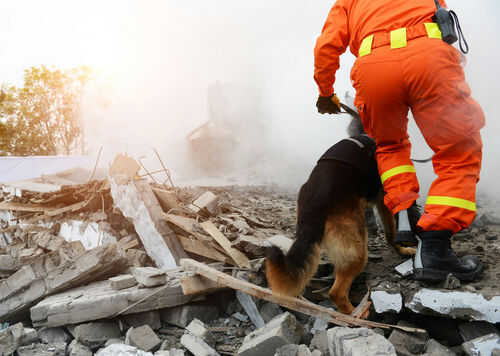
United States teams train for collapsed structures, heavy breaching, and medical stabilization. They bring dogs, cameras, acoustic gear, and lifting tools to cut rescue time. Coordination with local crews is key so duplicated searches do not waste daylight. The focus remains on live finds, then careful body recovery for families. As pallets of food, water, and shelter supplies land, commanders are mapping damaged roads and ports to keep aid moving despite aftershocks and debris [2].
Missing Persons Dispute And Limits On Reliable Data
United Nations briefers said needs are vast across several northern states. They cited reports of rescuers digging with bare hands and confirmed that more than 41,000 people were listed missing on an online portal, while many fear reentering cracked buildings [19]. They warned that communications gaps and power issues slow field reporting. That makes real-time counts uncertain and fuels public anger when families cannot verify where loved ones are taken after rescues or recoveries [19].
Venezuela earthquake death toll nears 1,500 as rescue efforts intensify
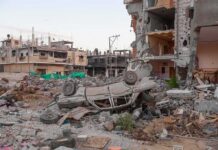
The aerial visual shows destruction across La Guaira, the hardest-hit state of a country. Dozens of buildings collapsed into piles of sand and rubble in the coastal state, about 40 km north of Caracas.… pic.twitter.com/v8fPSJONcM
— Inspirepreneur (@Inspirepreneur_) June 29, 2026
Information gaps are a known problem after major disasters. Experts said the United States Geological Survey system issued a red alert within minutes to guide aid, not to set a final toll. Still, their damage exposure estimates align with scenes of collapsed mid-rise blocks and hillside slides in key cities [20]. When governments hold back or cannot collect data, independent lists and satellite views help fill the void. That can reveal a higher human cost than early state numbers suggest [20].
Why This Matters For Americans And Our Allies
American rescuers are saving lives and showing what accountable government looks like. Speed, transparency, and logistics win the day. That is where the United States excels when politics does not block the mission. Our readers know the pattern: weak institutions, censorship, and crony building codes turn natural shocks into man-made catastrophes. Clear facts, open reporting, and strong supply lines are not “nice to have”—they are the difference between rescue and rubble [1][2][19][20].
What To Watch Next
Watch for updated missing and casualty figures as teams reach cut-off neighborhoods and stabilize high-risk sites. Look for more air bridges, field hospitals, and joint operations centers linking American crews with local responders. Track port and airport status for bottlenecks that could slow aid. Hold leaders to their public promises on access and data. Families deserve truth, and survivors deserve every tool we can bring to bear—fast and without political games [1][2][19][20].
Sources:
[1] YouTube – Venezuela rescue teams search for missing as quake nears 96-hour mark
[2] Web – June 24-25, 2026 — Venezuela rocked by 7.5 and 7.2 magnitude …
[8] Web – Search and rescue operations are intensifying in Venezuela as …
[10] Web – At least 235 people have been killed and more than … – Instagram
[19] Web – Venezuela: Human rights must guide earthquake response amid …
[20] Web – UN Geneva – OCHA, IOM, PAHO, UNHCR, OHCHR, IFRC