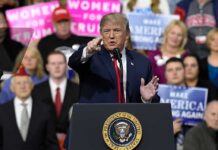
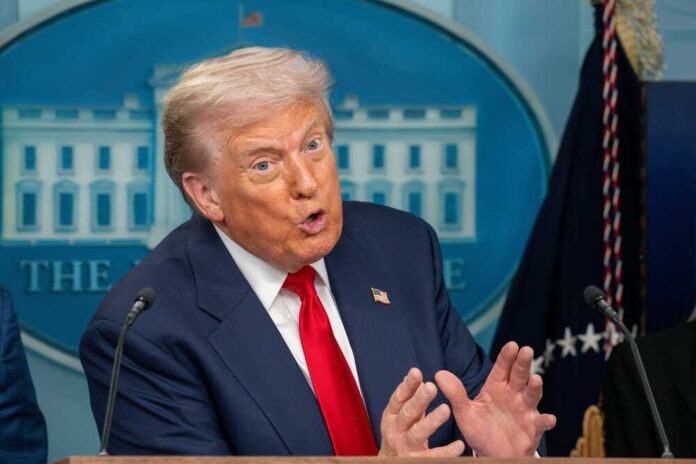
President Trump blasted Senator Lisa Murkowski for fighting a bill that simply says only American citizens should decide American elections.
Story Highlights
- The House passed the SAVE America Act, which requires proof of citizenship to register and photo identification to vote.[3][7]
- The White House says the bill amends the 1993 registration law to verify citizenship and tighten mail voting rules.[1]
- Senator Lisa Murkowski opposes the bill, citing burdens for Alaska Natives and federal overreach concerns.[8][10]
- Policy groups disagree on impact, with backers calling it common sense and critics warning of new barriers.[2][5]
What The SAVE America Act Actually Does
The SAVE America Act would require anyone registering for a federal election to show documents that prove United States citizenship. It would also require photo identification at the time of voting, and would narrow when mail ballots are allowed. The White House frames it as a fix to the National Voter Registration Act of 1993, ensuring that only citizens get onto federal rolls and that identity is checked before ballots are cast.[1]
The bill passed the United States House of Representatives in February 2026. Advocates say the core idea is simple: allow every eligible citizen to vote, and stop anyone who is not a citizen from registering or voting in federal contests. The Bipartisan Policy Center describes the law’s main change as adding documentary proof of citizenship at registration and photo identification at the polls, noting the overall goal is clean rolls and trusted outcomes.[3][7]
Why Supporters Call It Common Sense
Supporters argue proof of citizenship at registration closes a major gap. Federal law already bans noncitizen voting in federal elections, but the current system often relies on self-attestation. Backers say the SAVE America Act aligns the law with practice by asking for real documents up front and a photo identification on Election Day. Nonpartisan legislative analysts add the bill sets tighter standards for acceptable identification and adds stronger list maintenance tools.[2][3]
Conservatives also point to public backing for voter identification in general and stress that faith in elections grows when rules are clear and enforced. They argue that uniform federal standards for federal races prevent loopholes and patchwork enforcement across states. They add that documented, verifiable identity checks protect legal votes from being canceled by illegal ones, which is a basic matter of fairness to every law-abiding citizen.[2][3]
Murkowski’s Objections And Alaska-Specific Concerns
Senator Lisa Murkowski, a Republican from Alaska, says she supports voter identification in principle but opposes this draft. She warns the law could burden rural and Indigenous voters if tribal identification cards do not meet the bill’s photo and expiration rules. She also objects to requiring states to run voter rolls through a federal database and worries about immediate, unfunded mandates on state election offices and voters spread across vast distances.[8][10]
Senate walks back rebuke of Trump over Iran war
One day after adopting a resolution aimed at removing US military forces from the conflict with Iran, the Senate walked back its rebuke of President Donald Trump’s handling of the war, rejecting an attempt to advance a similar war… pic.twitter.com/mpdZXbHBtD
— Black Page (@WorldNEWS0_) June 27, 2026
In floor remarks, Murkowski said many Alaskans would have to travel to limited election offices to present documents if local options are not available. She also criticized added chain-of-custody prescriptions for absentee ballots and the risk of criminal penalties for officials who make good-faith errors. Her argument is that federal dictates could override workable state systems and disrupt voters who have cast ballots for years under existing state rules.[10]
Do The Risks Outweigh The Benefits?
Nonpartisan legislative researchers highlight that the measure would preempt state processes, add a strict photo identification rule, require documentary proof of citizenship for mail registrations, and authorize private lawsuits and criminal penalties tied to enforcement. Critics from civil groups claim these changes could create new barriers and lead to overzealous list maintenance. Supporters counter that the law simply enforces citizenship and identity, which they see as foundational to clean elections.[2][5]
The practical question is implementation. If states receive clear timelines, workable document options, and support to verify citizenship without needless trips or delays, then proof and photo checks can be met while keeping access strong. If not, rural voters and small offices may feel the strain. Debate in the Senate will likely focus on which safeguards, timelines, and funding levels keep both integrity and access intact.[2][3][8]
Bottom Line For Readers
The SAVE America Act advances a principle most conservatives share: only citizens should vote, and every legal vote should count. The House already backed it, and the White House is pressing the Senate to finish the job. Senator Murkowski stands apart, citing Alaska-specific burdens and federal reach. Senators must now decide if the bill’s guardrails—proof of citizenship, photo identification, and tighter mail rules—can be paired with fixes that protect access in remote communities.[1][3][7][8]
Sources:
[1] Web – WATCH: Trump Nukes “Trump Deranged” Lisa Murkowski for Opposing the …
[2] Web – The SAVE America Act – The White House
[3] Web – 9 Things to Know About the Proposed SAVE America Act -…
[5] Web – [PDF] SAVE Act Section-by-Section_BRANDED
[7] Web – What You Need to Know About the SAVE Act | Campaign Legal Center
[8] Web – The SAVE America Act has passed the House by a vote of 218-213 …
[10] Web – Republican Senator Murkowski speaks out AGAINST the SAVE Act