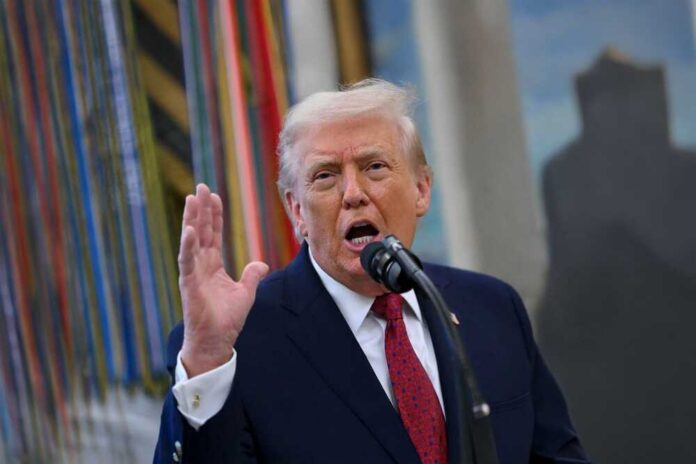
Trump’s primetime speech put a new election-security fight back at the center of Washington, and the media response quickly became part of the story.
Quick Take
- Trump said declassified documents showed China accessed huge amounts of U.S. voter data.
- The White House release said Chinese actors gathered voter registration data and probed election weaknesses.
- Several reports said the documents did not prove China changed any votes or altered the 2020 result.
- Critics said the speech could weaken trust in elections even as Trump called for more scrutiny.
What Trump Claimed About China and Voter Files
Trump said newly declassified documents showed China obtained 220 million U.S. voter files and exposed weak points in election systems. CNN reported that the released material shows Chinese intelligence gathering data on Americans and downloading voter registration records from several states, but not proof of vote manipulation. CBS News also reported that a White House official said the release did not allege votes were switched or voting machines hacked.
The core issue is simple. Access to voter data is not the same as changing votes. The documents, as described by CNN and CBS News, point to intelligence gathering, data collection, and possible vulnerabilities. They do not show that China altered the 2020 election outcome. That distinction matters because the public still remembers how election claims can spread fast and damage trust when the evidence is thin.
Why the Response Split So Hard
Media coverage split almost immediately. France 24 described the speech as heavy with unproven claims, while the New York Times reported that major news organizations cut away from similar Trump remarks in the past. That reaction fed Trump’s complaint that the press was hiding the story, but it also showed how skeptical outlets view claims tied to the 2020 election. The divide was not about style alone. It was about whether the speech delivered hard proof.
The stronger counterpoint comes from the intelligence record. CBS News reported that the 2021 intelligence community assessment found no foreign actor altered voter registrations, ballots, or results. That is the clearest official statement in the record. It does not answer every detail in the new document dump, but it does set a high bar for claims that China changed the election. Until the full files are public and independently reviewed, the broad accusation remains unproven.
What This Means for Elections Going Forward
Trump’s speech also raised the larger issue of election security. CBS News reported that some newly declassified material said U.S. adversaries have the capability to compromise election systems, with voter registration databases named as one possible weak point. That is a real concern and should not be ignored. But a possible weak point is not the same as a proven attack that changed votes. Conservatives who want stronger elections should welcome hard evidence, not rely on loose claims.
In a recent prime-time address, Donald Trump alleged that the Chinese government interfered in the 2020 election. Alongside the speech, his administration released newly declassified FBI records, many of them emails and messages between intelligence officials.
I reviewed those… pic.twitter.com/FNfjoA06ve
— Davis Jones (@pdavisjones) July 17, 2026
That distinction matters for 2026 as well. If the administration wants public trust, it needs full disclosure, clean methodology, and independent review. If critics want to dismiss the whole issue, they should also answer the voter-file questions directly instead of hiding behind blanket denial. The safest course for the country is simple: release the records, verify the claims, and let the facts speak before more distrust takes root.
Sources:
redstate.com, theepochtimes.com, facebook.com, afr.com