Iran’s nuclear agency says U.S. projectiles struck the under‑construction Darkhovin plant, and the U.N. nuclear watchdog is now asking questions.
Story Highlights
- Iran’s Atomic Energy Organization reported U.S. projectiles hit the Darkhovin nuclear site.
- The agency gave a precise time and location and called the strike illegal.
- The International Atomic Energy Agency said it is looking into the claim.
- U.S. military statements have focused on Islamic Revolutionary Guard Corps targets, not the plant.
Iran Reports Strike On Darkhovin Construction Site
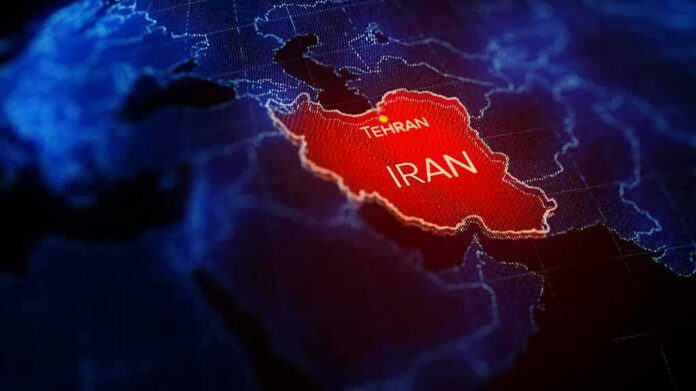
Iran’s Atomic Energy Organization said on July 19 that U.S. forces hit the Darkhovin nuclear power plant site, which is still under construction. The statement, carried by state media, described “a number of projectiles” striking the location in Iran’s southwest. The agency labeled the action an attack on a peaceful nuclear facility. Iranian outlets said the site sits in Khuzestan Province, near the Iraqi border, making it a sensitive area in an already tense region.
Iran’s Atomic Energy Organization provided an exact time for the incident. The agency said the strike occurred at 3:39 a.m. local time on Sunday. Iranian media repeated the claim across several platforms, creating a uniform message from Tehran. Iran framed the episode as a serious breach of sovereignty and of international law. The language marked a hard line at a moment when both sides are watching for signals about red lines and potential next steps.
Claims Of Illegality And The International Response
Iran called the strike “aggressive and brutal,” saying it violated national sovereignty and international law. Reports said the comments came through state-linked outlets that often speak for the government during crises. The International Atomic Energy Agency said it reached out to Iran to learn more and is looking into the report. The watchdog did not confirm damage or impact. That careful stance keeps space for facts to be tested as more data comes in.
United States Central Command statements highlighted recent strikes on Islamic Revolutionary Guard Corps facilities. Those messages did not name the Darkhovin plant as a target. That gap leaves a key question open: whether U.S. munitions actually hit the site or landed nearby. For readers sorting claims, this is a common pattern in fast-moving conflicts. One side alleges a specific hit, while the other side describes broader aims and target sets without site-by-site confirmation.
Location Details And What Is Known So Far
Iranian media placed the construction site in Khuzestan Province, near the Iraqi border. That location matters because cross-border threats and past clashes have made the area a corridor for risk. The site is part of Iran’s wider civilian nuclear program, which has long been a flashpoint. Iran’s description aligns with prior public information about Darkhovin as a planned power plant rather than an enrichment center. The distinction affects legal claims and the global reaction to any strike there.
Iran’s Atomic Energy Organisation (AEOI) claimed that a construction site of the Darkhovin nuclear power plant in Khuzestan province was struck by US projectiles Sunday.
The AEOI described the attack as a violation of Iran’s sovereignty and international law, saying the strike… pic.twitter.com/tqR92LBSpX
— Orissa POST Live (@OrissaPOSTLive) July 20, 2026
Independent proof remains limited. Public reports have not shown satellite damage images, debris photos, or a third-party engineering report. The International Atomic Energy Agency has not issued findings. United States officials have not confirmed a strike on the plant. Iran’s claims are detailed and consistent, but the lack of outside evidence keeps the status unverified. That uncertainty often persists in the first days after a strike and may ease once imagery or formal reports are released.
How This Fits A Larger Pattern Of Escalation
United States operations against Iranian nuclear-linked sites have a recent history. In June 2025, U.S. forces hit three nuclear facilities during an operation that officials said was tightly focused to degrade Iran’s program. That past action sparked sharp protests from Tehran and debate over international law. The current Darkhovin dispute fits that cycle: Iran alleges a clear breach, while the United States frames activity around security goals and self-defense claims under the United Nations Charter.
What To Watch Next For Clarity
International Atomic Energy Agency findings could confirm or refute a hit on the plant structures. Commercial satellite firms may release before-and-after images that reveal crater sites and structural scars. The Pentagon could publish a strike summary that lists aim points and effects. Iran could share detailed inspection photos and measurements. Each piece would tighten the picture. Until then, the clearest facts are Iran’s timed claim, the location, and the watchdog’s ongoing review.
Why This Matters For U.S. Security And Energy Stability
Strikes that touch nuclear sites can trigger fast escalation. Iran could answer with proxy attacks on U.S. bases or partners, or with moves at sea that drive up oil and gas prices. American families feel those shocks at the pump and on power bills. A precise, lawful use of force that deters threats protects our troops and our wallets. Verified facts will guide that judgment here. Patience now can prevent a wider fight and needless cost later.
Sources:
middleeasteye.net, english.alarabiya.net, dailysabah.com, congress.gov, devdiscourse.com, english.news.cn