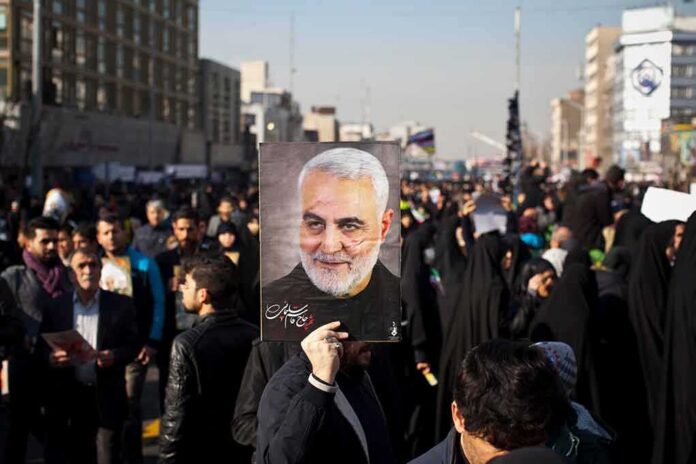
Iran’s regime staged a somber farewell for Ali Khamenei after state media confirmed he died from U.S.-Israeli strikes, while succession and stability remain unsettled.
Story Snapshot
- Iranian state television announced Khamenei’s death and a 40-day mourning period.
- Funeral events span July 4–9 with burial planned in Mashhad, though delays occurred.
- Reports say several Khamenei family members were killed in the strikes.
- Officials confirmed death hours after U.S. and Israeli leaders claimed responsibility.
State Confirmation And Mourning Orders
Iranian state television read a declaration from the Supreme National Security Council confirming Ali Khamenei’s death after coordinated strikes. Broadcasters then announced a 40-day public mourning period nationwide. Video from state-linked outlets showed anchors describing his death as “martyrdom” with visible emotion. These on-air confirmations fixed the regime’s narrative and signaled a controlled transition phase. The formal tone and religious language aimed to rally a shaken system and project unity in the face of outside force.
Government channels repeated the mourning decree across platforms, and foreign outlets echoed the news. The timeline matched the claim that the announcement followed statements from Washington and Jerusalem about the operation. The framing inside Iran focused on sacrifice and continuity. The framing outside Iran focused on cause and accountability. Both streams agreed on the core fact: the supreme leader was dead, and the country had entered an official period of grief and ceremony.
Funeral Schedule, Delays, And Security Pressures
State and international reporting outlined funeral events across Iran and Iraq. Plans indicated ceremonies from July 4 through July 9, ending with burial at the Imam Reza shrine in Mashhad. Reports also noted delays tied to ongoing military operations and security checks. The shifting schedule showed the strain of war-time logistics. It also showed how the regime balances public display with risk management, as it tries to deter attacks and still stage mass processions.
Coverage described the farewell stages in Tehran and movement of the coffins under heavy guard. Reports said members of Khamenei’s family also died in the strikes, which intensified the regime’s “martyr” message. Organizers sought foreign delegates and regional allies to attend, underscoring diplomatic lines that Tehran values. The state used these images to claim legitimacy at home and support abroad, even as the security climate forced route changes and crowd controls at short notice.
Claims Of Responsibility And Succession Uncertainty
Media reports said the confirmation aired hours after public claims by President Donald Trump and Prime Minister Benjamin Netanyahu that the strikes killed Khamenei. That timing made Tehran’s message of unity more urgent. The government had to answer both a leadership vacuum and the shock of foreign leaders taking a victory lap. Early Iranian denials gave way to a clear statement, but officials did not immediately name a successor, leaving a sensitive gap in the transition.
The coffins of Ali Khamenei and members of his family have been placed on public display ahead of a mass farewell ceremony in Tehran.
Large crowds are expected to attend the ceremony, with mourners gathering to pay their final respects before the funeral proceedings. Authorities… pic.twitter.com/vzftuGkSFp
— Pakistan Economic Network (@NetPakistan) July 3, 2026
Analysts pointed to the Assembly of Experts as the body that must certify the next leader, yet no formal successor announcement appeared right away in the first wave of coverage. That pause can invite elite infighting or fast-track a preselected figure. Meanwhile, human rights groups and prior reports documented years of repression under Khamenei, guaranteeing a divided public response to the mourning spectacle. The regime’s tight media control also limits open debate about the funeral’s meaning.
Why This Matters For U.S. Security And Values
American readers should see two stakes here. First, a hostile regime that crushed dissent for decades now faces internal tests as it buries its ruler. That can open windows for change or spark wider conflict. Second, clear messaging from the United States helps deter Iran’s proxies and protect our troops and allies. The ceremony’s pageantry cannot hide Tehran’s record of censorship, executions, and regional aggression. Strong pressure and clear red lines still matter most to keep Americans safe.
What To Watch Next
Watch for a formal statement from the Assembly of Experts naming a successor and setting a timeline. Watch for satellite or independent reports that verify strike details and clarify any remaining gaps. Watch for more delays or reroutes in the funeral path, which would signal ongoing threats. Finally, watch for a surge of proxy activity beyond Iran’s borders. That is where the regime often tests resolve. Firm U.S. policy, backed by allies, can limit escalation and protect our interests.
Sources:
youtube.com, bbc.com, aljazeera.com, isdglobal.org, hudson.org