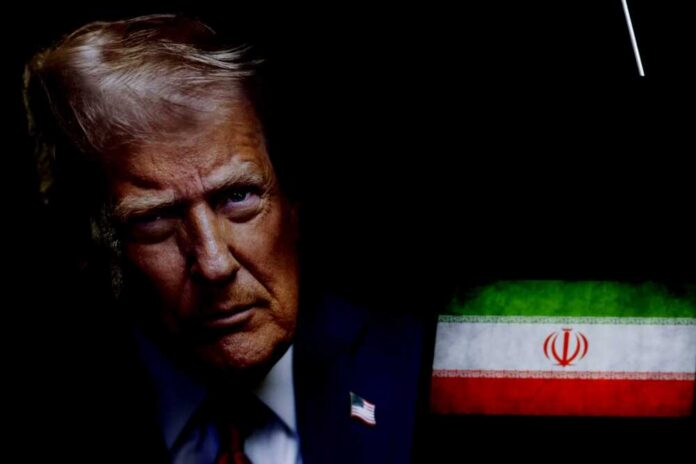
A Democrat-led House just voted to strip President Trump of core commander‑in‑chief authority over Iran, using a “symbolic” war powers measure that tells us more about Washington politics than about real national security.
Story Snapshot
- The House passed a resolution 215–208 to limit President Trump’s ability to continue military action against Iran without new congressional approval.[1]
- Four Republicans crossed over to back Democrats in what media outlets openly describe as a symbolic rebuke of the president’s Iran strategy.[1][2]
- The measure relies on the War Powers Resolution framework and now heads to the Senate, where similar efforts have struggled or stalled in past fights.[1]
- The Trump administration argues hostilities have effectively ceased under a ceasefire, meaning the War Powers timeline for continued conflict does not even apply.[1]
House Uses War Powers Resolution To Rebuke Trump Over Iran
The United States House of Representatives approved a war powers resolution aimed at President Trump’s Iran policy by a narrow 215–208 margin, with four Republicans joining all voting Democrats.[1] Reporters covering the vote framed it as an explicit attempt to halt or sharply limit further military action in Iran without new congressional authorization.[1][2] Floor debate emphasized that the resolution was introduced under the War Powers Resolution, a statute Congress frequently invokes when it wants to signal disapproval of overseas operations.
Television coverage stressed that the resolution directs the president to remove United States forces from what lawmakers label “unauthorized hostilities” involving Iran unless Congress affirmatively approves continued action.[1] The House Clerk’s roll call entry for this Iran measure shows it treated as a formal vote under the War Powers Resolution’s procedures, not simply a nonbinding sense‑of‑Congress statement. Supporters described the measure as a needed reassertion of Congress’s Article One power over war, even as commentators acknowledged immediate legal effects remain uncertain.[1][2]
Symbolic Constraint Or Real Limit On Commander‑In‑Chief Powers?
News outlets that generally favor stronger legislative checks on presidents still characterized this move as “largely symbolic,” underscoring how often war powers fights serve more as political signals than as binding constraints.[1][2] Coverage noted that the House resolution by itself does not automatically stop the conflict or force an immediate withdrawal of forces from the region.[1] Instead, any real change would require Senate agreement on matching language, followed by confronting a likely Trump veto, echoing familiar patterns in past war powers showdowns where Congress votes but operations continue.[1]
Commentators tied this latest vote to a modern trend in which one chamber, often the House, passes war powers measures with some bipartisan support but struggles to convert them into enforceable law.[1] Analysts pointed out that presidents from both parties routinely argue their actions are either defensive, time‑limited, or covered by existing authority, which narrows the War Powers Resolution’s practical bite. In that context, the House action looks less like a final decision on troop deployments and more like an institutional protest against Trump’s willingness to use force without fresh authorization.[1][2]
Trump Administration’s Argument: Hostilities Are Over, War Powers Clock Has Stopped
Reporting on the administration’s response highlights a key legal and constitutional fault line: White House officials say hostilities have effectively ceased due to a ceasefire declaration in the Iran conflict.[1] That position matters because the War Powers Resolution requires presidents to obtain congressional approval only if “hostilities” continue beyond certain time limits, commonly described as a sixty‑day window.[1] By framing the Iran campaign as concluded, Trump’s team argues Congress is debating a clock that is not even running anymore.[1]
The House passed the Iran war powers resolution 215-208. Four Republicans broke with Trump on a war he called "very boring." The "I don't care about midterms" clip was out of context. We have plenty of real material. 👀 #RyceTV #IranWar #WarPowers #NoKings #Congress pic.twitter.com/YjNoBwkDf5
— Cheryce Livingston (@RyceTV) June 5, 2026
Commentary from congressional sources and media analysts confirms that this standoff is about more than one Iran operation; it reflects enduring tension between the constitutional roles of Congress and the commander‑in‑chief.[1] Supporters of the House resolution say repeated authorizations after long wars are necessary to prevent endless conflicts, while the administration defends flexibility to act quickly in dangerous regions without waiting on slow, partisan legislatures.[1] That clash over who ultimately decides when a “war” begins or ends will not be settled by this single vote, even as it fuels ongoing debate over executive authority.
Sources:
[1] YouTube – What to know as House rebukes Trump with vote to limit war powers
[2] YouTube – House votes to curb Trump’s Iran war powers