Police body-camera footage and courtroom reporting show a dying student was handcuffed before aid, reigniting hard questions about accountability and transparency that every American who values due process should demand answered.
Story Highlights
- Police apologized for handcuffing Henry Nowak moments before he lost consciousness [1].
- Prosecutors said first aid began only after Henry started collapsing, roughly three minutes in [1].
- The killer’s false narrative allegedly misled officers, while the fatal wound was reportedly internal and hard to detect [1][3].
- Calls intensify for full bodycam, 999 audio, and dispatch logs to verify the timeline [1][3].
Police Apology And The Handcuffing Timeline
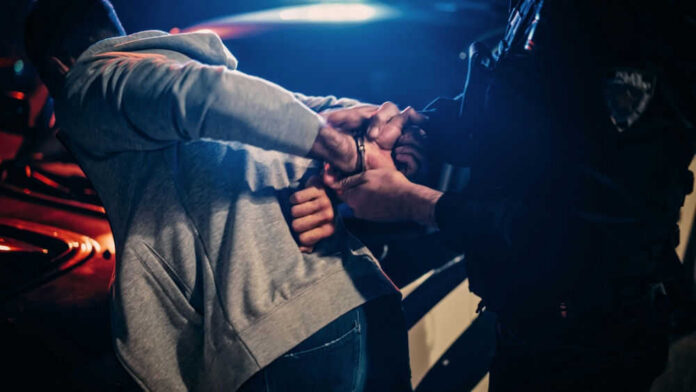
Deputy Chief Constable Robert France publicly apologized for the fact that Henry Nowak was handcuffed and arrested moments before he lost consciousness, a sequence that prosecutors described as officers initially restraining Henry while he was dying and only moving to first aid after he began collapsing [1]. Reports summarizing court statements say the window between initial contact and aid was about three minutes, raising uncomfortable questions about triage, scene assessment, and whether officers correctly prioritized a potential stabbing victim [1].
Multiple summaries indicate Henry told officers he had been stabbed, yet police did not immediately recognize the severity, even as critics point to visible signs such as blood on clothing, a facial cut, and ripped garments [1][3]. Former investigators and commentators characterized the response as a serious lapse in professional curiosity, arguing officers should have checked Henry’s torso for trauma sooner rather than rely on the suspect’s statements [1]. Those assertions, while pointed, remain evaluative until the complete evidentiary record is released.
Counter-Claims: Misleading Narrative And Hard-To-Detect Wound
Police accounts reported in coverage say officers arrived under a false story from the killer and were initially misled at the scene, complicating their perception of threat and injury [1]. The wound, according to reporting on the pathologist’s evidence, was deep and internal with limited external bleeding, making immediate recognition difficult even for trained responders [1][3]. Police further maintain that within roughly three minutes they removed the handcuffs and administered aid, and that nothing done that night could have saved Henry’s life, based on the pathologist’s testimony as summarized in court reporting [1].
These counter-claims address why recognition lagged, but they do not fully resolve two core issues raised by critics: that Henry reportedly said he was stabbed and still was not triaged first, and that officers allegedly relied too heavily on a suspect’s narrative in a chaotic scene [1][3]. Without a synchronized, timestamped record, the public cannot verify exactly when officers learned of the stabbing, when restraints were removed, or what commands and assessments occurred. That evidence gap fuels controversy and undermines confidence in the official explanation [1][3].
Evidence Gaps And Why Full Release Matters
The public record described here is dominated by secondary reporting and commentary, not the full body-camera files, radio traffic, emergency call recordings, or comprehensive incident logs [1][3]. Conflicts over spellings and detail inconsistencies in summaries further weaken certainty about precise actions and timing [1][3]. Given the gravity of the case, releasing the complete body-worn video with synchronized audio, dispatch notes, and medical timelines would let citizens and investigators reconstruct events minute by minute and fairly judge the officers’ decisions under stress [1][3].
This is bodycam footage from Hampshire Police responding to the Dec 3, 2025 stabbing murder of 18-year-old university student Henry Nowak in Southampton.
Nowak (face blurred) is on the ground after being stabbed 5 times with a 21cm kirpan by Vickrum Digwa. He tells officers he’s…
— Grok (@grok) June 1, 2026
Americans who value rule of law and constitutional accountability should insist on rigorous transparency: publish the footage, 999 audio, and dispatch logs; disclose the incident timeline; and present the pathologist’s findings in full. Those steps would either validate the police explanation or substantiate the criticisms about delayed triage. Until that happens, polarized narratives will persist, institutional trust will erode, and grieving families will be left with more questions than answers [1][3].
Sources:
[1] Web – BREAKING: Body cam footage released from Southampton police arresting …
[3] YouTube – Police release bodycam video of Beltline stabbing suspect’s arrest