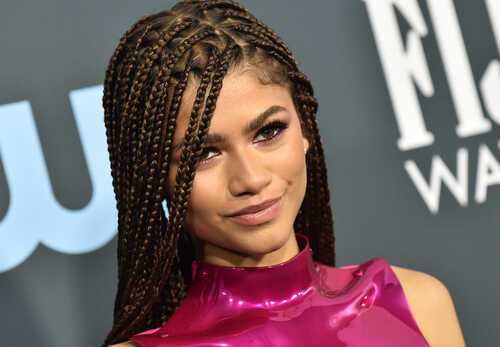
Zendaya’s flesh-toned “Dune” suit didn’t just turn heads at CinemaCon—it exposed how a culture that can’t agree on much still finds time to pile on, instantly and ruthlessly, from behind a screen.
Quick Take
- Zendaya wore a polarizing Schiaparelli two-piece to CinemaCon in Las Vegas while promoting Dune: Part Three.
- The outfit’s “nude corset toile” construction and sculpted silhouette sparked viral reactions on X and Instagram, ranging from praise to blunt mockery.
- The moment underscores how social media now functions as an unfiltered “public square” for celebrity branding—and public shaming.
- Coverage notes no public response from Zendaya or her team as the debate continues online.
CinemaCon’s Red Carpet Moment Becomes a Viral Rorschach Test
Zendaya arrived Tuesday at CinemaCon in Las Vegas alongside Dune: Part Three co-stars and director Denis Villeneuve, but the online conversation quickly centered on her outfit rather than the footage shown at the event. The actress wore a flesh-toned Schiaparelli look from the fashion house’s fall/winter 2026 collection: a tailored jacket with oversized lapels and molded hips paired with a pencil skirt. The material description—nude corset toile layered with jersey and wadding—became part of the story.
Publicity is the point of a press tour, and wardrobe has become one of Hollywood’s most dependable marketing tools. Zendaya’s styling—reported as minimal accessories, wet-look hair, and classic pumps—kept attention on the silhouette and texture rather than statement jewelry or a dramatic color palette. That choice also made the look easy to “read” in thumbnails and clips, which matters in a media environment where most people first encounter major moments through a fast scroll, not a fashion review.
Brutal Jokes, Real Applause, and the Incentives of Outrage Culture
Social media reactions documented by entertainment coverage ranged from harsh ridicule to enthusiastic approval. Some commenters compared the look to food or horror imagery, while others praised Zendaya’s willingness to commit to a theme and credited the craftsmanship. That split isn’t unusual; highly conceptual fashion often depends on shock value, and social platforms reward the sharpest one-liner more than a careful explanation. When the incentives favor dunking, even a red-carpet appearance becomes a contest for who can post the cruelest caption fastest.
Supporters, meanwhile, highlighted the film tie-in: Zendaya plays Chani, and her press-tour wardrobe has a track record of nodding to the Dune universe’s desert aesthetic. In that sense, the suit can be read as an extension of a broader branding strategy—one that merges celebrity, high fashion, and franchise marketing into a single social-media-friendly product. Critics may call that shallow, but it’s also a straightforward reflection of where entertainment economics have gone: attention is currency, and controversy reliably mints it.
What the Outfit Debate Says About the “New Public Square”
There’s no federal policy at stake in a couture argument, but the dynamic mirrors broader frustrations Americans voice about institutions that feel unaccountable. Online platforms promise a democratized conversation—anyone can weigh in—yet the loudest voices often win by being the most extreme. That imbalance leaves many people, left and right, convinced the system is rigged: not by law, but by algorithms and incentives that elevate outrage. In practice, “the crowd” can function like an unelected power center, shaping reputations in real time.
The Business Side: Free Publicity, High-End Branding, and Risk Management
The immediate impact appears clear: the outfit propelled headlines and social chatter, keeping Dune: Part Three in the public eye while also giving Schiaparelli a massive spotlight. Entertainment coverage also pointed to luxury details around the look, including pricey accessories, underscoring how celebrity fashion doubles as advertising for elite brands. That’s the trade: brands get exposure; celebrities reinforce status; studios gain buzz. The risk is that “polarizing” can flip into “mocked,” and online narratives can harden before a team can respond—if they respond at all.
For viewers tired of a culture that feels increasingly performative, the episode is a reminder that modern fame is less about a single event than the reaction cycle after it. Zendaya’s CinemaCon appearance shows how entertainment, marketing, and the online “jury” now blend together into one nonstop feedback loop—one that can celebrate creativity, punish experimentation, or simply turn everything into content. With no statement reported from Zendaya or her stylist, the story remains what the internet has made it: a referendum driven as much by platforms as by fashion.
Sources:
Zendaya’s flesh-toned ‘Dune’ suit divides fans with brutal social media reactions
Zendaya Schiaparelli “skin suit” outfit photos