A young Army mechanic stole a Huey helicopter and twice landed on the White House grounds, exposing a stunning security gap in 1974.
Story Snapshot
- Army Private First Class Robert Preston stole a Bell “Huey” from Fort Meade and landed on the White House lawn.
- Secret Service agents fired on the helicopter before Preston surrendered, ending the breach.
- Court-martial records show Preston received a year of hard labor and a fine.
- The incident remains a key case study in White House security failures.
What Happened During the 1974 Huey Intrusion
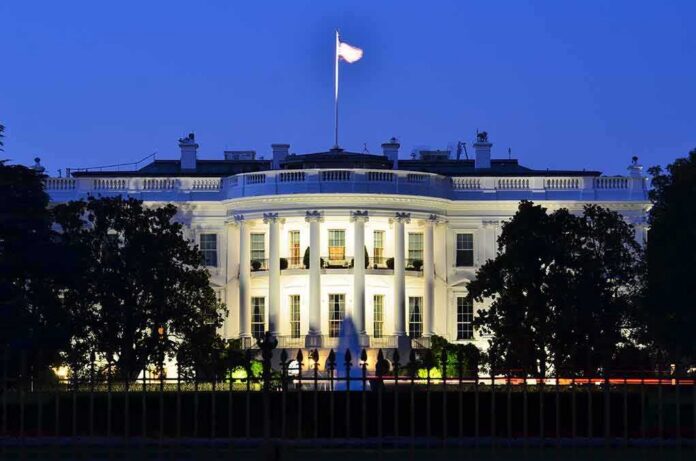
On February 17, 1974, Army Private First Class Robert Kenneth Preston took a Bell UH-1 “Huey” helicopter from Tipton Field at Fort Meade, Maryland, without permission. He flew to Washington and landed the aircraft on the South Lawn of the White House in what was described as a significant breach of security. The New York Times identified him as a 20-year-old helicopter maintenance technician. That contemporaneous report confirmed he reached the grounds before being stopped.
Accounts compiled later by museum and military writers describe how Preston maneuvered near the mansion, briefly set down, lifted off, and returned again to the South Lawn. Agents on scene said he recovered control and settled the Huey gently near the executive mansion before surrendering after fire from security personnel wounded him lightly. A congressional oversight document later summarized the event as a pass over the Executive Mansion and a brief touch down near the West Wing.
How Authorities Responded and What Followed
After the landing, law enforcement and the United States Secret Service moved to secure the grounds and take Preston into custody. An Associated Press dispatch reported that federal prosecutors dropped initial criminal charges that day and returned him to the Army for military proceedings, underscoring that the case would be handled under the Uniform Code of Military Justice. Months later, a court-martial sentenced Preston to one year of hard labor and imposed a $2,400 fine, confirming firm punishment for the unauthorized flight.
Subsequent write-ups, including standard references and historical summaries, consistently frame the incident as a “major” or “significant” breach. Those accounts agree on the core facts: a stolen Huey, an unauthorized flight from Fort Meade, landings on the South Lawn, gunfire from security, minor injuries, and a military conviction. While tone can vary, the factual spine has held steady for decades across primary documents and recognized outlets.
Why This Case Still Matters for Today’s Security
White House security history shows a recurring pattern of intrusions, near-misses, and perimeter failures over many decades. Reviews by news outlets and government materials list multiple breaches across eras, including fence-jumps, vehicle incursions, and airspace scares. From 2005 to 2015, official data cited by national outlets tracked over one hundred breach attempts at the complex. This broader record places the 1974 helicopter landing within a known risk category that planners must constantly address.
In 1974, a 20-year-old Army mechanic stole a Huey, flew over Washington and headed for the White House, where Secret Service agents opened fire. https://t.co/87z37VoYTh
— Military.com (@Militarydotcom) September 9, 2026
Conservatives value order, accountability, and strong protection of our leaders. The Preston case underscores that security discipline and quick action save lives. It also warns against complacency and bureaucracy that allow gaps to linger. President Trump’s security team must keep airspace control tight, communications clear, and response rules firm. Hard lessons from 1974 still apply: deter threats early, stop them fast, and maintain serious consequences for anyone who tests the White House perimeter.
Sources:
military.com, nytimes.com, oversight.house.gov