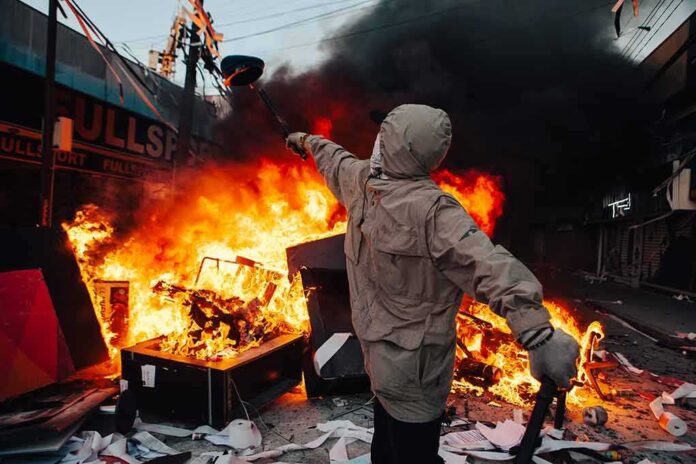
Dozens of Paris shops, including major retailers, were looted during nationwide unrest, as police fought rioters across the city and beyond.
Story Highlights
- Reporters on the ground saw looters smash windows and toss goods to crowds in Paris.
- Paris officials condemned vandalism that left whole streets devastated.
- Rioters targeted well-known retailers, including Galeries Lafayette and Lacoste.
- Unrest spread across several French cities amid cost-of-living anger.
What Happened In Paris And Across France
Agence France-Presse reported looting and clashes across France during large protests over rising prices. Reporters described groups attacking shuttered stores, with scores of shops looted in Paris and other cities. In Paris, police blocked crowds moving toward the Champs-Élysées, where flagship boutiques line the avenue. In Marseille, an Hermès boutique was looted. The violence mixed with large peaceful marches, but the damage in key retail areas drew global attention and alarmed city leaders.
An Agence France-Presse correspondent in Paris saw a skincare store window near Place de la République crash. Looters threw beauty products to people outside. A breached phone shop led to mobile phones tossed into a crowd. These vivid scenes showed how fast a mob can strip a store once glass gives way. The same report noted damage to pharmacies, supermarkets, and electronics shops, which widened the toll beyond a single sector.
Which Stores Were Hit
Citing events in central Paris, CNBC reported rioters tried to force entry at Galeries Lafayette, ransacked a Lacoste store, and looted an SFR mobile-phone shop. These brands are well known, and their locations sit near busy commercial corridors. The mix of targets included fashion and electronics, not only luxury boutiques. The reports do not offer a firm count of how many luxury stores were hit, but they confirm multiple retail breaches in Paris.
Paris deputy mayor Emmanuel Grégoire said most demonstrators aimed to march calmly but that vandals tarnished the protest. He described entire streets in Paris as devastated by the rioting and looting. His comments track with what reporters saw. They also echo a pattern France has seen before, where a smaller violent group hijacks a larger movement and turns city centers into security zones and cleanup sites by morning.
How This Fits A Known Pattern
During the Yellow Vest turmoil in 2019, Reuters reported that looters and arsonists damaged luxury businesses on the Champs-Élysées, with dozens of shops hit. Officials then stressed that the violent core did not represent most marchers. The latest unrest follows the same path: peaceful crowds, then a breakaway wave that smashes and grabs. That pattern strains police and punishes shopkeepers who had nothing to do with the politics on display.
How far will France’s anger go as protests erupt into chaos across the country?
What began as mass demonstrations has descended into scenes of destruction, with young people looting stores and setting fires in Paris, police firing tear gas and charging crowds with batons, and… pic.twitter.com/5RoggOgY5B
— APT News (@APT__News) October 18, 2026
The current reports also caution against lumping every incident into “luxury” looting. The damaged sites ranged from cosmetics and clothing to pharmacies and phone shops. That does not reduce the harm. It does show that urban unrest often targets what is close and unguarded. For Parisians and visitors, the result is the same: broken glass, lost jobs, higher insurance, and a sense that public order can collapse fast when leaders let it slide.
Why It Matters To American Readers
Looting in a major allied capital highlights what happens when order gives way. Small businesses suffer first. Families lose paychecks. Streets become unsafe. French officials now face a tough choice: restore control or watch more shops fall. American readers know this story. Cities here learned that letting mobs run free only invites more chaos. Secure streets protect honest people and deter the worst actors who hide behind protests to steal and destroy.
President Trump has pressed a simple rule at home: enforce the law, back the police, and protect property. France’s experience shows why that matters. When leaders signal weakness, mobs hear a green light. When leaders stand firm, the law-abiding can speak out without fear, and businesses can open their doors. Paris will rebuild, as it did in 2019. But rebuilding is costly and slow. Strong policing and fast justice are cheaper and fairer to working families and shopkeepers.
What Comes Next In France
French authorities will work to identify looters and count losses. Retailers will assess damage and file claims. City officials will debate crowd control and protest routes. Police presence near the Champs-Élysées and other retail hubs will likely increase. The key test is whether arrests lead to charges and real penalties. That is how France can protect peaceful speech while stopping those who use a march as cover to smash, grab, and burn again.
Sources:
instagram.com, afp.com, news.com.au