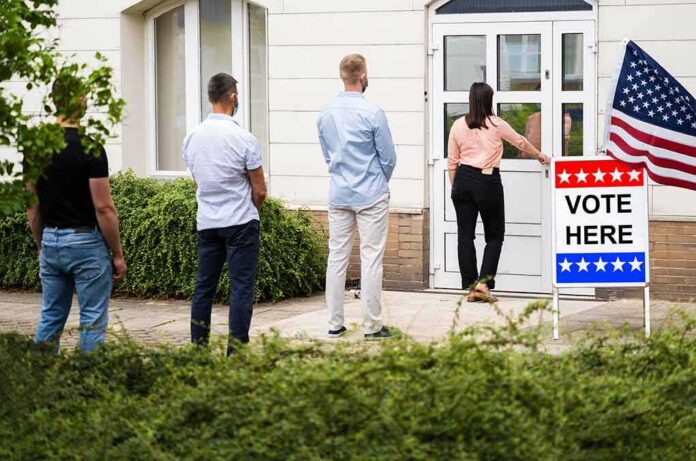
Taxpayer money reportedly bankrolled a nonprofit’s voter operation that critics say blurred into partisan ground inside a county voting site.
Story Highlights
- Public records show CHIRLA took in tens of millions in government grants.
- Undercover account alleges endorsements were handed out at a county voting site hosted at CHIRLA.
- CHIRLA promotes an “Immigrant Political Power Project” tied to building a voter base.
- CHIRLA denies partisan activity and says its entities are legally separate and audited.
Government Grants Funded a Powerful Voter Outreach Machine
The Sacramento Bee reported that the Coalition for Humane Immigrant Rights of Los Angeles received about $33.9 million in government grants in a recent tax year, and lawmakers have questioned the group’s public funding amid broader protests and activism. The Daily Signal tallied about $80.7 million in taxpayer-derived revenue for fiscal years 2021 through 2025, or about 67.9 percent of $118.8 million in total revenue, underscoring how much public support fuels CHIRLA’s operations. Those figures frame the accountability stakes for voters and taxpayers.
The Spectator reported that a state-submitted audit showed $34 million in government receipts, with spending categorized under organizing, civic engagement, community education and outreach, and policy and advocacy. Those labels raise fair questions about where education ends and electioneering begins. Federal law bars tax-exempt charities from endorsing candidates. The line is clear in principle but often murky in practice. When public dollars are involved, the duty to keep that line bright becomes even more urgent for trust in elections.
Alleged Endorsements Inside an Official County Voting Site
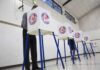
City Journal reported that Los Angeles County ran a Flex Voting Center at CHIRLA’s facility, equipped with Smartmatic voting tablets and a ballot drop box. A related undercover account alleged that CHIRLA staff gave candidate endorsements to voters at that location, a claim that, if verified, would cross a legal red line and raise election-integrity concerns inside an official voting space. City Journal also reported CHIRLA’s response that staff are trained to give voters clear, accurate guidance when asked, highlighting a direct dispute over what occurred.
The allegation remains disputed and requires primary-source review. The available coverage does not publish a complete, authenticated recording with identified staff, dates, and the exact language of any endorsements. No cited agency has issued a completed enforcement action or ruling on the claim in the material reviewed. That said, the charge is serious. Endorsements in a voting center would violate the nonpartisan rule for tax-exempt charities and could run afoul of state election laws designed to protect voters from pressure or partisan steering.
CHIRLA’s Stated Mission and the Political Power Project
CHIRLA’s own website describes an Immigrant Political Power Project as a joint initiative with the CHIRLA Action Fund that targets new citizens, Latinos, and English learners to build participation and political power. That framing shows an intent to mobilize a specific electorate. The Daily Signal reported that CHIRLA’s communications director said the organizations are separate, comply with Internal Revenue Service rules, avoid partisan activity at the charity, and undergo regular independent audits. Those claims, if accurate, would be essential guardrails.
CHIRLA’s civic-engagement page says the department builds electoral participation among immigrant, Latino, English-learning, hard-to-reach, and new voters. Another page says the group reaches, engages, and educates voters whom parties often ignore. Such outreach can be lawful when nonpartisan. The question is whether training, scripts, or on-site conduct crossed into endorsements. That is where documentation matters. Transparent records and full video evidence can confirm whether staff stayed within the law.
Accountability Questions for Public Dollars and Election Rules
Conservatives expect strict separation between taxpayer-funded charity work and partisan politics. The reporting raises concrete steps for answers. Audits and contracts could show whether public grants funded civic-engagement staff or activities near elections and what deliverables were allowed. Investigators can request California contracts, scopes of work, invoices, time sheets, and monitoring reports to trace dollars into specific programs, as critics urge. If state rules were followed, records should show that plainly and quickly.
City Journal’s piece notes the possibility of state or federal violations but identifies no completed finding in the provided material. That leaves a gap that regulators should close. Clear rulings protect lawful voter education and deter abuses. Voters deserve confidence that no one turns a public grant or a voting site into a campaign booth. President Trump’s administration and state partners can press for full transparency so the law is applied evenly, politics stays out of polling places, and trust is rebuilt for everyone.
Sources:
zerohedge.com, redstate.com, simplify.jobs, thebeltwayreport.com, lifezette.com, chirla.org, democracydocket.com