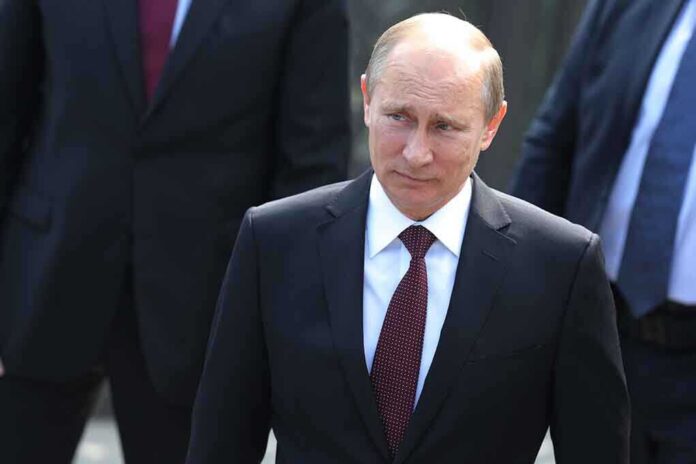
Vladimir Putin’s late-night arrival in New Delhi ahead of the BRICS summit puts India–Russia ties center stage and signals fresh moves by a growing bloc that challenges Western-led systems.
Story Highlights
- Putin landed in New Delhi ahead of the 11-member BRICS summit, with security and diplomacy in high gear.
- The visit sets up bilateral talks with Prime Minister Narendra Modi on energy, trade, and strategic ties.
- The summit’s agenda features wars in the Middle East and Ukraine, plus economic coordination among new BRICS members.
- India’s hosting underscores its push for strategic autonomy while dealing with both Moscow and Washington.
Putin Touches Down In New Delhi For BRICS
Russian President Vladimir Putin landed in New Delhi on Friday ahead of an expanded BRICS summit, confirming his in-person role at high-stakes talks hosted by India. Reporting placed his arrival at the Palam Air Force Station, where Indian officials received him as New Delhi tightened security and prepared venues for leaders across the 11-member grouping. The schedule includes a leaders’ program on September 12–13 and side meetings that typically drive concrete deliverables for energy, trade, and finance.
Indian coverage and prior official statements had flagged Putin’s trip for months, framing it as his second India visit in under a year and a chance to deepen bilateral cooperation. Kremlin-linked signals earlier affirmed his participation, which aligned with India’s plan to showcase results under its term as BRICS chair. The landing now shifts attention from speculation to outcomes: what Moscow and New Delhi will announce on oil flows, defense ties, payments, and other deals that shape India’s economic and security posture.
Summit Focus: Security Crises And Economic Coordination
Outlets tracking the agenda say the summit will be dominated by the wars in the Middle East and Ukraine, as well as bloc-level economic coordination among new members added since 2024. Leaders are expected to discuss supply shocks, global inflation, shipping risks, and currency and payments cooperation that can blunt outside pressure on trade routes and energy markets. That mix has long made BRICS a forum where non-Western economies seek leverage and options beyond institutions built and steered by Washington and Brussels.
India’s role as host adds weight to the optics. New Delhi has kept oil flowing from Russia, expanded discount energy purchases, and pushed for practical payment workarounds, all while maintaining strong defense and tech links with the United States. Analysts describe this as strategic autonomy: India aims to set its own course, partner by issue, and avoid capture by any single power center. The presence of Putin in the capital underscores that approach and keeps Moscow close without giving Beijing a free hand within the bloc.
What The Modi–Putin Meeting Could Deliver
Indian and Russian readouts often emphasize steady gains in trade volume, energy security, and defense industry supply lines. Observers expect the leaders to review oil purchases, spare parts and maintenance pipelines, and rupee-friendly payment systems that ease sanctions friction, with any announcements likely timed to the summit’s final sessions. Such moves would help India manage fuel prices at home and preserve critical military readiness, while giving Russia durable markets for its exports under continuing Western pressure.
#WATCH 🎥 | Delhi | Russian President Vladimir Putin arrives at Bharat Mandapam ahead of his bilateral meeting with Prime Minister Narendra Modi, scheduled shortly.
Putin is in India for the 18th BRICS Summit, which begins in New Delhi on September 12. His meeting with Modi… pic.twitter.com/hX87mXMWW0
— Moneycontrol (@moneycontrolcom) September 11, 2026
For American readers, the stakes are clear. A larger BRICS that coordinates on energy and payments can weaken Western leverage built through the dollar system and sanctions. India’s balancing act is not anti-American, but it is pro-India. Washington must compete by offering reliable energy trade, clean supply chains, and fair market access, not lectures. That aligns with conservative goals: stronger American industry, cheaper energy for families, and less dependence on global bodies that push costly green mandates.
Sources:
youtube.com, aljazeera.com, aninews.in, timesofindia.indiatimes.com