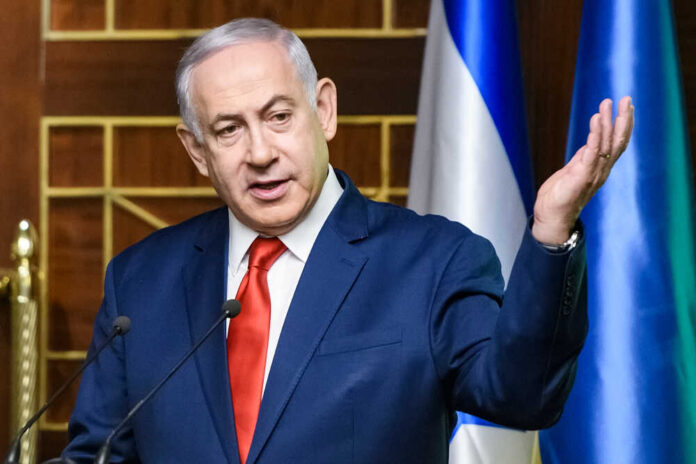
Israeli Prime Minister Benjamin Netanyahu reversed his opposition and agreed to join President Trump’s Gaza Board of Peace just days after publicly criticizing its composition.
Story Highlights
- Netanyahu joins Trump’s Board of Peace on January 21, 2026, despite earlier objections to Turkish and Qatari involvement in the Gaza Executive Board
- Trump’s 20-point Gaza peace plan aims to disarm Hamas and demilitarize Gaza through international cooperation, with the Board mobilizing resources for accountability
- The reversal underscores Netanyahu’s dependence on Trump for hostage leverage and security guarantees, even as Israel fears rivals may enable Hamas resurgence
- Trump chairs the Board with Jared Kushner, Secretary of State Marco Rubio, and special envoy Steve Witkoff, while inviting Russia’s Putin to participate
Netanyahu’s Strategic Reversal on Peace Board
Netanyahu announced on Wednesday his acceptance of Trump’s invitation to join the Board of Peace, reversing criticism he leveled just two days earlier. On Monday, Netanyahu’s office complained the Gaza Executive Board’s composition—featuring Turkish Foreign Minister Hakan Fidan and Qatari representative Ali Al-Thawadi—was never coordinated with Israel. The rapid shift reflects Netanyahu’s calculated decision to maintain access to Trump rather than risk alienating the administration that secured the release of twenty hostages during ceasefire phase one. This deference to Trump’s vision continues a pattern established since the 2024 election.
Watch: https://www.youtube.com/watch?v=TWS0yoxblfA
Trump’s 20-Point Plan Takes Center Stage
President Trump unveiled his comprehensive Gaza peace plan on September 29, 2025, building on Israel’s 2005 Gaza withdrawal and aiming for Hamas disarmament through international oversight. The Board of Peace, announced by the White House on January 16, 2026, executes all twenty points of the plan with Trump serving as chairman alongside Kushner, Rubio, Witkoff, and investor Marc Rowan. Trump positioned the framework as an alternative to United Nations involvement, remarking during preparations for the Davos signing ceremony that the UN “hasn’t been helpful” and might be replaced. The plan mobilizes international resources for Gaza’s transition from Hamas rule to a technocratic Palestinian administration.
Hostage Success Fuels Netanyahu’s Gamble
The release of all twenty living hostages—plus most remains of slain captives—during ceasefire phase one in October 2025 validated Netanyahu’s strategy of leveraging Trump’s influence over pursuing full military victory against Hamas. Trump set an early October 2025 deadline for Hamas acceptance, threatening “complete obliteration” if rejected, which pressured the terror group into compliance. Netanyahu publicly declared phase two would see “Hamas disarmed, Gaza demilitarized—easy or hard way,” framing the Board’s work as Israel’s path to security. Yet one hostage, Ran Gvili, remains unaccounted for, and Hamas has not been defeated militarily, raising concerns about the plan’s enforceability.
Risks of Rival Influence in Gaza’s Future
Israel’s security establishment views the inclusion of Turkey and Qatar on the Gaza Executive Board as a recipe for Hamas rehabilitation rather than elimination. These nations maintain ties with Hamas leadership and have historically supported the group’s political agenda, contradicting Israel’s objective of permanent demilitarization. U.S. officials propose trust-building through dialogue and amnesties for Hamas fighters. Netanyahu’s unwillingness to oppose Trump publicly on this composition reflects his prioritization of the bilateral relationship over immediate security concerns, gambling that American oversight will prevent the worst outcomes.
Trump extended invitations to international leaders including Russia’s Vladimir Putin, who is reviewing the offer, while France declined participation. The Board’s formation challenges traditional United Nations peacekeeping roles in the Middle East, positioning Trump’s administration as the primary arbiter of Gaza’s post-conflict transition. Netanyahu’s decision to join despite facing an International Criminal Court arrest warrant for alleged war crimes demonstrates the political calculation behind his acceptance. The Davos signing ceremony will provide Trump an opportunity to showcase the alignment between Washington and Jerusalem, even as unresolved tensions over the Executive Board’s composition and Hamas’s future threaten the plan’s long-term viability.
Sources:
Netanyahu Agrees to Join Trump’s Gaza Board of Peace After Initial Pushback – Fox News