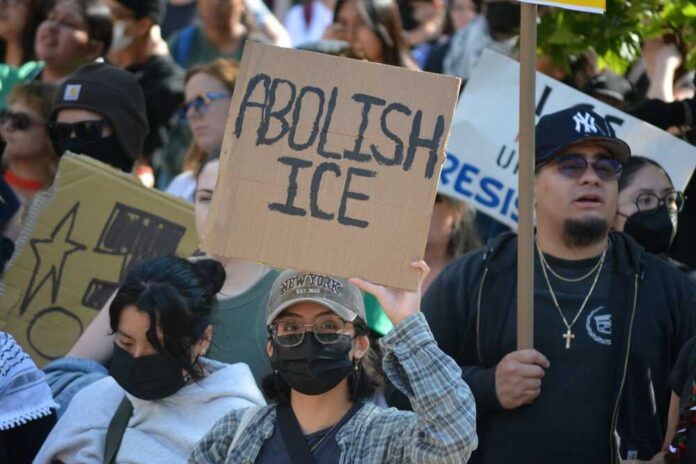
In a dramatic escalation, pro- and anti-ICE protests in Minneapolis have ignited a fierce battle over immigration policy, highlighting the deep national divide.
Story Snapshot
- Pro-ICE and anti-ICE protests clash amid record federal immigration enforcement.
- Jake Lang, a January 6 defendant, leads a pro-ICE rally and is met with larger counterprotests.
- Judicial limits imposed on law enforcement tactics during protests.
- Over 2,500 arrests made since the federal immigration surge began.
- National Guard and federal troops on standby due to escalating tensions.
Clashes Erupt Between Protest Groups in Minneapolis
On January 18, 2026, downtown Minneapolis became a battleground as pro-ICE demonstrators, led by conservative activist Jake Lang, clashed with a significantly larger anti-ICE contingent. The confrontation occurred against the backdrop of the Trump administration’s intensified immigration enforcement operations, which have drawn sharp criticism and sparked ten consecutive nights of protests. The fatal shooting of Renee Good by an ICE officer has become a flashpoint, fueling the ongoing demonstrations.
The pro-ICE rally, organized by Lang—recently pardoned by President Trump for his involvement in the January 6 Capitol riots—was met with a vehement response from counterprotesters. The clash reflects the broader conflict over federal immigration policy, as Minnesota, with its significant Somali immigrant population, becomes a focal point for both enforcement and resistance. The protests have centered around key locations such as downtown Minneapolis and City Hall.
Watch: https://www.youtube.com/watch?v=kqSnsH52O3k
Federal Court Intervenes Amid Rising Tensions
In response to the escalating conflict, a Minnesota federal judge imposed restrictions on law enforcement tactics, prohibiting the use of tear gas and unjustified detentions against peaceful protesters. These judicial measures underscore concerns over civil liberties and the appropriate limits of federal enforcement authority. Meanwhile, the Department of Justice is actively investigating Minnesota Governor Tim Walz and Minneapolis Mayor Jacob Frey for allegedly obstructing federal immigration operations, further intensifying political tensions between state and federal authorities.
With over 3,000 federal officers deployed to Minnesota, the Trump administration’s aggressive immigration enforcement approach is facing mounting opposition. Governor Walz has highlighted the lack of accountability for the ICE officer involved in Renee Good’s death, arguing that federal actions are overreaching and unjust.
Military and National Guard on Standby
As the situation remains volatile, the Minnesota National Guard has been mobilized, and 1,500 active-duty soldiers are on standby in Alaska for potential deployment to Minneapolis. This readiness highlights the federal government’s commitment to maintaining order amid the ongoing unrest. However, the deployment of military forces to manage civil unrest within U.S. cities raises significant questions about civil-military relations and the scope of executive authority.
The protests, occurring under extreme winter weather conditions, continue to strain law enforcement resources while drawing attention to the deep-rooted divisions over immigration policy. With more than 2,500 arrests since the surge began, the ongoing demonstrations reflect the profound impact of federal immigration enforcement on local communities, particularly Minnesota’s immigrant population.
As the nation watches closely, the events in Minneapolis serve as a stark reminder of the ongoing national debate over immigration policy, federal authority, and the rights of protesters. As both sides dig in, the potential for further escalation looms, demanding careful navigation to avoid further violence and uphold constitutional principles.
Sources:
ABC News – Protesters Clash with Federal Agents in Minneapolis
CBS News – Minnesota Protests: ICE Shooting and Law Enforcement