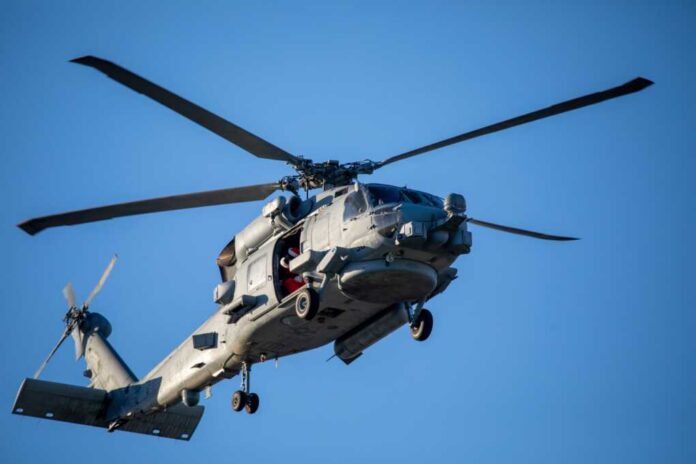
A U.S. Army Apache crash near the Strait of Hormuz has turned into a stark reminder that America’s military still faces danger in one of the world’s most volatile waters.
Quick Take
- Two U.S. Army crew members were rescued within about two hours and were reported in stable condition.
- The rescue used an unmanned surface vessel, which officials described as the first water rescue of its kind.
- The cause of the Apache crash remains under investigation, with mechanical failure and hostile action both still in play.
- President Donald Trump said Iran shot down the helicopter, but officials have not released a final finding.
Sea Drone Rescue Marks a Military First
The U.S. military pulled off an unusual rescue after an Apache helicopter went down near the Strait of Hormuz. U.S. Central Command said the two crew members were safely recovered within about two hours and were in stable condition. Officials also said an unmanned surface vessel carried out the water rescue, making it the first such operation ever done by the United States military.[1][4]
That detail matters because the rescue itself is not just a headline; it is a sign of how fast military technology is changing. A surface drone found the crew, moved them to another point on the water, and helped with the handoff for further transport. CBS News reported that the drone was operated by Task Force 59, a unit based inside the United States Fifth Fleet in Bahrain.[1][2]
Cause of the Crash Remains Unclear
The biggest unanswered question is why the helicopter went down in the first place. Central Command said only that the cause is under investigation, and later reporting kept both mechanical failure and enemy fire on the table. Fox News and other outlets said officials were not ready to rule out either explanation, which shows the record still lacks a final answer.[4][6]
President Trump moved faster than the investigators. CBS News reported that he said the Apache was shot down by Iran and that the United States must respond to the attack. That is a serious claim, but it remains a claim until officials release forensic evidence, sensor data, or a formal investigation result that backs it up.[1]
Why the Strait of Hormuz Raises the Stakes
The crash happened near the Strait of Hormuz, one of the most contested sea lanes on earth. That location alone makes any military accident there instantly suspicious to many viewers, because Iran and the United States have long been locked in tension around the waterway. Even so, the available reporting still does not prove hostile action, and the official line remains that the incident is under review.[1][6]
🧭🇮🇱 The First Order Consequence:
Israel’s security cabinet authorized strikes in Beirut in response to cross-border fire from Lebanon: potential escalation of Israel’s war posture without clearly established restraint mechanisms, which could either deter Hezbollah or trigger… https://t.co/fCUwM3cbCt— U.S.A.I. 🇺🇸 (@researchUSAI) June 9, 2026
For conservatives, the story cuts in two directions. The drone rescue shows that American forces can adapt quickly and use new tools without waiting for a bloated bureaucracy to catch up. At the same time, the lack of a clear public answer on the crash leaves room for confusion, political spin, and rushed conclusions. Until investigators speak plainly, the American public is left with a rescue victory and a causation mystery.[1][4][6]
What Readers Should Watch Next
The next key step is the official investigation. If the military later finds mechanical failure, that would change the story from one of hostile action to one of aircraft loss in a dangerous zone. If the crash was caused by enemy fire, then the Trump administration will face pressure to show strength and explain what response follows. Either way, the facts matter more than the noise around them.[1][4][6]
Sources:
[1] YouTube – REPORT: U.S. rescues helicopter pilots with sea drone, Israel restates …
[2] Web – AH-64 Apache Crew Rescued By Drone Boat After Going Down …
[4] Web – Accident Boeing AH-64 Apache , Tuesday 9 June 2026
[6] Web – U.S. Apache helicopter shot down by Iran, Trump says; crew rescued by …