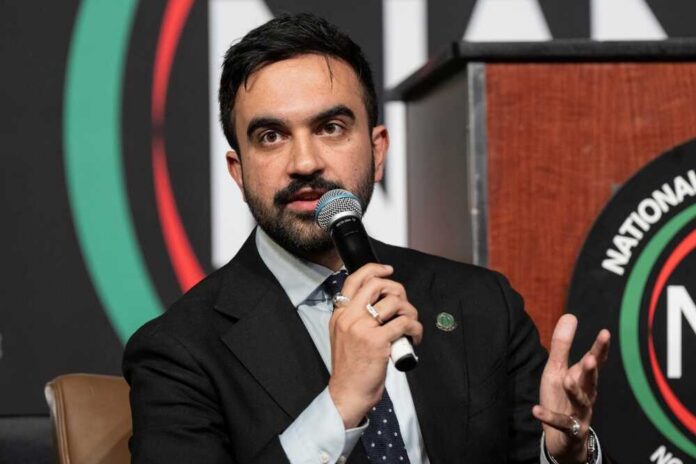
New York City’s new budget pitch dares Albany to approve a “millionaire tax” or watch a property-tax hike hit everyday homeowners.
Quick Take
- Mayor Zohran Kwame Mamdani released a $127 billion FY2027 preliminary budget that claims to close a $5.4 billion two-year gap.
- The plan centers on a stark choice: state-approved income and corporate tax hikes raising about $3.7 billion, or a 9.5% city property tax increase plus reserve drawdowns.
- Gov. Kathy Hochul provided $1.5 billion in state aid but has pushed for spending cuts and has opposed new tax increases.
- A Siena poll reported a majority of New Yorkers prefer taxing high earners over broad property-tax hikes, giving Mamdani leverage in a state-level fight.
Mamdani’s Budget Ultimatum: Tax the Wealthy or Raise Property Taxes
New York City Mayor Zohran Kwame Mamdani’s FY2027 preliminary budget totals $127 billion and is framed as “balanced” while confronting a reported $5.4 billion gap over two years. City documents and reporting describe two main pathways: Albany authorizes higher taxes on individuals earning over $1 million and on profitable corporations, or the city leans on a 9.5% property tax increase paired with reserve draws. The strategy squarely shifts the decision to state leaders.
City figures circulating around the proposal put the revenue target at roughly $3.7 billion from the millionaire and corporate taxes, mirroring what the property tax hike would generate. The budget presentation also anticipates using reserves, including nearly $1 billion in FY2026 and additional drawdowns in FY2027, if state approval for new tax authority does not arrive. That structure matters because one-time reserve use can mask long-term spending commitments rather than forcing reforms.
Albany Holds the Power, and Hochul’s Conditions Shape the Outcome
New York City cannot simply impose new income tax brackets on its own; state approval is the gatekeeper. Gov. Kathy Hochul has already provided $1.5 billion in aid across FY2026 and FY2027, but coverage of the negotiations describes her position as demanding cuts while resisting broad tax hikes. For taxpayers outside the city, that state leverage is the entire point: decisions in Albany can shift costs and incentives well beyond the five boroughs.
State legislative Democrats have signaled interest in formal measures aligned with Mamdani’s request, and a Siena poll found 54% of voters favored taxing higher earners rather than resorting to a property tax hike. That political reality strengthens Mamdani’s messaging, but it does not change the fiscal math or the risk that a “tax-the-rich” plan can be treated as an easy substitute for spending restraint. The sources provided do not show a verified “Millionaire’s Club” organization endorsing the plan.
Property-Tax Reform Promises Meet a System Long Called “Broken”
New York City’s property tax system has been criticized for years as inequitable, and multiple administrations have floated fixes. Reporting describes a forthcoming reform effort under Mamdani’s team, influenced by a 2021 commission launched under Mayor Bill de Blasio and by internal work briefed to Mamdani’s transition after Mayor Eric Adams’ term ended. Those past discussions included ideas such as lifting caps and offering targeted relief for households under certain income thresholds.
Property-tax politics are not abstract: a 9.5% increase would hit homeowners directly and can ripple into rents, co-op maintenance, and broader cost-of-living pressures. Conservatives watching from outside New York City will recognize the familiar pattern—government growth first, then a scramble to decide which group pays—while core services and accountability questions remain. The research indicates the city is trying to avoid blunt property tax pain, but the alternative is a permanent push for higher recurring taxes.
Overspending Critiques, Service Expansions, and What the Numbers Don’t Prove
Critics highlighted in the research argue the $127 billion plan reflects an 81% increase from 2013 levels and frames residents as “leverage” to win new taxes. Supporters emphasize program funding and fairness, pointing to items such as expanded legal staffing and food-related spending mentioned in coverage. The stronger, verifiable point is that the city is presenting a binary choice—either broader property taxes or targeted high-earner and corporate taxes—without resolving the underlying question of spending discipline.
New York Millionaire's Club Says They're Happy Paying Higher Taxes Under Mamdani https://t.co/JB89Y9s251
— zerohedge (@zerohedge) March 8, 2026
New Yorkers should also separate polling from proof. A majority preference in a survey does not establish that a millionaire tax will raise the projected revenue over time, nor does it show that high earners and corporations will not change behavior. The provided sources note debate over how ambitious reforms can be delivered and acknowledge key details remain pending, including the exact Albany bill language and the city’s final property-tax reform blueprint.
Sources:
https://atr.org/mamdani-uses-new-yorkers-as-leverage-to-get-his-tax-hikes/
https://www.cityandstateny.com/politics/2026/03/majority-new-yorkers-want-tax-rich-nyc/411866/
https://www.governing.com/urban/can-mamdani-deliver-on-property-tax-reform
https://nysfocus.com/2026/03/06/mamdani-corporate-tax-albany