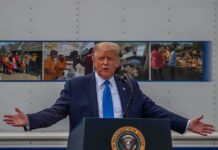

As Israel “deepens” its military operation inside Lebanon to push Hezbollah farther from its border, American conservatives are watching another front in the long war against Iran-backed terror take shape.
Story Snapshot
- Netanyahu orders a “deepening” of Israeli ground operations in Lebanon, beyond the long-used buffer zone.[1][3][4]
- Israel says the goal is to protect northern communities by pushing Hezbollah rockets and anti-tank missiles farther away.[1][2][4]
- Critics warn the expanded campaign risks more civilian casualties and wider regional destabilization.[1][4]
- The clash highlights a core question for U.S. allies: how far to go in confronting Iranian proxies before they reach your own towns.[2][4]
Netanyahu’s New Push: Deepening Operations Beyond the Border
Israeli Prime Minister Benjamin Netanyahu has ordered the Israel Defense Forces to “deepen” and “further expand” ground operations in southern Lebanon, framing the move as essential to protect northern Israeli communities from Hezbollah attacks.[1][3][4] Speaking in video statements and public remarks, he said the military is seizing control of areas and “fortifying the security zone” to change the reality on the northern front after months of rocket, drone, and anti-tank fire into Israel.[1][2][3] For Israelis near the border, this is being sold as a necessary pushback, not a choice.
Netanyahu’s language has been explicit: Israel is “expanding the existing security buffer zone” and “pressing the pedal even harder” against Hezbollah positions.[1][2][3] Israeli reporting describes advancing beyond the self-declared “Yellow Line,” a buffer extending roughly several miles into Lebanon that Israel has long treated as a security belt against incursions.[1][3][4] By moving past that line with larger ground forces, the government signals it is not satisfied with tit-for-tat strikes and wants to physically push Hezbollah’s launch sites and infiltration routes farther north, away from Israeli homes and highways.[3][4]
Security Rationale: Shielding Towns from Hezbollah Rockets and Drones
Israeli officials argue the expansion is a direct response to repeated Hezbollah rocket barrages, armed drone attacks, and cross-border fire that have targeted northern communities, schools, and civilian infrastructure.[2][4] Reports cite incidents where explosive drones crashed into homes and damaged public areas such as bus stops in border towns, underscoring why residents feel like they are living on the front lines rather than inside a secure sovereign nation.[2] From Jerusalem’s perspective, no government can tolerate a terror proxy parking precision weapons just across the fence.
Military planners have reportedly discussed seizing territory south of Lebanon’s Litani River and systematically destroying buildings and infrastructure used by Hezbollah for firing positions and logistics.[2][3] Israeli sources say this kind of deeper buffer is designed to push anti-tank missiles and short-range rockets out of effective range of many Israeli towns and key roads.[3] For conservatives who believe in peace through strength and clear red lines, that logic will sound familiar: if an enemy keeps firing from the border, you move the border threat back until your families are safe.
Escalation Risks: Civilian Harm, Regional Tension, and Media Framing
Opponents of the expanded operation, including many foreign outlets and commentators, describe the same moves as aggressive escalation that endangers Lebanese civilians and risks dragging the region toward a broader war.[1][4] Coverage emphasizes that Israeli forces are operating deeper in Lebanon and that airstrikes have hit multiple areas in the south and east, fueling concerns about casualties and displacement among noncombatants living in mixed civilian-militant zones.[4] These critics cast the campaign less as security defense and more as territorial expansion or pressure on Beirut.
🔔'Prime Minister Benjamin Netanyahu, today, at the start of the Security Cabinet meeting:
"As per the directive of myself, the Defense Minister and the IDF Chief of Staff, we are deepening our operation in Lebanon. The IDF is operating with large forces on the ground and seizing… pic.twitter.com/N6UCXYGFo5— Renate Brigitte Mierscheidt (@RenateBrigitte3) May 27, 2026
This clash of narratives fits a familiar pattern in border conflicts: governments under fire describe operations as defensive necessities, while adversaries and sympathetic media talk about occupation, mission creep, and sovereignty violations.[1][2] In this case, Israel stresses “protection of northern communities” and “deterrence against invasion,” while critics stress “deepening operations” and “crossing red lines” inside Lebanon.[1][3][4] For American readers who have watched years of lopsided coverage, the same footage of Israeli tanks can be portrayed either as border defense or as imperial overreach, depending on the outlet’s politics.
What It Means for U.S. Conservatives Watching from Home
For conservatives in the United States, Netanyahu’s move raises familiar questions about how free nations should deal with terror groups backed by hostile regimes such as Iran.[2][4] Israel faces what many border-state Americans fear at home: well-armed enemies just across a line, using gaps in security and political hesitation as leverage. Israeli leaders view a stronger buffer as the only realistic alternative to letting Hezbollah dictate daily life in their own territory, something no sovereign country should accept.[3]
At the same time, the operation’s “deepening” brings its own dangers: more urban fighting, more propaganda opportunities for anti-Israel activists, and more pressure on Washington to “restrain” its closest Middle East ally.[4] The situation underscores why many on the right are wary of global institutions and media that routinely demand Israel show restraint while ignoring the terror infrastructure built among civilians. As Israel pushes Hezbollah back from the border, Americans who value strong borders, self-defense, and national sovereignty will recognize both the necessity and the political cost of acting before your own towns become the next frontline.
Sources:
[1] YouTube – Netanyahu announces ‘deepening’ of Israeli military operation in …
[2] YouTube – Netanyahu orders military to expand invasion of southern Lebanon
[3] Web – Netanyahu Announces Expansion of Security Zone as Israel Steps …
[4] Web – Benjamin Netanyahu announces expansion to Lebanon buffer zone