
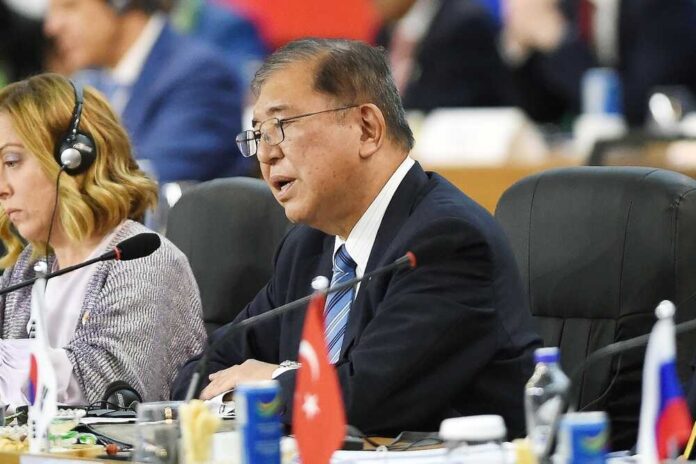
Japanese Prime Minister Ishiba Shigeru faces intense pressure but refuses to step down following a disastrous election defeat.
At a Glance
- The LDP-Komeito coalition lost its majority in the Upper House.
- Prime Minister Ishiba refuses to resign despite historical precedent.
- New populist parties gain significant ground in Japanese politics.
- Political deadlock in Japan could impact trade negotiations with the U.S.
Ishiba’s Refusal to Resign Sparks Controversy
Japanese Prime Minister Ishiba Shigeru has found himself in the eye of a political storm following the Liberal Democratic Party’s (LDP) loss in the Upper House elections. Historically, such a defeat would signal a resignation, yet Ishiba has chosen to stand his ground, citing his duty to the nation. This decision has not only defied tradition but has also left many questioning the future of Japan’s political landscape.
Watch: Japan Prime Minister Ishiba vows to stay on despite election loss | BBC News
The LDP-Komeito coalition needed to secure at least 50 of the 125 seats to maintain a majority, but they fell short, winning only 47 seats. This defeat marks the first time since 1955 that the LDP has lost its majority in both houses of the Diet, a record that has sent shockwaves through Japanese politics.
Rise of Populist and Nationalist Parties
The election results are a clear indication of the Japanese electorate’s growing disillusionment with traditional political parties. New populist and nationalist parties have capitalized on this sentiment, with the Democratic Party for the People (DPFP) and Sanseito making substantial gains. The DPFP increased its seats from 4 to 17, while Sanseito went from 1 to 14, signaling a shift towards more populist and nationalist ideologies.
This rise in populism poses a significant challenge to the LDP’s dominance, as these parties have managed to attract voters frustrated with economic stagnation and government policies. The political landscape in Japan is becoming increasingly fragmented, with opposition parties struggling to unite and form a cohesive alternative to the current government.
Watch: Tokyo residents react to reports that Japan PM Shigeru Ishiba will step down
Political Deadlock and Economic Implications
With the coalition losing its majority in both houses, Japan now faces the prospect of political deadlock. This could complicate the passage of crucial legislation and make it challenging for the government to implement necessary reforms. The absence of a clear majority means that the LDP will need to engage in negotiations and compromises to move forward with its agenda.
One of the most pressing issues is the ongoing trade negotiations with the United States. The Trump administration has been pushing for favorable trade terms, and Japan’s weakened political position could undermine its ability to negotiate effectively. The looming threat of U.S. tariffs adds an additional layer of pressure on the Japanese government.