
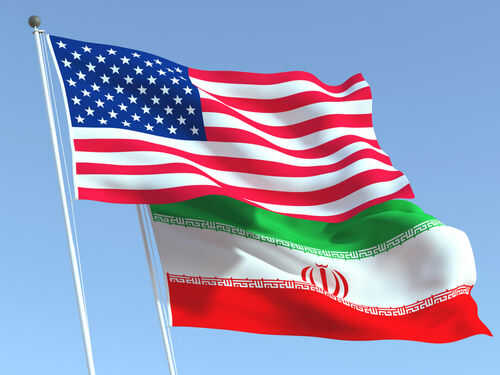
Trump is pressing for tougher terms before greenlighting a 60-day Iran ceasefire extension, signaling that American leverage—and security—will not be traded away for a weak deal.
Story Highlights
- Reports say U.S. and Iran drafted a 60-day memorandum to extend a ceasefire, but final approval rests with President Trump [3].
- The proposed framework links maritime safety, sanctions relief talks, and nuclear issues to the extension window [3].
- Media accounts consistently note unresolved language and verification details, underscoring why the White House is taking time [1].
- Trump’s review aims to ensure any pause strengthens U.S. interests instead of rewarding Iranian brinkmanship [6][7].
Trump Holds the Line While Mediators Await a Decision
Axios reported that United States and Iranian negotiators reached a 60-day memorandum of understanding to extend the ceasefire and launch follow-on talks, but that President Trump had not granted final approval and requested additional time to consider the terms [3]. Washington Times coverage likewise framed the arrangement as tentative and awaiting the president’s signature, confirming the deal is not final and remains subject to White House scrutiny [6]. Colorado Politics added that Trump’s stated priority is preventing an Iranian nuclear weapon [7].
Video summaries circulating in the news ecosystem echoed that a framework exists “pending Trump’s approval,” reinforcing that the proposal remains provisional and language details are still in flux [1]. These reports align on the central point: mediators describe a 60-day extension vehicle tied to resumed negotiations, but the president’s review continues. In diplomatic practice, this “framework before final text” window is typically where verification, sequencing, and enforcement provisions make or break the outcome [1].
What the 60-Day Window Reportedly Buys—and Demands
Axios described the draft as a 60-day period designed to extend the ceasefire and open structured talks on nuclear constraints, sanctions relief mechanics, and maritime access, including measures to secure the Strait of Hormuz [3]. Such a design aims to slow escalation while negotiators tackle the hardest issues. Supporters say the pause could enable mine removal and shipping normalization, while giving space for uranium, enrichment limits, and asset issues to be addressed in parallel discussions [3].
Secondary reporting suggests Iranian officials publicly push for broader geographic and political scope, including Lebanon, and seek economic concessions that go beyond a short truce, which complicates any minimalist extension [1]. Video segments emphasize that language, verification, and technical terms remain unresolved, consistent with a framework that still needs enforceable text and inspection pathways before the president could responsibly commit American credibility and relief measures [2]. This uncertainty justifies a methodical White House review grounded in verification first, concessions later [1][2].
Why Conservative Prudence Favors Leverage, Verification, and Accountability
Conservative readers know prior administrations too often rushed process for headlines, watered down enforcement, and tolerated loopholes that adversaries exploited. The current approach—holding approval until verification, sequencing, and enforcement are nailed down—reflects a leverage-first posture. Reports indicate Trump is reviewing the proposal precisely to ensure it advances U.S. security aims, especially preventing a nuclear-armed Iran, rather than front-loading benefits that Tehran could pocket while delaying compliance [6][7].
🇺🇸🇮🇷 Trump is reportedly pushing for changes to the proposed ceasefire extension with Iran, right on the heels of the House voting to rein in his war powers
What those changes look like is not yet known, and that is the detail that decides everything.
Source: Fox pic.twitter.com/IgHhG7iINH
— Amanakkineni (@Amanakkine) June 5, 2026
The public record lacks a released, signed text, and conflicting media accounts range from “framework reached” to “not finalized,” confirming that key clauses remain unsettled [1][3]. In that environment, insisting on precise terms is not delay—it is due diligence. A 60-day extension can make sense only if it tightens maritime safety, preserves deterrence, and compels verifiable nuclear steps. Anything less risks repeating the cycle of concession first, enforcement never—an outcome the administration appears determined to avoid [3][6][7].
Sources:
[1] Web – FOX NEWS REPORT: President Trump is reportedly seeking changes to a …
[2] YouTube – 60-Day Iran Ceasefire Framework Reached
[3] YouTube – Reports Claim US, Iran Forge Memorandum for 60-day Ceasefire
[6] YouTube – World awaits Trump decision on Iran ceasefire | What we know
[7] Web – Trump weighs 60-day plan to extend ceasefire, push nuclear talks …