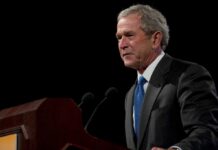
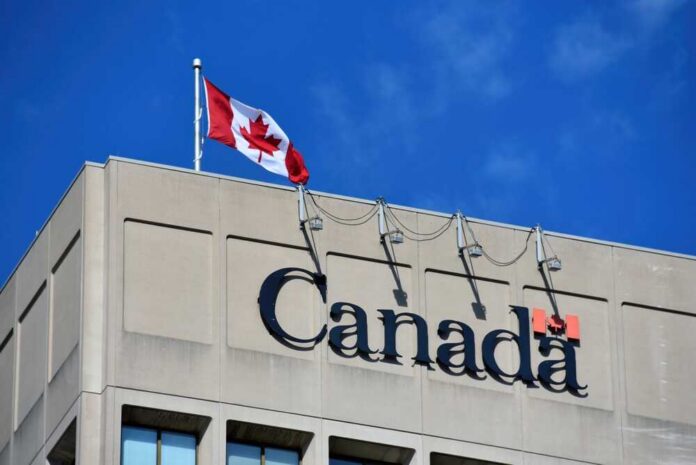
A former Obama-era ambassador’s claim that Canada now leads the “free world” more than the United States is fueling a blunt question many voters share: who, exactly, is steering America’s priorities?
Quick Take
- Michael McFaul, a former U.S. ambassador to Russia and Stanford scholar, is being widely quoted as saying it’s “shameful” that Canada is now a more consequential leader of the free world than the U.S.
- The exact wording and date of the quote are hard to verify from the research provided, but McFaul has a documented record of criticizing U.S. “isolationism” and warning that the world “suffers” when America pulls back.
- Supporters of America First see the “leader of the free world” framing as code for open-ended global commitments, while critics argue allied confidence is weakened when U.S. policy looks politically unstable.
- Canada’s elevated profile is tied in part to its pro-alliance posture and Ukraine support, even as the U.S. still dwarfs Canada economically and militarily.
What McFaul’s “Canada leads now” claim is really about
Michael McFaul, who served in the Obama administration as a Russia-focused national security official and later as U.S. ambassador to Russia, has long argued that U.S. pullback creates dangerous openings for adversaries. The research provided describes a paraphrased statement attributed to him—“shameful” that Canada is now a more consequential “leader of the free world” than the U.S.—but also notes no primary 2025–2026 source confirming the exact quote.
That verification gap matters. Political narratives often spread faster than documentation, and Americans across the spectrum are increasingly skeptical of expert-driven talking points that don’t come with receipts. Still, the broader theme is consistent with McFaul’s past commentary: he has criticized periods he views as U.S. “isolationism,” and he frames global politics as a competition between democratic states and autocratic regimes—an outlook that tends to justify deeper alliance commitments and sustained overseas involvement.
America First vs. “leader of the free world” language
Republican voters who backed Donald Trump’s second-term governing agenda generally prefer leverage over lecture: secure borders, stronger energy production, fairer trade, and a foreign policy built on clear national interest. In that worldview, “leader of the free world” can sound like an excuse for blank checks, ambiguous missions, and bureaucratic commitments that outlive public consent. McFaul’s framing, by contrast, reflects a more interventionist tradition that measures U.S. success by allied alignment and global activism.
Democrats and many establishment foreign-policy voices tend to argue the opposite: credibility is a currency, and uncertainty in Washington encourages adversaries. The research summary points to the Russia–Ukraine war and broader concerns about China as the backdrop for these arguments. Even when America’s raw power remains unmatched, critics say the on-again, off-again feel of U.S. political cycles can make allies hedge. Supporters of America First respond that “credibility” should not mean ignoring voters at home.
Why Canada keeps showing up in this argument
Canada’s international posture is frequently described as more predictably multilateral—emphasizing NATO, G7 coordination, and highly visible political messaging on democracy and alliances. The research provided suggests Canada has increased its profile through Ukraine-related assistance and diplomacy, creating a contrast with U.S. debates where foreign aid can become a domestic political football. Canada’s per-capita aid is often cited in these discussions, though the U.S. remains the largest contributor in absolute terms in many tallies.
That tension—per-capita “moral leadership” versus total capability—drives much of the spin. Canada’s economy and military capacity are far smaller than America’s, so “more consequential” is hard to defend if the metric is power. But if the metric is consistency, messaging discipline, and predictable alliance posture, Canada can look steadier to international audiences. The political catch is that steadiness can also mean less democratic friction—something U.S. voters increasingly see as a feature, not a bug.
The deeper frustration both sides recognize
McFaul’s complaint lands at a moment when many Americans—right, left, and independent—believe the federal government is failing at core responsibilities. Conservatives point to overspending, inflation tied to fiscal mismanagement, border chaos, and energy costs aggravated by policy choices. Liberals point to unequal outcomes, a fraying safety net, and perceived discrimination. In that environment, elite debates about who “leads the free world” can sound disconnected from daily life and national renewal at home.
Michael McFaul: Shameful That Canada Is Now a More Consequential Leader of Free World Than the UShttps://t.co/vCHTcfWtci pic.twitter.com/7NePy4fbEY
— Twitchy Team (@TwitchyTeam) May 5, 2026
Practically, the most defensible takeaway from the research is not that Canada has replaced the U.S., but that American leadership is increasingly contested—externally by adversaries and internally by voters who no longer trust the foreign-policy establishment. If McFaul’s remark is accurately quoted, it reflects that frustration from a different angle: a longtime internationalist warning that U.S. domestic politics are constraining global ambitions. Whether voters see that as a problem—or overdue accountability—now sits at the center of U.S. politics.
Sources:
https://fsi.stanford.edu/people/michael_a_mcfaul
https://stanfordmag.org/contents/mcfaul-and-putin-the-backstory