
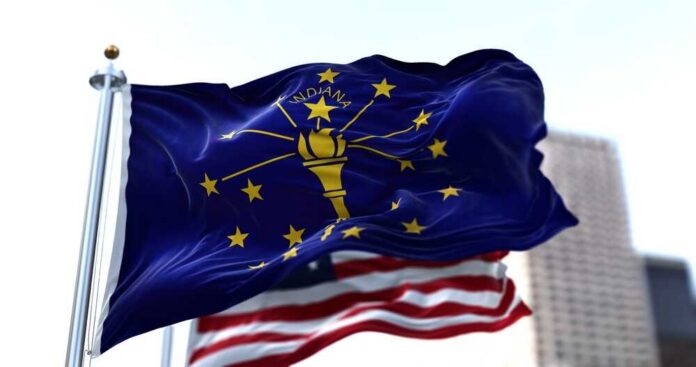
Twenty-one Indiana Republican senators defied President Trump’s aggressive redistricting demands in late April 2026, exposing deep fractures within the GOP and raising urgent questions about whether party leaders serve voters or Washington power brokers.
Story Snapshot
- Indiana GOP Senate rejected Trump-backed redistricting map 31-19, with 21 Republicans joining all Democrats against it
- Trump and JD Vance pushed aggressive gerrymander to capture all 9 congressional seats, splitting Democratic urban strongholds
- Lawmakers faced swatting incidents, pipe bomb threats, and primary challenge warnings during intense lobbying campaign
- Vote signals limits of MAGA influence over state parties and threatens GOP’s narrow House majority ahead of 2026 midterms
Trump’s Redistricting Push Meets Unexpected Resistance
President Trump and Vice President JD Vance orchestrated an intensive campaign in early 2026 to secure all nine Indiana congressional seats through aggressive redistricting. The proposed map aimed to fracture Democratic strongholds in Indianapolis and other urban areas, splitting them into Republican-leaning districts. With a 40-10 GOP supermajority in the Indiana Senate, passage appeared certain. However, constituent pressure for fair representation and public backlash against perceived extremism shifted momentum. Twenty-one Republican senators ultimately joined forces with ten Democrats, delivering a stunning 31-19 defeat that contradicts viral social media claims of MAGA victory.
Intimidation Tactics Backfire Against State Lawmakers
Between March and April 2026, Indiana legislators faced escalating threats as MAGA groups and national Republican operatives pressured lawmakers to support Trump’s redistricting blueprint. Multiple senators reported swatting incidents and pipe bomb threats to the FBI, while warnings of primary challenges flooded their offices. Outside the statehouse on voting day, protesters chanted demands for fair maps, creating a tense atmosphere reminiscent of January 6-era political confrontations. According to Senator Greg Goode’s WTHR interview, constituents overwhelmingly demanded fairness over partisan advantage. UCLA political scientist Lynn Vavreck identified a backfire effect where aggressive tactics galvanized moderates rather than intimidating them into compliance with Washington’s demands.
GOP House Majority Hangs in Balance
The redistricting defeat carries immediate consequences for Republican control of Congress. With the House GOP defending a razor-thin 220-215 majority as of 2025, Indiana’s failure to maximize seat gains jeopardizes national strategy heading into 2026 midterms. Cook Political Report analyst Dave Wasserman characterized the vote as the biggest GOP-on-GOP revolt since 2018, noting Trump overreached in assuming automatic state-level compliance. Indiana’s existing 7-2 Republican advantage remains unchanged, leaving Democratic Representatives André Carson and his colleague protected in their urban districts. The stalemate forces Republicans to rely on 2024 maps for upcoming elections, while Democrats gain morale and fundraising momentum in previously vulnerable seats.
Deep State or Grassroots Democracy?
This Indiana showdown illuminates the fundamental question troubling Americans across the political spectrum: do elected officials answer to constituents or Washington power brokers? Trump’s Truth Social post declaring “RINOs will pay!” alongside Vance’s Fox News warning that “disloyalty won’t be forgotten” reveals an expectation of lockstep obedience that contradicts representative democracy’s founding principles. Yet the 21 defecting senators cite constituent demands, not establishment manipulation, as their motivation. This creates a paradox for voters frustrated with elites: when state lawmakers resist federal pressure to preserve community representation, are they defending democracy or enabling the deep state? PolitiFact and Snopes both labeled viral claims of MAGA humiliating RINOs as false inversions of verified events.
National Implications for Party Control
Indiana’s redistricting rebellion sets precedent for similar battles in Wisconsin and Pennsylvania, where moderate Republicans face pressure to maximize partisan advantage. As of May 2026, no special session appears likely before midterms, cementing the status quo. House GOP leadership has quietly distanced itself from Trump’s scorched-earth approach, per Politico reporting, while MAGA-aligned groups promise primary purges. The fracture exposes limits on Trump’s control over state parties despite his overwhelming influence among Republican voters nationwide. Whether this represents healthy checks on executive overreach or destructive infighting that hands Democrats victories remains the central question for conservatives watching their narrow congressional majority teeter on the edge of collapse.