President Trump’s openness to buying a bankrupt airline has reignited a blunt question many voters thought Washington learned the hard way: when does “saving jobs” become taxpayers owning another private-sector mess?
Quick Take
- Trump said the federal government is “looking” at buying Spirit Airlines or backing a bailout “for the right price,” arguing it could save jobs and later be resold for profit.
- Spirit is in Chapter 11 for the second time, and court disclosures indicate “advanced” discussions that could involve roughly $500 million and equity-style warrants.
- The proposal collides with long-running conservative concerns about government picking winners and losers—even when the goal is to preserve competition and paychecks.
- Supporters see a temporary, deal-minded intervention; skeptics warn the precedent could normalize federal ownership in future “crisis” industries.
Trump floats a buyout-or-bailout to keep Spirit flying
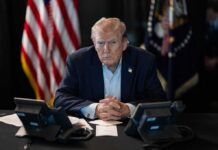
President Donald Trump told reporters on April 23, 2026, that his administration is considering buying Spirit Airlines outright or providing a bailout if the deal meets his “right price” standard. Trump pointed to Spirit’s aircraft and other assets and said the government could potentially acquire the carrier “virtually debt-free,” keep people working, then sell the airline later. The comments follow reports that negotiations are active but not finalized.
Bankruptcy court developments added detail to what otherwise sounded like an off-the-cuff Oval Office remark. Spirit’s attorney, Marshall Huebner of Davis Polk, disclosed that government financing discussions have been shared with creditor groups as part of the restructuring effort. Reporting described talks that could involve up to $500 million in support, with warrants that would give taxpayers an ownership-style stake—an approach closer to an investment than a no-strings grant.
Why Spirit is back in Chapter 11—and why fuel prices matter
Spirit’s situation did not start with this month’s headlines. The ultra-low-cost carrier, long known for base-fare pricing plus fees, has struggled through years of losses, failed strategic options, and multiple restructuring attempts. After an earlier bankruptcy, Spirit filed again in August 2025 with more than $1 billion in debt and continuing pressure from operating costs and demand weakness. A spike in fuel costs tied in reports to the Iran war sharpened the liquidation risk.
Spirit’s footprint also explains the political urgency. The airline employs roughly 18,000 people and serves a budget-travel niche that can disappear quickly when planes are parked and routes are cut. In a market already shaped by consolidation fights and heavy regulation, a Spirit collapse could reduce low-fare capacity in many secondary cities. Trump has framed competition as a reason to act, signaling he “likes having a lot of airlines,” even while opposing certain major-carrier mergers.
What makes this different from past airline aid programs
The United States has supported airlines before, but rarely in a way that looks like ownership. During COVID-19, the Payroll Support Program sent broad assistance to carriers to keep workers paid, and it largely avoided equity arrangements. The Spirit discussions being reported now are different because they contemplate warrants and, in Trump’s public framing, a possible outright purchase followed by resale. That structure invites comparisons to the auto bailouts, where Washington took equity and later exited.
That distinction matters politically because it touches a core conservative tension: limited government versus emergency intervention. A loan package backed by collateral, strict oversight, and a clear exit can be argued as protecting taxpayers while preventing wider economic damage. A full purchase, even if intended as temporary, creates a sharper precedent and raises questions about who decides when “temporary” ends. As of April 23, the administration had not released final terms, leaving key guardrails unknown.
The real test: protecting taxpayers while avoiding “deep state” dealmaking
The strongest facts available point to a process still in motion: “advanced” talks, private briefings to creditor groups, and public statements that blend buyout and bailout language. That uncertainty is exactly where public distrust thrives. Many Americans—right and left—already suspect that government interventions too often reward insiders, not citizens. If a Spirit package moves forward, transparency on valuation, warrants, repayment priority, and management control will determine whether it reads as disciplined dealmaking or another Washington carve-out.
Democrats have begun signaling pushback in public coverage, while the GOP-led government will ultimately own the outcome if it proceeds. For conservatives, the most defensible version of this plan is the one that treats taxpayers as senior stakeholders, demands measurable restructuring, and sets a hard timeline to sell any federal stake. For liberals wary of job losses and service cuts, the practical question is whether any rescue actually preserves routes and workers without becoming an open-ended subsidy for a struggling business model.
Sources:
Trump says he’s ‘looking’ at buying Spirit Airlines
Trump weighing taxpayer takeover of Spirit Airlines
Trump administration nears $500 million deal for Spirit Airlines
Trump says he wants somebody to buy Spirit Airlines, opposes United-American merger