U.S. forces intercepted Iranian attack drones near the world’s energy chokepoint and answered with precision strikes—signaling Washington will not tolerate threats to American lives or global shipping.
Story Snapshot
- U.S. Central Command said it downed four Iranian one-way attack drones headed toward the Strait of Hormuz [1][2][5].
- U.S. forces then hit Iranian coastal surveillance radar sites to deter further attacks [1][2].
- The Pentagon framed the actions as self-defense to protect regional maritime traffic [1][2][5].
- The episode fits a recurring U.S.–Iran pattern of dueling claims in the Strait of Hormuz [1][2][5][8].
CENTCOM Reports Defensive Shootdowns Near Vital Shipping Lane
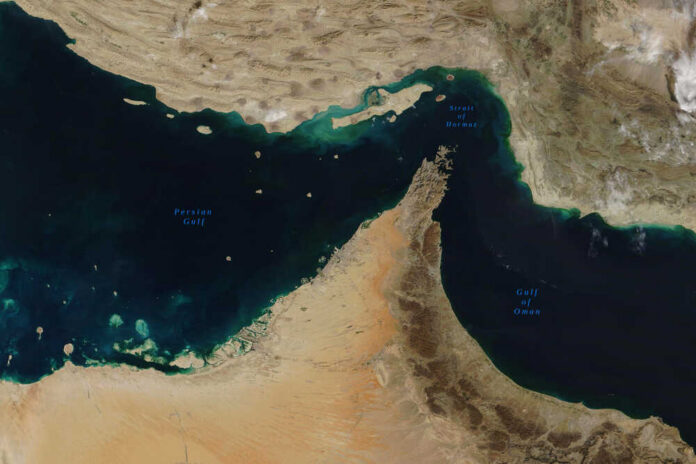
United States Central Command reported that American forces shot down four Iranian one-way attack drones launched toward the Strait of Hormuz, describing the aircraft as an immediate threat to regional maritime traffic [1][2][5]. The Strait of Hormuz carries a large share of the world’s seaborne oil and gas, and hostile drones in that corridor risk endangering civilian crews and U.S. personnel. The command characterized the intercepts as defensive actions intended to reduce risk to commercial shipping and allied vessels transiting the narrow waterway [1][2][5].
United States officials quoted in concurrent reporting said at least four drones were destroyed as part of a rapid-response air defense effort [2]. News accounts aligned on the key point that the drones were heading toward the strait and that U.S. forces acted to remove an imminent hazard to navigation and nearby forces [1][2][5]. While open-source visuals and radar tracks were not released publicly at time of reporting, outlets consistently cited the Central Command statement to detail timing and intent of the shootdowns [1][2][5].
Follow-On Strikes Target Iranian Coastal Radar Sites
After the drone intercepts, U.S. forces struck Iranian coastal surveillance radar installations in Goruk and on Qeshm Island, a move described as intended to defend against further attacks [1][2]. Targeting surveillance radars degrades an adversary’s ability to cue additional drones or missiles and can complicate tracking of shipping that Tehran or its proxies might attempt to harass. Reporting indicated the strikes were measured, focused on military infrastructure, and designed to deter new launches without widening the conflict [1][2].
Coverage framed the radar strikes as part of a self-defense continuum rather than a standalone escalation, linking them directly to the drone threat that preceded them [1][2]. That sequencing matters in international law and policy debates, where the United States asserts the right to neutralize imminent threats and the enabling nodes that make repeat attacks more likely. No U.S. casualties were reported in the initial dispatches, and shipping continued under heightened vigilance in the region [1][2][5].
Strategic Context: Hormuz Flashpoints and Competing Narratives
Analysts and past precedent show that U.S.–Iran incidents near the Strait of Hormuz often feature starkly different legal and operational claims from each side, especially about airspace, intent, and proximity to commercial or military vessels [1][2][5][8]. In 2019, Iran shot down a U.S. surveillance drone and alleged an airspace violation, while Washington said the aircraft was in international airspace; that crisis cooled only after the United States shifted to non-kinetic measures and sanctions pressure [8]. The current episode follows this familiar contest of narratives [1][2][5][8].
US attacks Iranian coastal sites after Iran launches drones in latest flare-up
US military says it hit Iranian surveillance sites near the Strait of Hormuz after downing four drones targeting maritime traffic, as Washington and Teh…https://t.co/pYNAlk9guY pic.twitter.com/6CYYgLU2Wg
— Ynet Global (@ynetnews) June 6, 2026
Publicly available evidence in early reports remains limited, a recurring reality in fast-moving engagements where operational security and classified sensors drive decision-making [1][2][5]. However, in this case, the U.S. position is specific: drones launched toward the strait posed an immediate maritime threat, and follow-on strikes targeted radars to prevent more attacks [1][2][5]. Absent concrete counter-data from Tehran—such as radar logs or flight telemetry—claims dismissing the threat lack the detail needed to undercut the Central Command account.
What This Means for American Interests and Deterrence
Protecting the Strait of Hormuz protects American service members, shields families and businesses from energy shocks, and reinforces freedom of navigation that undergirds the global economy. When Iran or its affiliates push drones toward vital sea lanes, decisive defensive actions communicate that harassment and brinkmanship carry costs. The Trump administration’s national security posture emphasizes deterrence through strength, calibrated responses, and keeping commercial traffic safe without dragging Americans into open-ended conflict—an approach reflected in the intercepts and targeted radar strikes [1][2][5].
Sources:
[1] Web – US shoots down Iranian drones launched toward Strait of Hormuz after …
[2] Web – US shoots down four Iranian drones bound for Strait of Hormuz
[5] Web – U.S. military says it shot down Iranian drones launched toward Strait …
[8] YouTube – US forces shoot down Iranian attack drones near the Strait of Hormuz