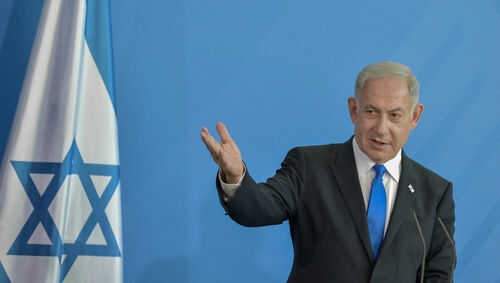
As Fox’s Brian Kilmeade pressed Benjamin Netanyahu on Iran, the Israeli leader flatly rejected any talk of a rift with President Trump and doubled down on their shared vow that Iran will never get a nuclear weapon.
Story Snapshot
- Brian Kilmeade asked Netanyahu if his relationship with President Trump is under strain over the Iran war.
- Netanyahu said he and Trump remain aligned and share the goal of stopping Iran’s nuclear and missile programs.
- Both men back massive strikes that have hit thousands of Iranian targets and crushed much of Iran’s missile power.
- Critics in the media and Europe call the campaign an “illegal war,” casting Trump, not Iran, as the problem.
Kilmeade’s Tough Question: Is There a Trump–Netanyahu Rift?
Fox News host Brian Kilmeade did what good interviewers should do: he asked the hard question many viewers had on their minds. During a sit-down focused on the fierce war with Iran, Kilmeade looked at Israeli Prime Minister Benjamin Netanyahu and asked if his relationship with President Donald Trump was “under strain.” The backdrop was heavy. Trump’s second-term White House had launched broad strikes on Iran, and some pundits tried to suggest Israel pushed America into war. Kilmeade gave Netanyahu a chance to answer that head-on and clear the air for concerned conservatives.
Netanyahu did not dodge. He told Fox News that he and President Trump “remain aligned” on Iran and that the United States and Israel share a simple goal: Iran must never get a nuclear weapon. He stressed that the joint campaign aims to remove enriched nuclear material and dismantle the sites that support Iran’s bomb program. Netanyahu described Iran’s rulers as deeply hostile to America and Israel, pointing to their “Death to America” chants as proof this regime cannot be trusted with advanced weapons. His message to Kilmeade’s audience was clear: no personal feud, only a shared mission to protect the West.
Trump’s Iran Campaign: Crushing Missiles, Blocking the Bomb
While Kilmeade has raised sharp concerns about parts of Trump’s Iran deal, he and Netanyahu agree on one core fact: Iran is a grave threat that had to be confronted. Under Trump, the United States and Israel launched sweeping operations, often described as Epic Fury and Economic Fury, to hit Iran’s military and choke off its cash. Independent conflict data show that coalition forces have carried out strikes in at least 26 of Iran’s 31 provinces, wrecking air defenses and hammering missile launch sites. A United States admiral has said more than 8,000 Iranian military targets, including over 100 vessels, have been hit so far.
Those blows have real effect. Before the war, experts estimated Iran held around 2,500 long-range ballistic missiles. Since Trump ordered strikes, hundreds of those missiles have been launched, destroyed, or targeted in storage. One defense analyst reported Iran’s missile launch rate falling by more than 90 percent, while drone launches dropped at a similar pace. Netanyahu has gone even further in public, arguing that the United States–Israeli strikes “eliminated Iran’s ability to produce nuclear weapons and ballistic missiles,” removing what he called two “existential threats” to Israel. For constitutional conservatives worried about American security, these are the kinds of hard numbers that show strength rather than surrender.
Iran’s Regime: Weakened but Still Dangerous
Kilmeade has voiced frustration that, after what he describes as thousands of attacks, Iran’s government still stands. That feeling is understandable. Americans remember past wars where heavy bombing seemed to promise fast regime change. Yet modern war data tell a different story. Analysts tracking this conflict note that even while Iran’s missile and drone capacity has been slashed, the regime is using cheap drones and terrorist proxies to hit oil fields, airports, and other soft targets around the Gulf. Iran’s strategy is not to win outright but to spread chaos and drive up energy and shipping costs, hoping global pressure forces Washington to back down.
That is why Netanyahu warns the war “is not over” and says Iran is “afraid” yet still trying to rebuild underground bunkers and hardened sites. He has described Iran’s rulers as “fanatic” and “unreformable,” insisting that if America and Israel did not act now, they might never be able to stop a future nuclear-armed Iran from blackmailing the West. For Trump supporters, this logic lines up with a core belief: peace comes through strength, not wishful thinking. Iran’s rulers may be bleeding and off balance, but they still test our resolve every day. Letting up too soon would throw away the gains bought by American and Israeli pilots.
Media Spin, Allied Hesitation, and What’s at Stake for Americans
Even as Trump and Netanyahu push to stop Iran’s nuclear and missile programs, many mainstream outlets frame the campaign as an “illegal war” and focus more on legal claims than on Iran’s open threats. Commentators in places like The New York Times and The Washington Post are reported to downplay Iran’s attacks and instead question American motives. Some European leaders, including in the United Kingdom, have used similar language, backing away from firm support and offering only symbolic deployments far from the real front lines. That pattern is familiar to conservatives who watched global elites lecture America while our enemies gained ground.
Fox's Brian Kilmeade Straight-Up Asks Netanyahu: Is Your Relationship With Trump 'Under Strain?' https://t.co/bP9LXRv6HK
— Mediaite (@Mediaite) July 6, 2026
For Trump’s base, the stakes reach far beyond Tehran. A hostile Iran drives up energy prices, threatens shipping lanes, and fuels terror networks that target Americans, Israelis, and our allies. Disruption in the Strait of Hormuz can ripple into food prices and global supply chains, hitting working families already hurt by past years of inflation and bad economic policy. Kilmeade’s on-air grilling of the Iran deal reflects a healthy skepticism of any arrangement that could hand billions to a radical regime or recognize its control over key waterways. Netanyahu’s replies show that, at least on the core goal of stopping Iran’s bomb and missiles, he and Trump are still on the same page—and that matters for every American who wants a strong, free nation that does not bow to terror states.
Sources:
mediaite.com, youtube.com, instagram.com, foxnews.com, facebook.com, yahoo.com, acleddata.com, brookings.edu