In an era when nearly every presidential gesture is read through a partisan lens, President Trump’s Rose Garden ceremony for the World Series champion Los Angeles Dodgers is best understood as part of a long, deeply rooted American tradition—one that mixes genuine athletic accomplishment, civic ritual, and, in Trump’s case, a very particular brand of humor.
Key Points
- The Dodgers’ July 23 White House visit was a formal Rose Garden event explicitly organized to honor their 2025 World Series championship, continuing a long-standing tradition of champion teams being feted by the sitting president.
- President Trump used the occasion to celebrate star players and the organization’s back-to-back titles, while seasoning his remarks with characteristic jokes, quips about the Rose Garden, and a now-famous championship ring gag caught on multiple live feeds.
- The Dodgers’ front office and on-field leadership embraced the visit as “a baseball thing” and a civic honor, even as some individual players chose not to attend—fueling media narratives about politics and symbolism more than any dispute over the event’s purpose.
- This ceremony fits a broader pattern: the facts of the visit are straightforward and well-documented, but public debate centers on attendance decisions, social media reaction, and how Trump’s performance style reframes a routine sports ritual.
A Championship Ritual, Not a Political Stunt
Strip away the chatter and the core reality is clear: the Dodgers went to the White House to be honored as World Series champions, and the White House treated it as exactly that. Major League Baseball’s own announcement described the trip as part of “a long-standing tradition” for champions, specifying that the club would visit on July 23 to celebrate its 2025 title. Reuters, ABC local affiliates, and national outlets independently reported the same timing and purpose, noting it would be the second straight year the Dodgers had been feted by President Trump after back-to-back championships.
White House communications mirrored that framing. Spokeswoman Taylor Rogers, speaking to the California Post, said plainly that “President Trump is excited to welcome the Los Angeles Dodgers BACK to the White House to celebrate their World Series championship,” emphasizing continuity with previous visits. Live video feeds from The Hill, ABC News, and regional stations all introduced their coverage as a presidential ceremony for the reigning champions, not a campaign rally or policy event. The Rose Garden was not a backdrop for legislative messaging; it was a stage for trophy-season baseball.
How the Ceremony Unfolded: Trump’s Style Meets Baseball Tradition
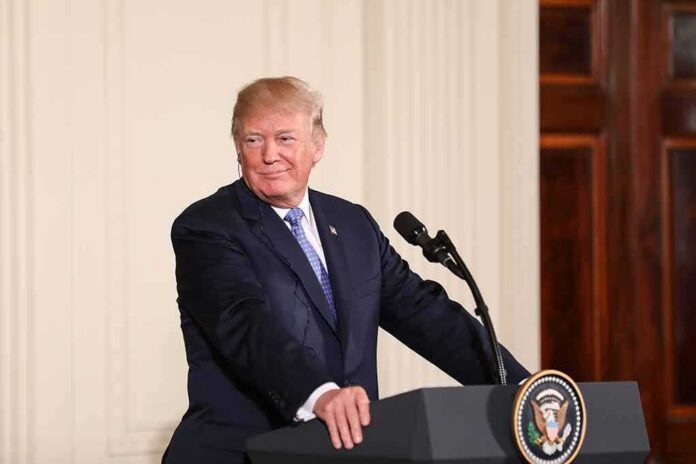
At the heart of the event was a familiar script: the president, the champion team, and a formal acknowledgement of what it takes to win a title. In the official Rose Garden reception, Trump welcomed the “2025 World Series champion Los Angeles Dodgers” and congratulated them on their season, with manager Dave Roberts and controlling owner Mark Walter flanking him at the podium. The president’s remarks tracked closely with other championship visits he has hosted—recapping the playoff run, highlighting individual performances, and praising the organization’s culture.
Across ESPN, ABC, and the Los Angeles Times coverage, Trump is quoted lauding the Dodgers as “one of the great brands anywhere in the world” and singling out Shohei Ohtani, Mookie Betts, and other stars as uniquely gifted athletes. He compared Ohtani to Babe Ruth and framed the club’s consecutive titles as a rare achievement, noting that the team had become the first repeat champion in a quarter century. This is classic presidential championship rhetoric: larger-than-life comparisons, a bit of mythology, and an acknowledgment that sustained success in modern professional sports is extremely hard to come by.
What distinguished this ceremony from a more generic script was Trump’s comedic timing and willingness to play foil in the moment. Multiple broadcasts captured him joking about the Rose Garden renovations, riffing about the cost of a championship ring, and turning a presentation of a customized Dodgers jersey and ring into a comic set piece. When Walter presented him with an honorary World Series ring bearing his name, Trump quipped about whether he had to “report” its value, triggering laughter from players and staff. His humor was topical, self-aware, and in line with a public persona that rarely passes up a chance to turn a ceremonial exchange into a punchline.
Who Showed Up, Who Didn’t, and Why That Became the Story
The factual record leaves little doubt that the event was properly staged and broadly attended. The Dodgers’ own statements, MLB coordination, and travel reporting show the club carved out its lone off-day in the middle of an East Coast swing to make the trip, threading it between a Philadelphia series and games against the Washington Nationals. Local coverage from the Los Angeles Times documented the team’s arrival at the White House and participation in both the Rose Garden event and related meetings, including an Oval Office visit for selected players and staff.
Still, some players did not attend. The Guardian’s contemporaneous story, echoed by other outlets, framed the visit with the detail that “some players stay away,” and offseason reports had described logistical hurdles that made an earlier spring visit impractical. Those absences became the hook for a secondary narrative: was skipping the White House a political signal, a scheduling conflict, or simply a personal choice? The supplied record does not include a comprehensive attendance list or detailed explanations from each absent player, so the motivations remain partially speculative. What is documented is the organization’s stance. Manager Dave Roberts repeatedly characterized the ceremony as tradition and “a baseball thing” that the club would approach unified, even while acknowledging that individual decisions were up to each player.
Historically, teams have navigated this terrain under multiple presidents. The Dodgers themselves visited the White House in 2021 under President Biden and again in April 2025 for their 2024 championship under President Trump, with both events described by the club as part of the same tradition of champions being honored by the sitting president. Within that context, the 2026 visit looks less like a one-off political statement and more like the continuation of an institutional norm, with players making individual choices against a backdrop of organized support from ownership and field leadership.
Trump’s Humor as a Lens on the Modern Presidency-and-Sports Relationship
The question in the headline—Trump welcoming the Dodgers “with his typical humor”—speaks to a broader cultural point. Championship visits have always been performative; they exist as much for the cameras and the historical record as for the athletes in the room. Under Trump, that performance has a distinctive texture. He blends congratulatory language with jokes about money, fame, and his own persona, often using the players as straight men to his punchlines. Clips of Clayton Kershaw responding wryly when Trump teases him about returning to pitch, or of Trump turning red after a playful “no” serves as comic rejection, circulate rapidly because they crystallize that dynamic.
For many fans, this approach humanizes the ceremony. The president appears not as a remote dignitary but as a talkative host riffing with guests about rings, contracts, and stat lines. For others, the same style risks overshadowing the team’s achievement, pulling focus from the Dodgers’ hard-earned title to Trump’s latest viral soundbite. The media economy rewards these moments: ETimes, Mirror Now, and other clip-focused outlets highlighted the ring gag and Kershaw exchange more prominently than the formal recitation of the team’s season. The ceremony, in effect, becomes content.
From a structural perspective, Trump’s humor is not evidence that the visit was anything other than a championship honor; the core script—the invitation, the title, the speeches from club leadership, the presentation of a jersey and ring—matches decades of precedent. What changes is how audiences experience it. In a polarized environment, supporters read his banter as charm; critics read it as trivialization or self-promotion. The same jokes become Rorschach tests, mapped onto existing views of the president rather than onto the underlying question of whether the team’s success deserved recognition. On that latter point, there is no dispute.
Media, Social Platforms, and the Magnification of a Routine Tradition
The Dodgers’ 2026 visit illustrates how a routine civic ritual can be magnified into a broader cultural argument once it enters the social-media bloodstream. Traditional outlets—MLB.com, Reuters, the Washington Post, the Los Angeles Times—anchor their stories in the basic facts: dates, titles, quotes from Trump, Ohtani, Roberts, Walter. Those pieces situate the ceremony squarely in the lineage of championship visits. By contrast, social commentary fragments around sharper edges: an angry tweet blasting the Dodgers for “ass-kissing,” a fan excited to see their rivals honored even after losing the prior year, letters to the editor debating whether the negatives of visiting “outweigh the positives.”
These reactions do not contest what happened; they contest how to feel about it. In the research record, there is no Side B built on primary-source evidence claiming the event was misrepresented or that the Dodgers were not, in fact, there for a championship celebration. Any serious factual counter-narrative would have to produce documents—invitation language, transcripts, logistical records—showing a materially different purpose. None do. Instead, the “controversy” is subjective: questions about whether teams should participate, whether attendance confers political legitimacy, and whether a president’s style enhances or diminishes the gravity of the occasion.
For the club, those debates are largely external. Ownership and the manager have consistently framed these trips as honors tied to winning, with Clayton Kershaw and others defending the experience of meeting the president and walking through the Oval Office “regardless of personal beliefs.” It is a pragmatic, tradition-centered view: championships come with certain civic rituals, and the White House ceremony is one of them. The 2026 event did not break that pattern; it reaffirmed it, then added Trump’s humor as a distinctive overlay.
WATCH: President Trump is gifted an honorary World Series championship ring and jersey from the Los Angeles Dodgers as they visit the White House. pic.twitter.com/VCSDD1BdNi
— John F. Kennedy Jr (@JFKennedyJrr) July 25, 2026
What This Episode Tells Us Going Forward
Viewed in isolation, the Dodgers’ Rose Garden ceremony is straightforward: a dominant back-to-back champion accepted a White House invitation and was honored by the sitting president in the way American champions have been for generations. The complexity enters when we consider how such events function in today’s media ecosystem. They are no longer experienced primarily as closed-room rituals but as multi-angle livestreams, clipped and recontextualized across platforms within minutes.
In that environment, a president’s humor, a star’s offhand remark, or a single absentee on the team sheet can become the dominant narrative. Yet the evidentiary backbone remains solid. Team and league announcements, White House statements, network feeds, and newspaper reporting converge on the same description: President Trump welcomed the World Series champion Dodgers to the White House to celebrate their title, and did so with the combination of praise and showmanship that has come to define his public style.
For readers trying to separate fact from feeling, that distinction matters. The facts are clear and well-attested; the feelings will differ. And as long as championships are won in Los Angeles and presidents sit in Washington, some version of this ritual—part honor, part theater—will continue, with each administration imprinting its own style on the moment.
Sources:
redstate.com, theguardian.com, mlb.com, nytimes.com, washingtonpost.com, latimes.com, reuters.com, abc7.com, si.com, dodgersnation.com, reddit.com, thesportingtribune.com, thehill.com, nypost.com, facebook.com