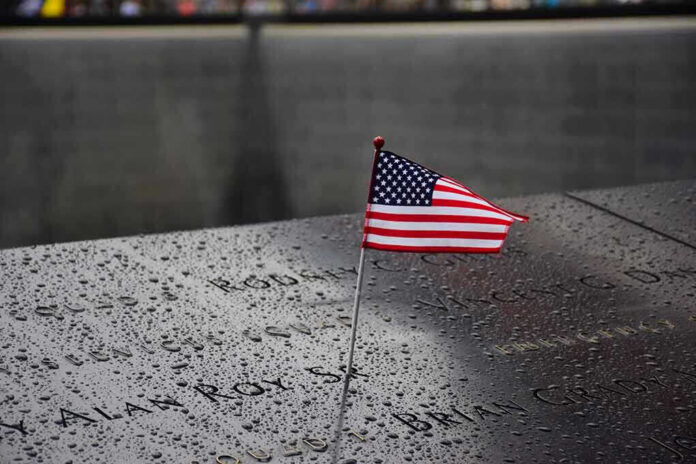
A Pentagon widow is asking America to remember the unity and kindness we showed after 9/11—and to live it again today.
Story Highlights
- Laurie Laychak urges Americans to remember how we treated one another after 9/11.
- Her husband, David, was killed at the Pentagon; she has spent years honoring victims and supporting families.
- Pew Research says the surge of unity after 9/11 was real but faded over time.
- Laychak speaks at memorial events and says remembrance should teach and comfort communities.
Pentagon Widow Calls Americans Back to Post-9/11 Unity
Laurie Laychak, whose husband David was killed at the Pentagon on September 11, 2001, is calling on Americans to remember how we treated each other in the days after the attacks. She told Military.com that the lesson is not only what happened, but who we became—kinder, united, and focused on one another. Her message comes as the nation marks twenty-five years since the attacks and weighs what we have kept, and what we have lost, from that shared resolve.
Laychak’s appeal speaks to a memory many still hold. After the attacks, people flew flags, prayed together, and checked on neighbors. Streets were quieter, and lines for blood donations stretched around buildings. Pew Research Center notes that Americans “came together—bonded by sadness and patriotism”—but also finds that this unity faded with time as politics and daily life took over. Laychak’s focus is simple: do not let that spirit drift. Choose it, again, in how we live now.
A Family’s Loss Turned Into Service and Teaching
Laychak has honored her husband’s memory by serving others. Voice of America reported that David left behind Laurie and their two children when he was killed at the Pentagon, a loss that shaped their lives and her mission to remember the fallen with dignity and purpose. She has stood with other families at the Pentagon Memorial and at local tributes, reminding communities that the names on those benches and walls are husbands, wives, parents, and friends, not statistics or headlines.
In Virginia this year, she supported a memorial effort that honors the residents lost on 9/11 and helps the living learn from that day. She said the memorial meets three goals: honor those who died, comfort the families who remain, and teach future generations what happened and why it matters. Photos show her speaking at the Liberty Memorial dedication in Woodbridge, urging people to remember with action, not only with words. That work keeps memory alive and connects it to duty, country, and community strength.
Why Her Message Matters to Today’s America
Pew’s anniversary analysis confirms that the early wave of unity was real but fleeting. Many remember the flags and shared purpose, but daily divisions returned as time passed. Laychak’s message challenges that slide. She points to a choice within reach: act like we did then—be kind, be honest, and stand together as Americans. That approach supports strong families, strong neighborhoods, and a country that values service over slogans.
New York handed a 9/11 pen to an al-Qaeda lawyer.
Mamdani signed a “Day of Remembrance” order, then passed the pen to Ramzi Kassem; the lawyer who defended Ahmed al-Darbi, an al-Qaeda operative who pleaded guilty in the 2002 Limburg tanker bombing.
Al-Darbi’s sister married… pic.twitter.com/5S3aoICSRa
— Hannah (@VoiceOfVatan) September 7, 2026
Laychak’s call also fits a broader pattern of anniversary coverage that centers real people and real grief. That human frame helps teach younger Americans, including those with no living memory of 9/11, why the day matters and how a nation heals. It steers attention from noise toward character and civic duty. In plain terms, she asks us to be the neighbors we were on September 12: firm in our love of country, decent to each other, and mindful of the cost of freedom.
Sources:
military.com, wjla.com, dvidshub.net, voanews.com, pewresearch.org