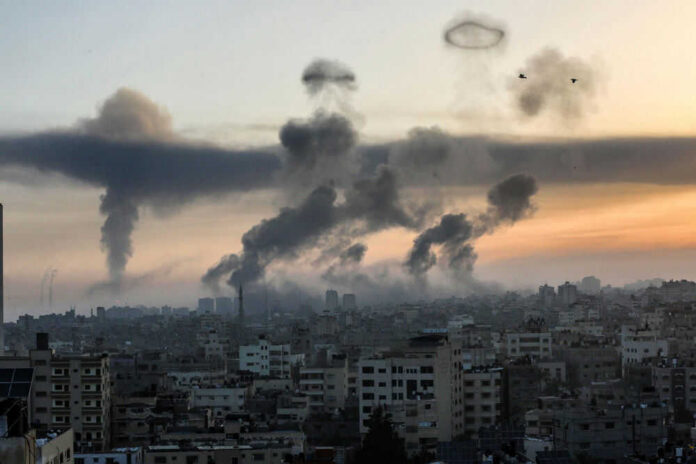
Israel’s strike in Msayleh turned a heavy machinery yard into another flashpoint in the fight over Lebanon’s ceasefire.
Quick Take
- Israeli officials said the strike hit machinery linked to Hezbollah rebuilding efforts, not a random neighborhood.[2][4]
- News reports described the site as a heavy machinery business that was destroyed in the pre-dawn attack.[1][4]
- Human Rights Watch later said it found no evidence of military targets at or around the site.[2]
- The strike killed one person and injured seven others, adding to anger over the ceasefire’s collapse in practice.[1][2][4]
What Israel Says the Strike Hit
Israeli officials said the airstrike targeted equipment stored for Hezbollah’s rebuilding effort.[2][4] Their claim matters because it shifts the story from civilian damage to a military purpose. That distinction drives the legal fight. If the machinery was tied to Hezbollah, Israel can argue it struck a valid target. If it was a normal business, the strike looks far harder to defend.
Reporting from AP News, Al Jazeera, and NPR described the site in Msayleh as a place that sold heavy machinery.[1][4] The accounts say the pre-dawn blasts destroyed a large number of vehicles and damaged the yard badly. That matters for readers because the public record, as published, does not show a military depot on the ground. It shows a commercial-looking site hit by war.
Why Critics Say the Strike Crossed the Line
Human Rights Watch said it investigated the site and found no evidence of military targets at or around it.[2] The group also said the idea that equipment might someday be used for military work does not make it a lawful target.[2] That is the core legal dispute. Under the laws of war, a force cannot strike civilian property just because it could one day help an enemy.
The civilian toll sharpened that dispute. AP News reported that one Syrian citizen was killed and seven others were hurt, including Lebanese civilians.[1] Al Jazeera and NPR said a passing vegetable truck was hit during the strikes.[1][4] For many readers, that detail will matter more than the battlefield talk. It turns the event into a visible case of ordinary people paying the price.
Why the Story Keeps Growing
The Msayleh strike did not happen in isolation. AP News said Israel has carried out near-daily airstrikes since the ceasefire that ended the last round of fighting in late November.[1] Al Jazeera also said the strike was part of a pattern of ceasefire breaches.[4] That background shapes public reaction. Each new strike adds to the sense that the ceasefire exists on paper, not on the ground.
That is why the evidence gap matters so much. The public reporting relies on Israeli statements, Lebanese casualty reports, and later rights group findings.[1][2][4] What is missing is a public release of target files, surveillance images, or battle-damage analysis from Israel. Without that record, the debate stays stuck between a claimed military need and a strong civilian-harm narrative.
Why This Matters Beyond One Village
For readers watching the region, the deeper issue is trust. When a military says a site supported an enemy but gives little proof, people fill the gap with suspicion. When rights groups later say they found no military target, that suspicion hardens. The result is predictable: Israel may see a security action, while critics see another attack on civilian life and rebuilding efforts.
Msayleh also shows how reconstruction itself has become a target of the wider conflict. AP News reported the site dealt in heavy machinery, the kind used to clear rubble and repair roads.[1] Human Rights Watch later linked similar attacks to reconstruction equipment across southern Lebanon.[2] That makes the stakes plain. If rebuilding tools are destroyed, recovery slows and civilian life stays trapped under the weight of war.
Sources:
[2] Web – Lebanon: Israel Unlawfully Destroying Reconstruction Equipment
[4] YouTube – Israel Strikes Southern Lebanon, Damages Civilian Infrastructure